



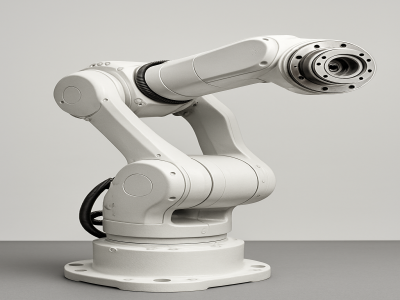
Recently, Swiss industrial giant ABB announced that it had decided to implement a 100% spin-off of its robotics business unit, which is scheduled to be completed in the second quarter of 2026, and will promote the business to start trading as an independent listed company.
ABB's robotics business ranks second in the global market, second only to Japan's FANUC, and ahead of Japan's Yaskawa Electric and Germany's Kuka, which are also the "four major families of robots". In 2024, the department's sales revenue reached US$2.3 billion, accounting for about 7% of ABB Group's total revenue, and the operating EBITDA margin was 12.1%. ABB's robotics business unit has about 7,000 employees.
ABB said that if the relevant proposal is approved by shareholders, the split plan will be carried out through a share distribution. ABB Limited shareholders will receive shares of the new listed company (tentatively named "ABB Robotics") as a dividend in kind according to their existing shareholding ratio.
At present, ABB divides its global business into four major divisions, namely the Electrical Division, Process Automation Division, Motion Control Division and Robotics and Discrete Automation Division. Morten Wierod, CEO of ABB Group, said that the business and technology synergies between the robotics business and other business units of the group are limited, and face different market demands and market characteristics. "As an industry leader, ABB's robotics business will benefit greatly if it can be compared more directly with its peers."
This is ABB's largest business restructuring since it sold its power grid business to Hitachi of Japan in 2018. After the spin-off is completed, the company's diversified operations will be further simplified, and the mechanical automation business unit of the Robotics and Discrete Automation Division, which belongs to the same division as ABB's robotics business, will be incorporated into the Process Automation Division. This means that ABB will become a pure electrification and automation company, showing greater similarities with competitors such as Siemens and Schneider Electric.
While disclosing Q1 financial data, ABB also responded to the impact of the trade war on global business. ABB benefits from the localized production model. "In the United States, 75%-80% of our sales come from local production, and we also enjoy the additional support of certain tariff exemption policies. In Europe and China, our localized production ratio is even higher. Energy transformation and expansion mean a growing demand for advanced electrification technologies, and we continue to invest in the United States to support the expected long-term market development." In March this year, ABB announced that it would invest $120 million in the United States to expand its production capacity of low-voltage electrification products. In terms of robotics business alone, ABB has three major production bases in Vasteras, Sweden, Michigan, USA, and Shanghai, China.
Industry insiders said that after sustained high growth, global industrial robot sales have weakened in recent years, dragged down by major application markets such as automobiles and electronics. At the same time, in China, the world's largest industrial robot market, foreign giants are also facing the rise of local manufacturers such as Huichuan and Estun to squeeze the market share, as well as fierce price wars caused by intensified competition.(来源:机器视觉沙龙)


