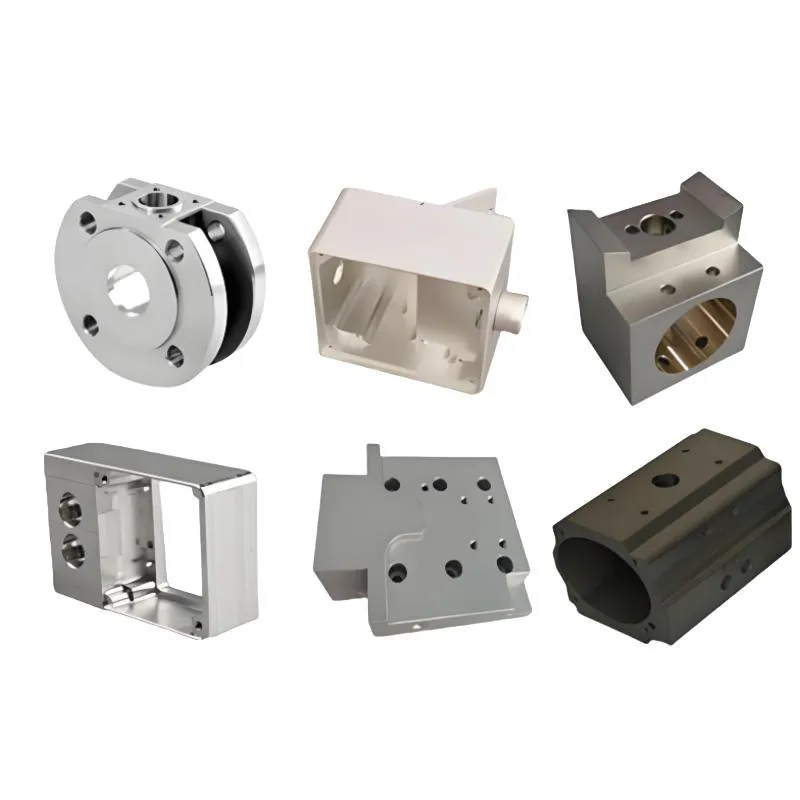
Core Capabilities of Your China CNC Machining Manufacturer
3-, 4-, and 5-axis CNC milling at our China factory. Aluminum, titanium, stainless steel parts machined to ±0.005 mm tolerance.
Swiss-style and turn-mill CNC turning for high-concentricity shafts and connectors with mirror surface finish and tight repeatability.
On-demand prototyping with 12-hour DFM feedback. CAD to functional prototype in 5 working days from our Dongguan facility.
Industries Served by MID Precision
-
01Aerospace CNC Parts
-
02Medical Device CNC Machining
-
03Semiconductor & Cleanroom CNC Machining
-
04Industrial Automation & Energy CNC Machining
-
05Robotics CNC Machining
-
06Automotive Precision CNC Machining

Aerospace work demands more than precision — it demands documented traceability. Every shipment from MID Precision includes an AS9102-format First Article Inspection Report, material certifications traceable to mill heat numbers, hardness verification on heat-treated parts, and dimensional layouts performed on Mitutoyo coordinate measuring machines under climate-controlled conditions. We control machining-induced residual stress through optimized tool paths and intermediate stress-relief cycles, so titanium and aluminum aerospace components arrive flat, stable, and within tolerance after weeks in international transit. Our 9-machine simultaneous 5-axis CNC cell lets us produce undercut features, swept surfaces, and integral monolithic housings in a single setup, collapsing the cumulative tolerance error from multiple fixturings to the precision of one single zero-point reference. For non-ITAR aerospace programs, we work transparently with US primes and Tier 1 suppliers under signed NDAs, and our project managers understand AS9102, AS13100, and Nadcap requirements.
If you are sourcing a Chinese CNC machining manufacturer for aerospace work and your last supplier returned parts that warped on the inspection plate or shipped without proper documentation, MID Precision is the second opinion your program needs.More About..

We routinely machine medical-grade materials including 316L and 17-4 PH stainless steels, Grade 5 and Grade 23 ELI titanium, PEEK and PEEK GF30, Ultem 1000, MP35N, and Delrin. Burr control, edge break specifications, sub-Ra 0.4 µm surface finishes, and passivation per ASTM A967 are part of every medical job at MID Precision, not premium add-ons.
Documentation is where most low-cost Chinese suppliers fail medical customers, and where we have built our reputation. Every medical project ships with a process traveler, raw material certificates traceable to mill heat number, dimensional inspection reports against the customer print, surface finish verification with calibrated profilometers, passivation certificates per ASTM A967, and — when required — cleaning validation records meeting ISO 19227. Parts destined for sterile assembly are double-bagged in cleanroom-prep packaging.
For surgical-robotic and minimally invasive surgical instrument applications, we apply our micro-machining capability to features below 0.5 mm in diameter, with ±0.001 mm tolerance on critical motion-transmission dimensions. Our engineering team signs mutual NDAs at the CAD review stage so your IP is protected from the first drawing exchange.
From a 10-piece R&D batch destined for animal study to a 5,000-piece commercial production run, MID Precision delivers parts meeting your design history file requirements without surprises, without substitutions, and without missed delivery dates.More About..

Last year, our semiconductor cell delivered more than 12,000 vacuum chamber components, gas distribution manifolds, wafer handling end-effectors, and electrostatic chuck mounting plates. Many of these parts demand Ra 0.4 µm or better surface finishes, ISO 5 (Class 100) cleanroom packaging, and absolute dimensional stability across thermal cycles.
We invest in process controls semiconductor customers specifically demand — ultrasonic cleaning with multi-stage deionized rinse, isopropanol final wipe, double-vacuum bagging in cleanroom-prep areas, and lot-level surface roughness verification on every shipment. Helium leak testing on vacuum components and electropolishing on stainless steel parts are available as standard secondary operations. Our 5-axis machining centers and dedicated finishing teams produce semiconductor parts that drop directly into your tool integration without rework.
Equally important, we understand the rhythm of semiconductor capital equipment manufacturing. Orders are unpredictable, lot sizes vary from one prototype to fifty production parts, and the next-tool cycle moves fast. MID Precision holds open capacity in our small-batch cells specifically for semiconductor customers, we ship in 5 to 10 days when you need ramp parts, and we do not require forecast volume commitments you cannot honestly give.
If your fab equipment program needs a Chinese partner who already speaks the semiconductor language of cleanliness, traceability, and short cycle times, MID Precision is the China CNC machining manufacturer to qualify next quarter.More About..

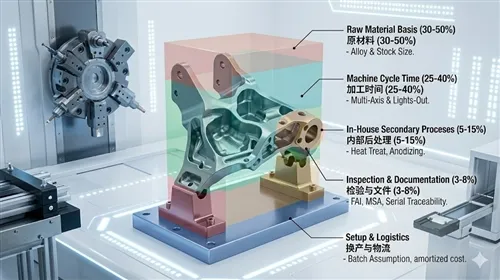
For automation equipment, we typically machine 6061-T6 aluminum, 4140 prehardened steel, and 304 or 316 stainless steel where corrosion resistance matters. Many automation customers specifically value our DFM feedback because we will tell them — politely but clearly — when a design feature is driving 50% of the machining cost without delivering 50% of the function.
For energy and renewables, we support solar tracker components, wind-turbine sensor housings, battery enclosure machined details, hydrogen valve bodies, and high-pressure fluid manifolds. These parts often require precision plus pressure-bearing integrity, validated through hydrostatic or helium leak testing as required. Material certifications and PMI (positive material identification) reports are available on request and standard on all critical pressure-bearing work.
Across both automation and energy customers, MID Precision provides the same outcome: predictable lead times, transparent pricing, in-house surface finishing, and complete dimensional documentation. We are happy to support your prototype builds, your spare-parts inventory, and your serial production with the same single quote system, the same project manager, and the same factory floor — every time.More About..

In our most recent fiscal year, MID Precision delivered 31,000+ robotic arm joint components and 18,000+ harmonic drive output flanges to robotics customers. We typically work in 7075-T6 aluminum for lightweight industrial cobots, anodized 6061-T6 for cost-sensitive commercial robots, 17-4 PH stainless steel for harsh-environment industrial robots, and titanium for surgical-robotic platforms.
A robotic joint that drifts by 0.01 mm becomes a tool-tip error measured in millimeters after several stages of articulation, which is why we treat these parts with the same rigor we apply to aerospace flight hardware. Bore-to-face perpendicularity, bolt-circle true position, and total runout on rotating features are held to 0.005 mm or tighter, with full CMM verification on every first article and statistical sampling on every production lot.
What our robotics customers value most is our ability to support the engineering reality of robotics development. Designs change weekly during prototyping. MID Precision is set up for that — our small-batch cell delivers 1- to 50-piece runs in 5 to 10 days. When the design freezes, the same parts move into our production cell with identical process documentation, so you don't re-qualify your supplier for full-rate production.
If you build robots and want a precision partner who understands the geometric tolerance discipline behind every successful articulation, MID Precision is the China CNC machining manufacturer you have been looking for.More About..

We machine 6061 and 6082 aluminum, free-machining steels, 4140 alloy steel, and increasingly copper and copper-alloy busbars for high-voltage EV applications. Our process engineers are fluent in PPAP, APQP, and 8D problem-solving — the language automotive quality teams speak — so onboarding MID Precision as a new supplier into your approved supplier list is straightforward.
What sets us apart in automotive work is the ability to walk a part from low-volume prototype through PPAP validation builds and into 5,000- to 50,000-piece production without changing vendors. The CAM programs, fixtures, inspection methods, and operator work instructions used in prototyping carry forward into production unchanged. That continuity protects your launch schedule and your engineering team's nights and weekends.
We understand that automotive buyers are price-sensitive, and that "lowest quoted price" is not the same as "lowest landed cost." MID Precision quotes honestly, factors in tooling amortization transparently, holds prices for the agreed contract period, and never substitutes materials or skips inspection to protect a margin. For EV and new-energy applications, we maintain dedicated process documentation supporting UL recognition, IEC compliance, and customer-specific quality requirements.
If you are launching a new vehicle program or sourcing a replacement supplier for a part that has been giving you scrap headaches, our automotive CNC machining team will respond to your RFQ within 12 hours.More About..
Types of Precision Parts Our China CNC Machining Manufacturer Produces
- Titanium Structural Components for Aerospace and Defense
- Stainless Steel Precision Shafts and Connectors
- Complex 5-Axis Geometry Parts
- Micro-Tolerance Small Metal Parts
- Custom Threaded and Assembly Parts

Titanium Structural Components for Aerospace and Defense
Titanium is one of the most rewarding metals to machine well and one of the most punishing to machine poorly. MID Precision has spent more than three decades developing the tool paths,
fixturing strategies, coolant management, and operator know-how that turn Ti-6Al-4V (Grade 5) and Ti-6Al-4V ELI (Grade 23) titanium into flight-quality aerospace structural components,
defense hardware, and demanding industrial parts. In the past 12 months, our aerospace cell completed 14,200 titanium structural parts, with zero non-conformance returns from our top
three aerospace customers.
Typical titanium parts we produce include aircraft structural brackets and ribs, UAV airframe nodes, satellite payload mounts, defense subsystem housings, missile guidance hardware,
and high-strength fasteners. These parts share a common manufacturing challenge: extreme strength-to-weight requirements, deep load-bearing cavities, contoured 3D outer surfaces, and
ultra-thin walls that must remain straight and stress-free after machining.
Our solution combines AS9100D-certified planning with hands-on capability. We use simultaneous 5-axis CNC milling on our in-house 9-machine 5-axis cell to access undercuts and complex
contours in a single setup, eliminating the cumulative error stack-up that kills titanium tolerances on lesser equipment. We control heat with premium carbide tooling specifically
selected for titanium, high-pressure through-tool coolant, and in-process on-machine probing to compensate for tool wear before it impacts the part. Finished bearing surfaces are
ground or honed when required to achieve Ra 0.2 µm or better.
Every titanium order from MID Precision ships with mill heat-number traceability, hardness verification, Mitutoyo CMM dimensional reports, and a full AS9102 First Article Inspection
Report on initial release.
If you are designing a flight-critical structural component or a defense subsystem and your last Chinese CNC machining manufacturer delivered parts that warped on the inspection plate,
MID Precision is the second opinion your program has been searching for. We routinely hold ±0.005 mm on critical features and ±0.001 mm on micro-precision details, and we ship globally
to the United States, Germany, Sweden, the United Kingdom, Israel, and Southeast Asia with full export documentation and ITAR-aware project handling for non-controlled programs.
Stainless Steel Precision Shafts and Connectors
Precision shafts and connectors are the motion-transmission backbone of robotics, medical devices, automation systems, and high-performance industrial equipment. MID Precision
manufactures custom stainless steel shafts, dowels, threaded connectors, hydraulic couplings, and multi-step concentric components in 303, 304, 316L, 17-4 PH, 15-5 PH, 440C, and 465
stainless steel grades. Last year, this product family represented 23% of our total parts shipped — approximately 120,000 precision shafts and connector components across 280 unique
part numbers.
The manufacturing challenge with precision shafts is straightforward to describe and difficult to deliver: extreme length-to-diameter ratios (often 20:1 or higher), multi-step
concentric features that must remain coaxial within microns, micro-tolerance dimensional requirements across the full length, and surface finishes that often need to reach Ra 0.2 µm
through grinding or polishing. Any runout in the workpiece during machining translates directly into wobble, vibration, and premature wear in your end product.
Our approach starts with the right machine for the job. Long, slender shafts run on Swiss-style sliding-headstock CNC lathes that support the workpiece within millimeters of the
cutting tool, eliminating deflection — work we run in-house and, for high-volume Swiss-turning programs, route to dedicated audited partners under our quality system. Multi-feature
shafts move to Doosan turn-mill compound centers and our in-house CNC lathes that finish outside diameter turning, drilling, milling, and threading in a single setup, eliminating
fixture-induced concentricity error. Final precision is achieved with centerless or cylindrical grinding when surface or roundness requirements demand it.
Every precision shaft order at MID Precision is supported by full in-process inspection including digital indicator runout verification and final-stage Mitutoyo CMM measurement of all
critical concentricity, parallelism, and total runout callouts. Surface finish is verified with calibrated Mitutoyo metrology at first-piece, mid-run, and final lot inspection. For
medical-grade shafts, we add passivation per ASTM A967 and provide passivation certificates with each shipment. Whether you are sourcing a 5-piece prototype lot of surgical instrument
shafts or a 5,000-piece production run of automation linear motion components, MID Precision delivers the concentricity and consistency your assembly needs — and we will ship the
inspection data with the parts, not three weeks later when your QA team asks for it.

Complex 5-Axis Geometry Parts
Some parts simply cannot be made by 3-axis machining at any cost. Undercuts, swept surfaces, intersecting bores at compound angles, deep pockets with narrow access — these features
demand simultaneous 5-axis CNC machining, and that is where MID Precision has built our reputation among engineering buyers worldwide. A 5-axis machining job is fundamentally different
from a 3-axis job — the CAM strategy has to manage tool tilt to avoid collisions, workholding has to remain accessible from all five sides without moving, and the operator has to
verify a far more complex motion path before the cycle starts. We invested heavily in 5-axis simultaneous equipment specifically because our customers were asking for parts that 3- and
4-axis shops in China simply could not deliver. Our in-house 5-axis cell consists of 9 simultaneous 5-axis CNC machining centers, configured across small-part platforms (≈500 mm travel
for surgical robotic and precision optical work) and larger platforms (600 mm+ travel for aerospace structural and semiconductor chamber parts). All 5-axis programming is performed in
Mastercam and Siemens NX CAM, running on a 4-station programming network, with full Vericut machine simulation verification before any cycle starts. In the past 12 months, this cell
completed more than 47,000 5-axis parts across 380 unique part numbers.
Typical 5-axis parts we manufacture include monolithic aerospace structural brackets with integral features on multiple faces, surgical robotic articulation joints, optical mounting
structures with critical angular references, semiconductor vacuum chamber components with cross-bored gas channels, and impeller-style flow components. These parts share a common
attribute: they would require five or six separate fixturings on a 3-axis machine, accumulating tolerance error at each setup. On a true 5-axis simultaneous machine, the part is
fixtured once, machined complete, and inspected directly — collapsing the cumulative geometric error stack to the precision of a single zero-point reference.
MID Precision pairs our 5-axis hardware with experienced 5-axis CAM programmers who understand collision avoidance, tool length compensation, and feed-rate optimization for complex
motion paths. We verify every program through full machine simulation in Vericut before it touches a real workpiece. The result is 5-axis parts that match the print, hold ±0.005 mm
tolerance, and arrive ready for assembly — without rework, without scrap surprises, and without the missed delivery dates that have made some buyers afraid to source 5-axis work from a
Chinese supplier.

Micro-Tolerance Small Metal Parts
Some of the most challenging parts MID Precision delivers measure less than 25 mm in any direction. Minimally invasive surgical instruments, semiconductor inspection probes, precision
optical hardware, and micro-mechanical assemblies all depend on small metal parts machined to extreme tolerances — and that is a specialty market most CNC shops simply cannot serve.
Our micro-machining capability is anchored by five FANUC Robodrill α-D21MiA and α-D21MiB Plus high-speed precision machining centers — Japan's reference platform for micron-level
positioning repeatability and the workhorse of precision electronics, surgical instrument, and small-feature aluminum production worldwide. These machines run with thermal-stabilized
spindle systems, glass-scale feedback on critical axes, and full integration with our Mitutoyo metrology lab. Two of the five Robodrills are configured with 4th-axis rotary tables for
compound-angle micro features, and our small-part 5-axis platforms cover any geometry that exceeds 3+1 axis capability. Inspection is performed on Mitutoyo three-coordinate measuring
machines, Mitutoyo IM-series optical comparators (2D vision systems with sub-micron measurement repeatability), and Mitutoyo precision height gauges. We routinely machine features
below 0.5 mm in diameter, hold ±0.001 mm on critical dimensions, and achieve surface finishes below Ra 0.2 µm without secondary polishing.
The challenges in micro-precision work go well beyond simply scaling down a normal job. Tool deflection at micro scale is unforgiving — a 0.3 mm end mill has roughly 1% of the lateral
stiffness of a 3 mm end mill, which means feeds, speeds, and depth of cut have to be recalculated, not just reduced. Heat dissipation has to be managed at the level of individual
chips. Workpiece handling has to be cleanroom-grade because a single particulate or microscopic burr can scrap a part. Final inspection has to be performed under optical magnification
because the human eye cannot resolve the features at full size.
We have built our process around those realities. Our micro-machining cell operates in a temperature-controlled environment held at 20 ± 1 °C, our operators are trained specifically on
small-part handling and inspection, and 100% in-process inspection is standard rather than optional. Materials commonly machined in this cell include 316L and 465 stainless steel,
Grade 23 ELI titanium, nitinol, PEEK GF30, and beryllium copper.
For medical OEMs developing the next generation of minimally invasive surgical tools, for semiconductor companies inspecting sub-micron features, and for precision optics companies
aligning lens stacks within microns, MID Precision can match — and often exceed — the work you would otherwise expect from Swiss or German micro-machining suppliers, at substantially
better commercial terms and equally rigorous documentation.

Custom Threaded and Assembly Parts
The unglamorous reality of industrial manufacturing is that a small percentage of failed parts are spectacular fractures and a large percentage of failed parts are threads that backed
out, fasteners that cross-threaded, or mating features that fit on the first piece but not on the fiftieth. MID Precision takes assembly fit and thread integrity seriously because our
customers have learned that we do. In the past 12 months, we shipped more than 89,000 threaded components across 210 unique part numbers, with a documented field-failure rate of zero
on critical thread integrity.
We manufacture custom threaded components and mating assembly parts across a wide range of industries: automotive powertrain fasteners, aerospace structural bolts, medical implant
trial hardware, industrial pneumatic and hydraulic fittings, custom captive fasteners, and a wide variety of non-standard thread profiles that no off-the-shelf supplier carries.
We machine threads three ways depending on the application: single-point threading on a CNC lathe (best for low-volume, non-standard, or large-diameter threads), thread milling on a
CNC mill (best for hardened materials, very large or very small diameters, and critical aerospace work), and thread rolling for high-volume production work where the rolled-thread
grain structure improves fatigue life. Our process engineers will recommend the right thread-generation method based on your material, your volume, and your performance requirements —
and we will explain the reasoning honestly so you can make an informed engineering decision. Every threaded part order at MID Precision is verified with a thread plug or thread ring
gauge appropriate to the specification (UN, UNJ, UNF, metric M, NPT, BSPP, BSPT, or custom). For aerospace work, we verify thread profile per ANSI/ASME B1.1 or B1.13M with optical
comparator inspection. For high-volume work, we sample threads with statistical process control to catch tool wear before it causes a reject lot.
Mating assembly fit is verified by physical assembly of the first article whenever possible. When two parts have to fit together with a specific clearance or interference, we
manufacture and inspect them as a matched set, not as independent pieces. That single discipline — verifying assemblies, not just individual parts — has eliminated more field returns
for our customers than any other process improvement we have made.
Materials Our China CNC Machining Manufacturer Works With Every Day
Material choice drives a CNC part's mechanical behavior, corrosion resistance, weight, surface aesthetic, regulatory acceptance, and unit cost — often more than any other engineering decision. MID Precision operates daily in the five material families that account for over 95% of demanding precision CNC machining worldwide, with the tooling, fixturing, coolant strategy, and inspection know-how each family demands.
Stainless Steel CNC Machining
Titanium CNC Machining
Brass and Copper CNC Machining
PEEK, POM, PPSU, and Engineering Plastics CNC Machining

Aluminum CNC Machining
Aluminum is the most-machined metal at MID Precision — approximately 41% of our annual parts production. We work daily across all the major engineering aluminum grades: 6061-T6 (the general-purpose structural and tooling workhorse), 7075-T6 (high-strength aerospace and high-performance tooling alloy), 2024-T351 (aerospace skin and structural panels), 5052 (formable, marine-grade, corrosion-resistant), 6082 (the European structural standard), and aerospace-grade 7050-T7451 for thick-section structural parts. The defining challenge of aluminum CNC machining is not whether the machine can cut it — almost any CNC machine can. The challenge is delivering parts that arrive flat, dimensionally stable, and free of surface marring after machining, heat treatment, finishing, and international transit. Thin-walled aerospace brackets, EV battery cooling plates, and large structural plates are particularly sensitive to clamping-induced distortion and residual stress release. We plan for this with optimized tool paths, intermediate stress-relief cycles where required, and fixture designs that minimize clamping pressure on critical features. Our five FANUC Robodrill α-D21MiA and α-D21MiB Plus high-speed precision machining centers are particularly well-suited to aluminum production work, running the spindle speeds and feed rates aluminum rewards while maintaining the surface finish quality aerospace and medical customers expect. For larger aluminum structural parts, our 18 production-grade 3-axis VMCs and 9-machine 5-axis cell cover envelopes from 500 mm up to 1,300 mm in X-axis travel. Available aluminum surface finishes include bead blasting (matte and satin), Type II anodizing in clear, black, red, blue, gold, and custom Pantone-matched colors, Type III hardcoat anodizing for high-wear and high-voltage isolation applications, chromate conversion (Alodine / chem film) for electrical grounding and corrosion protection, and electroless nickel plating where chemical resistance is required. We routinely hold ±0.05 mm general tolerance and ±0.005 mm on critical features, verified on Mitutoyo CMM equipment. Aluminum CNC machining lead times typically run from 5 working days for prototypes to 4 weeks for production runs of several thousand pieces.

Stainless Steel CNC Machining
Stainless steel CNC machining at MID Precision covers the full range of austenitic, precipitation-hardening, martensitic, and duplex grades that demanding industries specify: 303 (free-machining), 304 and 304L (general-purpose corrosion resistance), 316 and 316L (marine, biomedical, and chloride-resistant applications), 17-4 PH and 15-5 PH (precipitation-hardened for high strength plus corrosion resistance), 440C (high-hardness bearings and cutlery), 465 (medical implant and surgical applications), and 2205 duplex (severe chloride and stress-corrosion environments). The defining manufacturing challenge with stainless steel is work hardening. When stainless is cut with the wrong feed rate, wrong tool geometry, or insufficient coolant, the workpiece surface hardens faster than the cutting edge can remove material — turning a routine job into a tooling-cost nightmare and scrapping parts on progressive dimensional drift. This is where a serious Chinese precision supplier separates from a low-cost one. We use carbide tooling specifically rated for austenitic and precipitation-hardening stainless grades, optimized feeds and speeds derived from our in-house tool life database, and high-pressure through-tool coolant to evacuate chips before they re-cut the surface. Typical stainless steel CNC machined parts at MID Precision include medical surgical instruments (316L, 17-4 PH, 465), food-grade fluid handling components, marine deck hardware, custom fasteners and threaded inserts, hydraulic and pneumatic fittings, semiconductor cleanroom components (316L electropolished), and pump and valve internals. Surface finishes available include passivation per ASTM A967 (citric or nitric acid process per customer specification), electropolishing for ultra-smooth medical and semiconductor surfaces (achievable to Ra below 0.2 µm), bead blasting in coarse and fine grits, brushed satin finish, and mirror polishing where surface aesthetics matter. For medical applications, parts ship with full material certifications traceable to mill heat number, passivation certificates, and cleanroom-prep double-bagged packaging. For pressure-bearing applications, hydrostatic or helium leak testing is available as a standard secondary operation. Tolerances are routinely held to ±0.025 mm general and ±0.005 mm on critical features.

Titanium CNC Machining
Titanium CNC machining is one of MID Precision's signature capabilities — and a major reason engineering customers come to us instead of staying with their incumbent supplier. We work daily in Grade 1 (commercially pure, for corrosion-critical and biocompatible non-structural applications), Grade 5 / Ti-6Al-4V (the structural aerospace and industrial workhorse, ≈50% of all titanium produced globally), Grade 23 / Ti-6Al-4V ELI (extra-low-interstitial, the medical implant grade for orthopedic and dental work), and Grade 9 / Ti-3Al-2.5V (lightweight tubing for aerospace hydraulics and high-performance bicycle frames). What makes titanium difficult is precisely what makes it valuable. Its strength-to-weight ratio is exceptional. Its biocompatibility is unmatched. But it has very low thermal conductivity — heat generated at the cutting edge stays at the cutting edge — and a strong tendency to work-harden if feeds, speeds, or rigidity are wrong. Tool life on titanium is roughly one-third of tool life on aluminum, and the cost penalty for a botched titanium job is approximately 10× the cost penalty for a botched aluminum job because raw material cost runs $40–$90 per kg. We address titanium with premium carbide tooling specifically selected for Grade 5 and Grade 23, high-pressure through-tool coolant to manage cutting-edge temperature, conservative feeds and depth-of-cut where part rigidity demands it, and in-process on-machine probing to compensate for tool wear before it impacts the part. Our nine-machine 5-axis simultaneous cell handles undercuts, swept surfaces, and integral monolithic titanium structures in a single setup, collapsing the cumulative error stack that ruins titanium tolerances when parts are re-fixtured between operations. Typical titanium CNC machined parts include aerospace structural brackets and ribs, UAV airframe nodes, satellite payload mounts, defense subsystem housings, medical implant trial components, surgical instruments, marine hardware exposed to saltwater, automotive performance parts, and high-performance bicycle components. Every titanium order ships with mill heat-number traceability, hardness verification, Mitutoyo CMM dimensional inspection, and — for aerospace work — a full AS9102 First Article Inspection Report. We routinely hold ±0.005 mm on critical features and ±0.001 mm on micro-precision details.

Brass and Copper CNC Machining
Brass and copper CNC machining occupies a specialty corner of our daily production at MID Precision — the parts where electrical conductivity, thermal conductivity, or aesthetic finish matter more than raw mechanical strength. We work daily in C360 free-machining brass (the workhorse alloy for plumbing fittings, electrical connectors, and decorative hardware), C260 cartridge brass (formable, corrosion-resistant for marine and ammunition components), C110 oxygen-free electronic copper (for high-conductivity electrical and RF applications), C145 tellurium copper (free-machining copper alloy combining conductivity with manufacturability), and C170 / C173 beryllium copper (high strength plus high conductivity for connectors, springs, and demanding electrical contacts). Brass and copper sit at opposite ends of the machinability spectrum. Brass is one of the easiest engineering metals to machine — it cuts at high feed rates, produces clean chips, and leaves excellent surface finishes with minimal tool wear. Copper, especially oxygen-free copper, is the opposite. Pure copper is gummy. It work-hardens. It builds up on the cutting edge if tool geometry is wrong, leaving torn surfaces that scrap optical-grade and RF-grade parts. Beryllium copper additionally requires handling controls because the airborne dust is toxic and regulated. We address these challenges with sharp, polished tool geometry specifically dedicated to copper alloys, proper rake angles selected by alloy and operation, and emulsion or dry-air cooling depending on the workpiece. We do not run copper or brass on the same tools used for steel or aluminum — cross-contamination affects both surface finish and chemical compatibility, which matters enormously for medical, food-grade, and electronic applications. Common brass and copper CNC machined parts at MID Precision include high-current electrical busbars for EV battery packs (C110 and C145), RF and microwave waveguide components, plumbing and gas fittings, decorative architectural hardware, musical instrument components, jewelry hardware, and precision watch parts. Available finishes include polishing, mirror buffing, lacquer coating for tarnish resistance, electroplating in nickel, chrome, gold, silver, tin, or zinc, and electroless nickel for combined wear and corrosion protection. We routinely hold ±0.025 mm general tolerance and ±0.005 mm on critical features.

PEEK, POM, PPSU, and Engineering Plastics CNC Machining
CNC machined engineering plastics are a major part of our daily production at MID Precision — particularly for medical device, semiconductor, food-grade, and electrically-insulating applications where metals are unsuitable. We machine the full range of engineering thermoplastics: POM (Delrin / acetal) in both copolymer and homopolymer forms, PEEK and PEEK GF30 (glass-filled for additional stiffness and dimensional stability), PPSU (Radel) for autoclavable medical and high-temperature aerospace interiors, Ultem 1000 (PEI), Nylon (PA6, PA66, MoS2-filled grades), PTFE (Teflon), HDPE, UHMW polyethylene, polycarbonate (PC), PMMA (cast and extruded acrylic), and PVDF (Kynar). Machining engineering plastics is a fundamentally different discipline from machining metal. Plastics are sensitive to heat — friction at the cutting edge can melt the workpiece before chips form properly. They deflect under cutting forces, so fixturing pressure must be planned around the part's stiffness, not the machine's capability. They release internal residual stress during machining (especially when machined from extruded stock), causing parts to warp hours or even days after they leave the spindle. Most low-cost shops treat plastic the same way they treat aluminum — and most of them ship warped, dimensionally drifted plastic parts as a result. We address these realities with sharp, polished tooling dedicated exclusively to plastic work (we do not share tools between metal and plastic), conservative depth-of-cut strategies that prevent heat build-up, intermediate stress-relief cycles on parts machined from extruded rod or plate, and dimensional inspection performed at controlled room temperature to avoid thermal expansion measurement errors. For medical-grade PEEK and PPSU (implantable and surgical applications), we maintain physical isolation from general industrial plastic work within our ISO 13485-certified medical production cell. PEEK trial components, PEEK GF30 surgical instrument bodies, PPSU autoclavable handles, and PTFE seals destined for sterile assembly ship in cleanroom-prep packaging with material certificates traceable to lot number. Common engineering plastic CNC machined parts at MID Precision include medical device PEEK components, autoclavable PPSU surgical handles, food-processing UHMW wear strips, semiconductor PEEK fluid-handling components, automation Nylon bushings and gears, and Delrin pulleys and precision mechanical parts.
Advanced CNC Machining Capabilities
-
3/4/5 Axis CNC Milling
-
CNC Turning & Turn-Mill
-
Rapid Prototyping
-
Surface Finishing: Anodizing, Plating, Sandblasting, Polishing
-
Tight tolerance micro machining
-
Metal & Plastic machining
Certifications That Define a Serious China CNC Machining Manufacturer
MID Precision operates under a certification stack that allows a single OEM/ODM partner to cover the regulatory and quality demands of aerospace, medical, and general industrial customers
without forcing you to onboard multiple vendors.
Our active certifications:
● AS9100D — aerospace and defense manufacturing quality management system
● ISO 13485 — medical device manufacturing quality management system
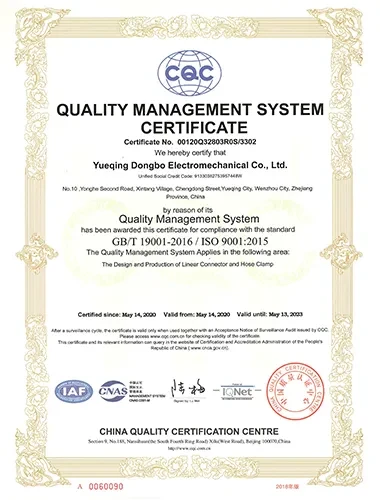
● ISO 9001:2015 — foundation quality management system across all production
In addition, our automotive production cell is operated in alignment with IATF 16949 practices (PPAP, APQP, 8D), and our medical cell follows ISO 19227 cleaning validation requirements
where the program demands it.
Every order produced under these certifications ships with full material traceability (raw material certificates traceable to mill heat number), dimensional inspection reports (CMM,
optical, or hand measurement as appropriate), surface finish verification, and process documentation. AS9102 First Article Inspection Reports are standard on aerospace work. Cleanroom-prep
packaging is standard on medical and semiconductor parts. We welcome customer audits. Our facility is audit-ready, and our quality records are current.
How to Start Your CNC Project With Your China CNC Machining Manufacturer
Upload 2D or 3D CAD files (STEP, IGES, PDF, DWG) through our encrypted portal. Mutual NDA signed within one business hour.
Our engineering team reviews drawings, confirms tolerances, materials, surface finishes, and recommends DFM improvements that reduce cost and lead time.
You receive a complete quote with DFM feedback, lead time, inspection plan, and shipping terms within 12 business hours.
What Engineering Buyers Say About Our China CNC Machining Manufacturer
Frequently Asked Questions for Engineering Buyers
Lorem ipsum dolor sit amet consectetur adipisicing elit.
Q: How much does CNC machining at a Chinese manufacturer typically cost?
CNC machining cost depends on six variables — material, geometric complexity, tolerance, surface finish, quantity, and lead time — so a single price doesn't exist. As benchmarks from our recent shipments: a 50 mm aluminum 6061-T6 bracket with ±0.05 mm tolerance and Type II anodizing runs roughly $8 to $14 per piece at quantity 100. A titanium aerospace bracket with ±0.005 mm critical features, AS9102 documentation, and certified material runs roughly $85 to $180 per piece at quantity 50. A stainless steel precision shaft for surgical robotics runs roughly $35 to $90 per piece at quantity 50, including passivation and cleanroom packaging. Send us a drawing and we will return a complete itemized quote within 12 business hours — including material, machining, finishing, inspection, and shipping cost broken out separately so you can benchmark against your domestic supplier honestly.
Q: What is your typical lead time as a China CNC machining manufacturer?
Lead time depends on quantity, complexity, and finishing requirements. Prototype quantities of 1 to 10 pieces typically ship in 5 to 10 working days. Small production runs of 50 to 500 pieces typically ship in 2 to 3 weeks. Production runs in the thousands typically ship in 3 to 5 weeks, depending on capacity and surface finishing. Once parts ship from our Dongguan facility, international air freight to the United States or Europe runs 3 to 5 business days door-to-door via DHL, FedEx, or UPS. Ocean freight and consolidated LCL shipping are available for cost-sensitive production work. Lead times and shipping options are confirmed in writing with your quote, so you can plan your inventory and launch schedule with confidence.
Q: How do you protect my drawings, designs, and intellectual property?
Intellectual property protection is one of the most important questions our customers ask, and we take it seriously. MID Precision signs mutual non-disclosure agreements (NDAs) on request — we sign yours, or we provide ours, before any drawing exchange. Drawings and CAD files are stored on access-controlled internal servers, distributed only to the specific engineers and machinists working on your project, and never shared with sub-contractors without your written approval. We do not maintain a public "showroom" of customer parts, and we do not use customer parts in marketing without explicit written permission. Our China-based legal structure allows enforceable IP commitments under Chinese law, and our 30-year track record with US, EU, and Israeli OEM customers confirms our reliability on this point in practice, not just on paper.
Q: Do you offer OEM and ODM services, and what is the difference for my project?
Yes. MID Precision is a full-service OEM and ODM partner. OEM (Original Equipment Manufacturing) means you provide finished engineering drawings and specifications, and we produce parts exactly to your print under your brand or as direct supply to your assembly. ODM (Original Design Manufacturing) means our engineering team participates in part design, material selection, DFM optimization, or full-design work for clients who do not have in-house mechanical engineering. In either model, your IP is protected by signed NDA, your drawings stay confidential, and the parts ship under your purchase order — not ours. Most of our Fortune 500 aerospace and medical clients use the OEM model; most of our startup and small-OEM clients use ODM. Tell us where you sit on that spectrum and we will quote accordingly.
Q: What is the minimum order quantity at MID Precision?
There is no minimum order quantity. We routinely produce one-piece prototypes, five-piece R&D samples, and fifty-piece pilot batches for engineering customers who need to validate a design before committing to full production. Single-piece prototype quotes typically come back the same business day. We do not penalize low-volume orders with disproportionate setup fees — our small-batch CNC cell is built around the realities of engineering development, where designs change weekly and the next revision is more important than the lowest unit cost. As your design freezes and your volumes ramp, the same parts move to our production cell with identical process documentation and the same project manager, so you do not have to re-qualify your supplier for full-rate production.
Q: Can you handle surface finishing in-house, or do you sub-contract it?
The majority of surface finishing is performed in-house at MID Precision, including bead blasting, sandblasting, tumbling and vibratory deburring, manual polishing, mirror polishing, brushing, and passivation per ASTM A967. Anodizing (Type II and Type III hardcoat), electroplating (nickel, chrome, gold, silver, tin, zinc), powder coating, electropolishing, and DLC coating are performed by long-term partner suppliers within our local Dongguan industrial cluster — typically within a 30-minute drive from our facility — under our direct quality oversight and audit. We coordinate all finishing operations as a single project, so your purchase order is for a finished part, not a machined blank that still needs to be sent out for coating. This single-source approach eliminates a major source of delivery delay and quality finger-pointing.
Q: Why should I choose MID Precision over my current CNC machining supplier?
Three reasons our customers cite when they switch to MID Precision. First, our certification stack — AS9100D, ISO 13485, ISO 9001 — lets a single supplier handle aerospace, medical, and industrial OEM/ODM work without forcing you to onboard multiple vendors. Second, our 30-year track record on tight-tolerance and complex 5-axis work means we consistently deliver parts that other shops quote and then fail to produce. Third, our pricing reflects the reality of factory-direct manufacturing in Dongguan — typically 30 to 50 percent below comparable domestic US or EU CNC machining work, without compromising tolerances, traceability, or delivery. The best way to evaluate us is to send us a drawing your current supplier is struggling with and let our quote, our DFM feedback, and our first article performance make the case for themselves.
Why OEMs Choose MID Precision as Their China CNC Machining Manufacturer
-
Mid (Dongguan) Intelligent Manufacturing Co., Ltd. — operating worldwide as MID Precision — is a factory-direct China CNC machining manufacturer headquartered at No. 22 Jiaoping Road, Tangxia Town, Dongguan, Guangdong. As a dedicated OEM/ODM partner, we were established to solve one problem: most engineering buyers who try to source CNC parts from China end up paying twice — once for the cheap parts that fail incoming inspection, and again for the urgent rework from a domestic shop. MID Precision exists so that does not happen to you.

-
Our 7,500 m² production facility houses more than 40 CNC machining centers in-house. The fleet includes a 9-machine simultaneous 5-axis CNC cell for contoured aerospace structures and surgical robotic geometries; 5 FANUC Robodrill α-D21MiA and α-D21MiB Plus high-speed precision machining centers — Japan's reference platform for micron-level repeatability on aluminum and small-feature work; 18 production-grade 3-axis vertical machining centers, several configured with 4th-axis rotary tables for compound-angle parts; and Doosan turn-mill compound centers paired with dedicated CNC lathes for precision shaft and connector work. Inspection is performed in our metrology lab equipped with Mitutoyo three-coordinate measuring machines (CMM), Mitutoyo optical comparators for 2D vision inspection, and Mitutoyo precision height gauges, calibrated annually under ISO traceability. Our engineering team of 24 includes 6 senior CAM programmers fluent in Mastercam, Siemens NX CAM, and Autodesk PowerMill.

-
Beyond our in-house capacity, MID Precision maintains a qualified network of audited supply partners — including specialist Swiss-style turning shops and certified surface treatment vendors — all operating under our QES quality system. This network extends our effective throughput by two to three times on demanding OEM/ODM programs without diluting our single-point quality accountability. In our most recent fiscal year, we shipped more than 520,000 parts across 1,400 unique part numbers to customers in 52 countries. Repeat-customer revenue exceeded 78% of total revenue — a number we publish openly because we believe it is the single most honest measure of a precision manufacturer's quality.

-
What sets MID Precision apart is the certification stack we operate under. We hold AS9100D for aerospace and ISO 13485 for medical devices simultaneously — a combined industry-specific audit footprint that almost no Chinese CNC machine shop maintains together. Both sit on top of our foundation ISO 9001:2015 quality management system. That stack is your evidence that when we say we do aerospace or medical work, we have the audit trail to prove it.


Latest News