



In the field of CNC machining, surface roughness is an "invisible yardstick" for measuring the functionality and aesthetic value of parts - from the antibacterial properties of medical devices to the reliability of aerospace seals, micron-level texture differences often determine the success or failure of a product. With the upgrading of precision manufacturing needs, how to balance machining efficiency with key roughness indicators such as Ra (arithmetic mean height) and Rz (maximum peak-to-valley height) has become a core challenge for engineers to overcome. Modern CNC technology has successfully controlled the surface finish below 0.4μm through intelligent tool path optimization, dynamic cutting parameter adjustment, and nano-level polishing processes, while eliminating common tool marks and burrs in traditional machining. This article will analyze the impact of roughness on precision parts from the perspective of practical applications.
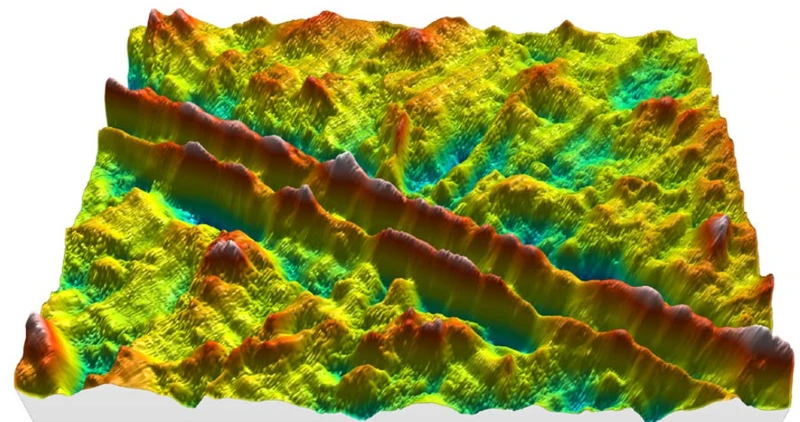
What does it mean in practice if the roughness is larger or smaller? In other words, what physical impact does it bring? For example, for the bearing mating surface, what does choosing Ra3.2 or Ra1.6 affect? If you are used to choosing the roughness value according to the manual recommendation or experience, and have never thought about this question. Then I hope this article can open up your mind.
We will not choose a roughness casually. The selection of a specific roughness must be to meet a certain function and improve a certain performance.
For a single part, in addition to affecting the appearance and touch of the part, the size of the roughness mainly means the size of the stress concentration. From a microscopic perspective (as shown in the previous picture), the larger the roughness, the greater the height difference of the pits and the more gullies. In the area subjected to high tensile stress loads, there is stress concentration at the gullies, which is also the origin of cracks. So if you want to improve fatigue strength, you have to choose a small roughness.
More often, roughness is used for matching between two parts. Here, roughness can affect many factors, such as friction coefficient, wear, deformation, heat conduction, leakage, adhesion, etc.
The smaller the roughness, the smaller the friction coefficient and friction resistance. Small roughness is required between fast-rotating parts, such as between the rolling elements and raceways of bearings.
With small roughness, the microscopic "small peaks" will not be very high or numerous. When there is vibration or high pressure between the two parts, there will be no change in connection stiffness and micro-change in matching dimensions due to the flattening and compression deformation of the peaks, which will also reduce the occurrence of micro-motion wear.(MID is a leading CNC precision parts processing service provider, focusing on providing customers with solutions to surface roughness.)
The smaller the roughness, the better the surface fit of the two parts, the better the heat conduction effect, and the higher the roughness requirements in some places where heat dissipation needs to be improved. In addition, small roughness will also reduce the possibility of oil leakage.
For adhesion, a rough surface can provide more surface area for the adhesive, which helps to improve the bonding strength, but if the surface is too rough, the overall contact area may be reduced, and air may be trapped at the joint surface, thereby weakening the bonding strength. So choose moderate.
In summary, the choice of roughness varies from application to application. It may not matter in some applications and locations, but it is crucial in the occasions and applications mentioned above. Before choosing the roughness, it is worth thinking about what my purpose is.(来源:iMechanics机械)


