



A threaded center hole, also known as the "C-type center hole" in our country or the "D-type center hole" in the DIN standard, is commonly seen in many mechanical structures and drawings.
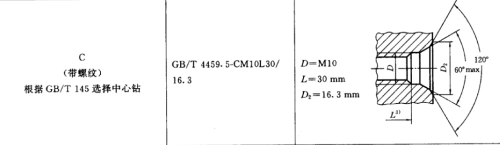
The threaded center hole expands the functionality of the center hole by adding threads, enabling it to serve more purposes. So, when should we choose a threaded center hole? Let's discuss this briefly, and I hope it will be helpful to you.
Fixing Components at the Shaft End
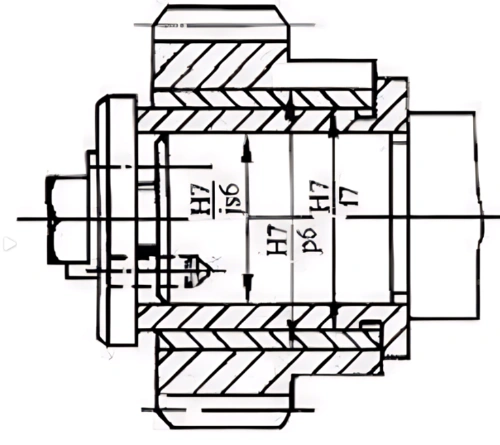
With a threaded center hole, it becomes easy to install components such as end plates, sprockets, timing pulleys, couplings, sensors, etc., at the shaft end.
Lifting Holes for Hoisting
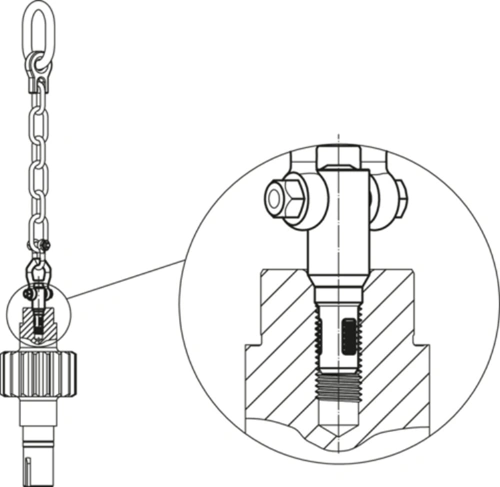
When the part weighs over 15 kg, it's ergonomically not recommended for manual handling. In such cases, if there is a threaded hole at the shaft end, you can install a lifting ring or hoisting bolt to use a crane for lifting.
Assisting in Disassembly and Stress Points
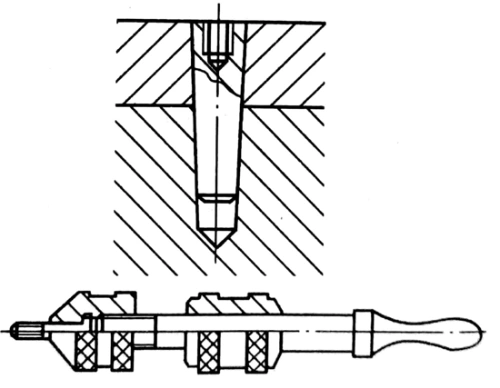
For some blind hole fits or interference-fit parts without external application space for force, disassembly can be very difficult when they need to be replaced later. If a center hole needs to be processed on them, the threaded center hole can be used to install a process bolt. By applying uniform force (e.g., with a slide hammer puller), the interference-fit parts can be pulled out. This works similarly to using a puller to remove a cylindrical pin with internal threads, as shown in the diagram.
Sealing the Center Hole for Protection
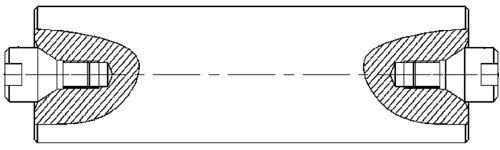
When there are high requirements for the repeated accuracy of a center hole, or when a previously reworked center hole needs protection, a plug can be screwed into the threaded center hole. This will protect and seal the center hole, preventing foreign objects from entering or coolant residue from contaminating it, thus maintaining the accuracy of the center hole for the next process or usage cycle.(文章来源:iMechanics机械)


