



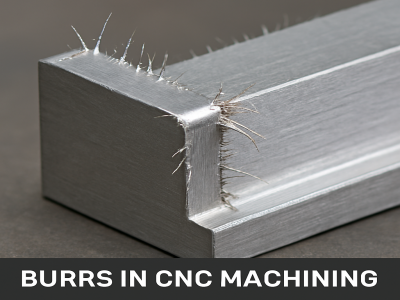
In the world of precision metal machining, one tiny troublemaker always finds its way in - burrs.
These small, unwanted edges are formed during processes like milling, drilling, or turning. Left untreated, burrs can harm product quality, reduce safety, and increase production costs. Let's dive into everything you need to know about deburring and how to do it right.
🔍 What Are Burrs - and Why Do They Matter?
Burrs are rough edges or protrusions left on a workpiece after machining. They are especially common when working with ductile materials like aluminum, copper, and stainless steel.
❗ Why You Should Remove Burrs:
🧩 Assembly Issues: Burrs interfere with tight fits and tolerances.
⚠️ Reliability Problems: They create stress points and risk part failure.
🩹 Worker Safety Hazards: Sharp burrs can cut hands during handling.
🎯 Surface Quality Concerns: Burrs ruin aesthetics and functional surfaces - critical in aerospace, medical, and electronics industries.
⚠️ Note: It's nearly impossible to eliminate burrs during machining. That's why post-process deburring is essential.
🔧 Deburring Methods: The 4 Main Categories
To choose the right deburring method, you need to match the technique with your part's material, geometry, and precision requirements.
1️⃣ Basic Deburring – "Hard Contact"
For: Quick, rough removal on low-precision parts
Techniques:
Chamfering tools
Hand filing or scraping
Belt grinding
✅ Pros: Fast and low-cost
❌ Cons: Leaves tool marks, labor-intensive
2️⃣ Standard Deburring – "Soft Contact"
For: Moderate surface quality improvement
Techniques:
Sanding belts
Polishing wheels
Nylon abrasive brushes
✅ Pros: Smooths surfaces, removes burrs gently
❌ Cons: May struggle with complex shapes
3️⃣ Precision Deburring – "Smart Methods"
For: High-precision parts, delicate geometries
Techniques:
Electrochemical deburring (ECM)
Electrolytic grinding (ECG)
High-pressure fluid deburring
✅ Pros: Accurate and non-damaging
❌ Cons: Higher cost and process complexity
4️⃣ Ultra-Precision Deburring – "Advanced Tech"
For: Aerospace, medical, and ultra-fine tolerances
Techniques:
Thermal deburring (TEM)
Magnetic deburring
Abrasive flow machining (AFM)
Ultrasonic or laser-based methods
✅ Pros: Highly consistent, automation-ready
❌ Cons: Expensive, requires special equipment
✅ Conclusion: Find the Right Deburring Strategy
The right deburring solution depends on:
Material type
Tolerance and surface requirements
Production volume
Budget and equipment availability
Choosing the right method ensures better quality, safety, and cost control in your manufacturing process.
📞 Need Professional Deburring Help?
MID specialize in precision CNC machining and custom deburring solutions for industries like aerospace, medical devices, and semiconductors.


