



In precision mechanical assembly, the installation direction of round nuts (GB/T812 round nut standard) is often a subject of discussion. Below, I have summarized the key points for your reference.
1. Structural Features of Round Nuts
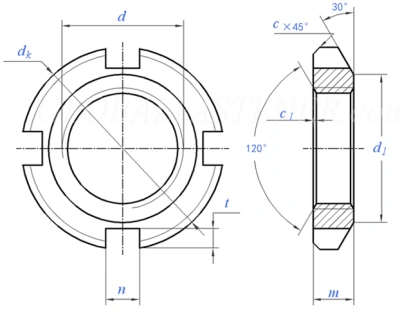
One side of the round nut has a large 30° chamfer (30-degree chamfer nut), which is mainly used for shaft axial fixing.
2. Pairing with Lock Washers
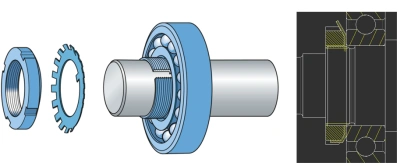
In practice, to achieve anti-loosening (anti-loosening nut method), round nuts are usually used together with a lock washer (GB/T858 lock washer):
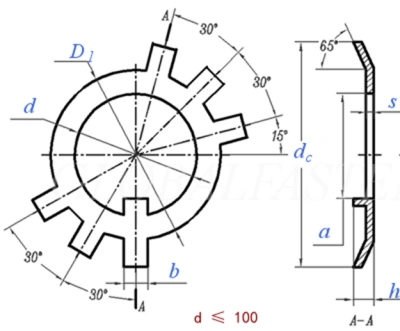
The washer has multiple tabs and a 65° angle;
According to the standards, the D1 dimension of the washer matches the d1 dimension of the round nut;
Therefore, the large chamfered side of the round nut must pair with the lock washer.
👉 In other words, when a round nut and lock washer are used together, the chamfered side should face the clamped component.
3. When Lock Washers Are Not Used
Sometimes, lock washers are not applied. For example:
Using double round nut locking for anti-loosening;
No anti-loosening requirement, only tightening a single round nut.
Does the installation direction still matter in such cases? The answer is: yes, there are still considerations.
4. Additional Considerations for Installation Direction
Nut perpendicularity tolerance:
The GB/T812 standard specifies perpendicularity requirements for the chamfered side, but not for the opposite side.
Bearing lock nut installation:
In assemblies such as bearings, it is generally desirable that the component pressed against the bearing does not extend beyond the inner race diameter. In such cases, placing the chamfered side toward the clamped component is more reasonable.
If the assembly has no such limitations, then the installation direction is not strictly critical.(文章来源:iMechanics机械)


