




If you're pulling quotes for tight-tolerance parts this year, you've probably noticed two things. The numbers got bigger. And the shops you used to lean on for quick turnarounds are stretched thin. Welcome to high precision CNC machining in 2026 - a market reshaped by tariffs, reshoring, and the simple fact that tight tolerances are now table stakes in more industries than they were two years ago.
We work with a lot of mid-market buyers who used to send precision work overseas and now want it back stateside. The honest conversation usually starts the same way: "What's this really going to cost me, and how do I know the shop can actually hold the tolerance?" That's what this guide is for.
What "High Precision" Actually Means in 2026
The phrase gets thrown around loosely, so let's pin it down. Standard CNC work in most shops holds tolerances around ±0.01mm. That's fine for brackets, housings, and general industrial parts. High precision CNC machining starts where that ends - typically around ±0.005mm and tighter. Once you're inside ±0.003mm, you're in the territory aerospace and medical buyers live in. Industry guides published in early 2026 put standard aerospace tolerances at ±0.005mm or tighter, and the leading precision shops now hold 1–3 microns on the right parts.
Here's how high precision CNC machining tolerances actually break down in practice:
| Tolerance Band | What It's For | Typical Cost Impact |
|---|---|---|
| ±0.01mm | General brackets, housings, fixtures | Baseline |
| ±0.005mm – ±0.01mm | Industrial assemblies, fluid components | 2–3x baseline |
| ±0.003mm – ±0.005mm | Aerospace structural, medical instruments | 3–5x baseline |
| <±0.003mm (1–3 μm) | Optics, semiconductor, precision metrology | 5x+ baseline |
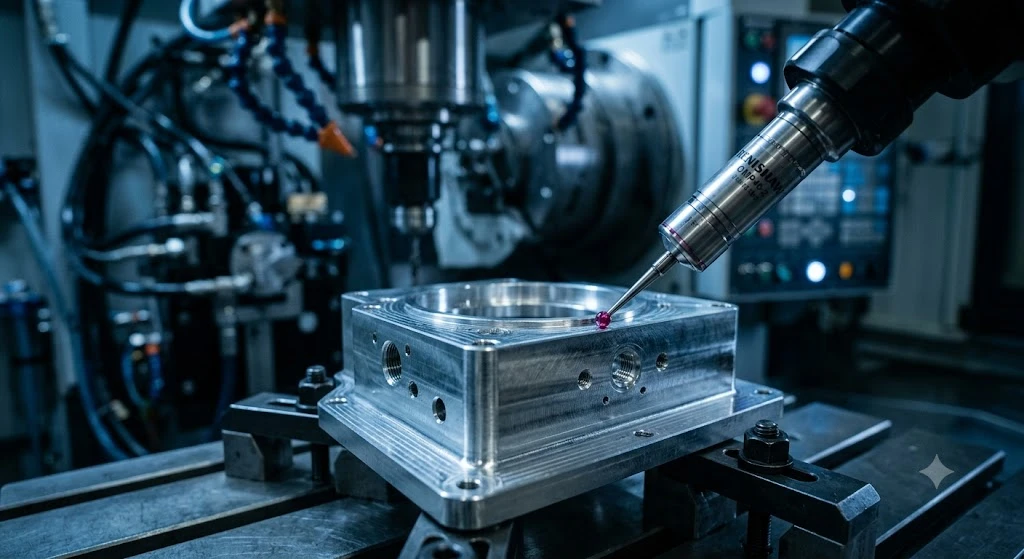
A point most generic articles miss: machine tool accuracy is not the same as part accuracy. A spindle rated to ±0.005mm doesn't deliver that on every part. Thermal drift from warm coolant, tool wear across a 50-piece run, fixturing stress - all of it stacks up. A serious precision shop controls those variables. An average one calls the print "tight" and pads the quote.
Why Domestic Sourcing Is Suddenly Math, Not Sentiment
For years, sending precision work overseas was about unit cost. That math has shifted. Section 232 tariffs on imported steel and aluminum are still active, derivative product rules tightened earlier this year, and lead times for offshore precision parts often run 8 to 12 weeks once you factor in freight and inspection cycles. Domestic shops with vertical integration are quoting 2 to 4 weeks on comparable work, according to industry reporting from early 2026.
The Reshoring Initiative's 2025 survey put workforce availability, supply chain interruption risk, and government incentives at the top of reshoring decision drivers - and roughly 88% of jobs reshored in 2024 landed in technology-intensive categories. That's exactly where high precision CNC machining lives.
What this means at the buyer level: stop comparing unit price line-by-line. Run a Total Cost of Ownership calculation. Add freight, duties, inspection overhead, rework risk, expedited shipping when something slips, and the cost of carrying safety stock. We've seen jobs where the "cheap" offshore quote landed 35% above the domestic option once the full spreadsheet was filled out.
What Actually Drives the Cost of High Precision CNC Machining
Buyers ask us all the time why two shops quote the same part 40% apart. It's almost never markup. It's how the print gets interpreted and what the shop has to do to hit it. The real cost drivers are predictable.
Tolerance band is the loudest one, but not always the biggest. A part with one critical ±0.005mm feature and everything else at ±0.01mm costs far less than a part where every dimension is called out tight. The lever on your print: tag tight tolerances only on features that have to fit, seal, or function. Everything else stays general.
Material drives high precision CNC machining cost more than people think. Holding ±0.005mm on 6061 aluminum is one job. Holding the same tolerance on Inconel 718 or Ti-6Al-4V is a different animal - slower feeds, faster tool wear, more inspection stops. The metal itself raises the bill before the first chip flies.
Setups and fixturing add up fast. Every time a part comes off the machine and gets re-fixtured, you pay for setup time and you accumulate stack-up error. Geometry that machines from one or two sides is dramatically cheaper than something needing four or five.
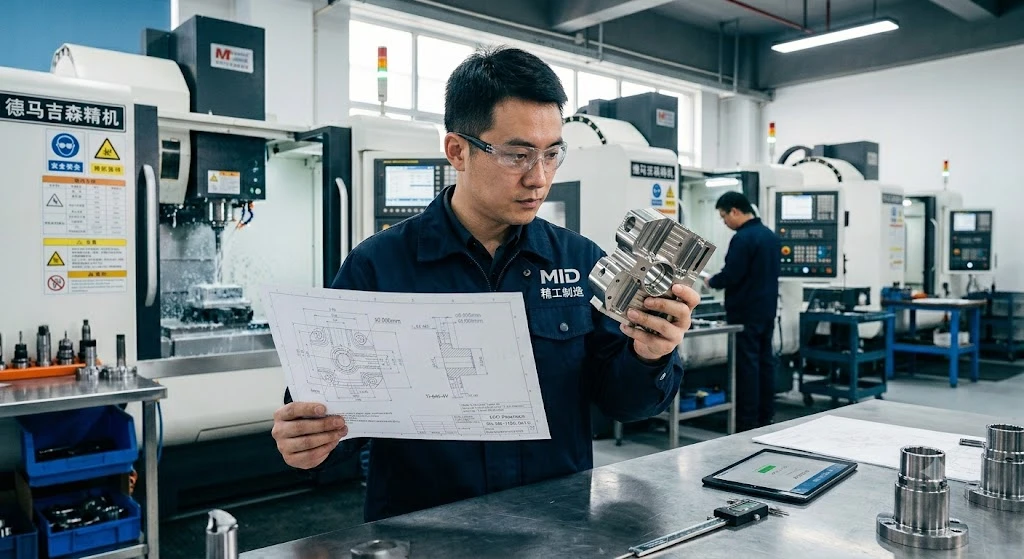
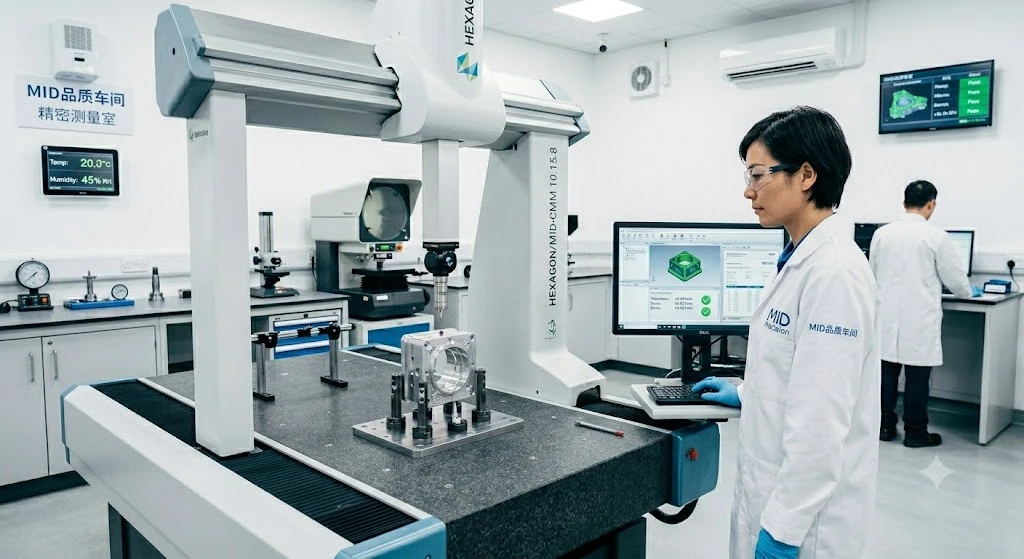
Inspection overhead is the cost most buyers underestimate. Tight tolerances require traceable metrology - CMM time, surface finish gauges, sometimes optical comparators. There's an old machine-shop principle called the "rule of 10": your measurement equipment should resolve at least ten times finer than the tolerance you're holding. For ±0.005mm work, that means metrology repeatable to ±0.0005mm. That equipment isn't cheap, and you're paying for a slice of it in every quote.
| Cost Driver | Why It Adds Cost | Buyer's Lever |
|---|---|---|
| Tolerance band | Tighter = slower feeds, more inspection stops | Tag tight tolerances only on critical features |
| Material | Hard alloys slow cutting and wear tools faster | Spec the right alloy, not the strongest one |
| Setups | Each re-fixture adds time and stack error | Design for fewer machine sides |
| Inspection | Traceable metrology takes time and equipment | Match QA depth to actual application risk |
| Surface finish | Sub-Ra 0.8finishes need extra passes or post-processing | Call out fine finishes only where they matter |
How to Spot a Real Precision Shop From a Generic One
The phrase "high precision CNC machining services" sits on basically every machine shop website in America. Here's how to tell which ones can actually deliver.
Start with certifications, but don't stop there. AS9100D matters if you're in aerospace. ISO 13485 matters if you're in medical. ISO 9001:2015 is the baseline for general industrial work. A certified shop has put real money and process discipline into traceability, calibration, and corrective action - which is exactly what you need when something goes sideways.
Look at inspection capability honestly. Ask what CMMs they run, how often calibration happens, and whether the inspection room holds stable temperature. A shop claiming ±0.003mm without a temperature-controlled inspection environment is either bluffing or fighting their own equipment.
Ask about DFM feedback before you ask about price. The shops that catch problems early save you the most money. At MID Precision, we send roughly one in four incoming prints back with at least one feature or tolerance flagged - usually a corner radius that can't be milled as drawn, or a tolerance called out tighter than the part's actual function requires. That early conversation is where the real savings live, before a single chip is cut.
Mill certs and material traceability matter more than they did two years ago. With supply chains scrambled and tariff classifications shifting, you want to know exactly what alloy is in your part and where it came from. A serious shop hands over the paperwork without being asked.
Common Mistakes That Inflate Your Quote
Two patterns show up in incoming RFQs over and over. Both are easy to fix once you see them.
Over-toleranced prints. Engineers play it safe by applying tight tolerances across the whole part. Every dimension at ±0.005mm turns a $40 part into a $120 part, and most of those features don't need it. Go through the print, flag the features that genuinely affect fit, seal, or function, and relax the rest.
Vague surface finish callouts. A note that just says "smooth finish" doesn't tell the shop anything. Call out a specific Ra value where the surface actually matters - usually mating surfaces, sealing faces, or anywhere fluid flows. Everywhere else, as-machined is fine.
Locking material by trade name with no alternates. If your print says "must be 7075-T6" but the application doesn't need that strength, you're paying a premium for nothing. List acceptable alternates when the design allows.
FAQ
What's the realistic tolerance limit for production CNC machining?
Most production work comfortably holds ±0.01mm to ±0.05mm. Specific features can hit ±0.003mm or tighter when geometry and material cooperate, but expect cost and lead time to climb sharply. Sub-micron work exists, but it's a specialty corner of the industry, not a default.
How much does high precision CNC machining cost compared to standard CNC work?
There's no universal number - material, geometry, and volume all move it. As a directional benchmark, moving from ±0.01mm general tolerances to ±0.005mm tight tolerances typically runs 2–3x the baseline. Sub-±0.003mm work lands at 3–5x or higher.
Do I really need an AS9100 or ISO 13485 shop if my parts aren't flying or going into a patient?
Probably not, but the discipline that comes with those certifications - traceability, calibration, corrective action - shows up in part quality even on non-regulated work. If your application is high-stakes industrially, certified shops are usually worth the premium.
How do I get a faster quote on a precision part?
Send a clean 3D model (STEP or IGES), a 2D print with tolerances and finishes clearly called out, material spec with acceptable alternates if you have them, and the quantity. A shop that has all that can usually quote in 24–48 hours. Vague RFQs sit in someone's inbox.
The Bottom Line
High precision CNC machining isn't a black box. The shops that win in 2026 are the ones with disciplined process control, real inspection capability, and an engineering team that calls you about problems before they become scrap. The buyers who win are the ones who spec only the tolerances that matter, source domestically when the TCO math supports it, and partner with shops that earn the work by catching issues early.
If you're working through a tight-tolerance project and want a second set of eyes on the print before it goes out for quotes, that's the kind of conversation we have every week at MID Precision. Send the file over - we'll tell you straight what's drivable and what's costing you money for no reason.


