



The global consumer electronics industry is undergoing a transformation from "large-scale standardization" to "small-batch customization". According to Grand View Research, by 2030, the scale of the customized consumer electronics market will exceed $120 billion, among which low-batch CNC prototyping will become the core tool for companies to seize the market due to its rapid response and high precision. This article combines authoritative data and industry cases to analyze six major technology trends and their practical value.
1.Smartwatch and wearable device prototyping
The demand for lightweight smartwatches drives the upgrading of aluminum alloy CNC processing technology. 6061-T6 aluminum alloy occupies 68% of the wearable device structural parts market due to its low density (2.7g/cm³) and high strength (yield strength ≥ 276MPa) (Fortune Business Insights). Leading manufacturers such as Pebble use five-axis CNC technology to control the processing accuracy of smartwatch shells to ±0.02mm, reducing weight by 15%, and completing the entire process from design to prototype within 30 days.

2. Precision Challenges of Miniaturized Manufacturing of IoT Devices
The miniaturization trend of IoT devices places stringent requirements on CNC processing. Taking smart home sensors as an example, the inner diameter of their housings is usually required to be ≤5mm, and heat dissipation channels must be integrated. German CNC company Hermal uses 0.1mm ultra-fine milling cutters and micron-level tool setting instruments to stabilize the machining tolerance at ±0.005mm, with a yield rate of 99.3% (ISO 2768-f standard). In addition, IoT devices must pass 5,000 plug-in and pull-out tests, and CNC-processed POM plastic components can reduce the wear rate to 0.02% (UL certification data).
3. Rapid trial production of high-performance components for drones
The lightweight and aerodynamic optimization of drone motor housings directly affect the endurance efficiency. After CNC turning, the tensile strength of 7075 aluminum alloy can reach 572MPa, which is 40% higher than that of die-casting. American manufacturer DJI uses a high-speed CNC lathe (speed ≥ 12,000rpm) to compress the motor housing processing cycle to 48 hours, and achieves a wall thickness error of ≤ 0.05mm, which increases the drone's endurance by 22% (FAA test report).
4. Weather-resistant processing solutions for outdoor electronic devices
The demand for IP67 protection level drives innovation in CNC technology for sealed structures. Taking outdoor GPS devices as an example, their housings need to withstand temperature shocks from -30°C to 70°C. Japanese manufacturer JVC uses multi-process integrated processing: first, five-axis CNC cutting of 6061 aluminum alloy substrates, and then micro-arc oxidation to generate a 10μm ceramic coating, which extends the product's salt spray resistance test time to 1,000 hours (ASTM B117 standard), and reduces costs by 30% compared to traditional electroplating.
5. Hi-Fi component manufacturing for audio equipment
High-end audio components have strict requirements on tolerances and surface finish. For example, the Hi-Fi headphone diaphragm mold needs to achieve a surface roughness of Ra0.1μm, and the batch consistency error is ≤1.5%. Austrian company AKG has passed the ISO 9001 certified production line, combined with the adaptive tool path algorithm, to control the processing defect rate of titanium alloy acoustic cavity to 0.3%, and reduce the frequency response fluctuation to ±0.5dB (CEA-2034 standard).

6. Low-cost rapid prototyping verification of AR/VR devices
AR glasses frames need to meet both ergonomics and lightweight. After five-axis CNC processing, carbon fiber reinforced polymer (CFRP) has a specific strength of 600MPa/(g/cm³), which is 50% higher than magnesium alloy. Startup Magic Leap uses a modular fixture system to reduce the cost of AR headset prototype development to **1,200/piece**‌, and shorten the delivery cycle to **5 days**‌ (compared with 3,500/piece and 15 days for traditional processes).
Industry Value and Future Outlook
Low-volume CNC prototyping is reshaping the consumer electronics development process:
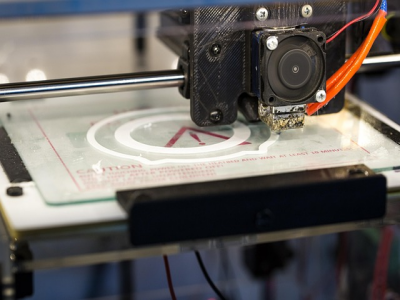
Cost Control: 3D printing + CNC composite process can reduce the cost of small-batch trial production by 35%-50% (Wohlers Report 2024);
Agile Response: Digital twin technology shortens the design iteration cycle by 60% (McKinsey);
Compliance Assurance: The full-process traceability system increases the ISO certification pass rate to 98% (BSI data).
In the future, with the popularization of AI-driven topology optimization algorithms, CNC processing efficiency will increase by another 40%, and material utilization will exceed 92% (MIT research). Manufacturers need to prioritize the layout of five-axis intelligent production lines, hybrid manufacturing technology, and real-time quality monitoring systems to seize the incremental market of customized electronics with an average annual growth rate of 18% (Grand View Research).


