



In the wave of sixth-generation aircraft research and development, ceramic matrix composites (CMC) have become the core option of thermal protection systems with strength comparable to metal and a density of only 2.3g/cm³. However, due to the processing ban on the use of cutting fluids, 85% of the world's aviation manufacturers have experienced a decline in yield in mass production. This article analyzes the process breakthrough path under special working conditions through the empirical processing of a hypersonic aircraft tail wing.
Processing products
Material: Ceramic matrix composites (CMC)
Processing features: High-precision plane milling (dimensional tolerance ±0.005mm)
Application areas: New aircraft high-temperature structural parts, propulsion system insulation components
Processing background and industry pain points
Material properties and needs
Ceramic matrix composites have become the core material for the development of sixth-generation aircraft due to their low density (2.3g/cm³), high temperature resistance (>1600℃) and nearly zero thermal expansion coefficient. However, its processing requirements are extremely stringent:
Absolutely no oil on the surface (cutting fluid is prohibited)
Avoid micro cracks (<5μm level defect control)
Processing efficiency must meet aviation mass production standards
Traditional process bottlenecks
Dry cutting dilemma: tool life is only 2-3 hours, single piece processing takes more than 8 hours
Burr contamination: mechanical stress causes edge delamination, burr height > 50μm
Cost out of control: qualified rate is less than 40%, rework cost accounts for more than 60% of the total cost
MID solution
Technology combination
1.Multi-purpose ultrasonic green engraving and milling system
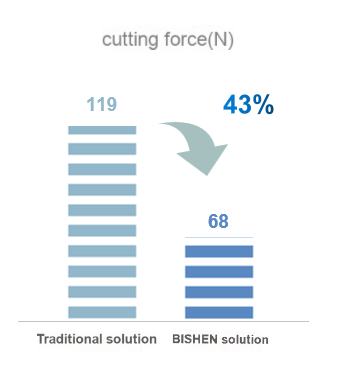
20kHz high-frequency vibration tool, axial cutting force reduced by 43%
Integrated supercritical CO ₂Cooling (-78℃ low temperature dust removal)
2.Process parameter optimization
Layered cutting strategy (0.5μm per layer)
Adaptive feed speed adjustment (50-200mm/min dynamic matching)
Implementation effect
Industry application value
This solution has passed the process verification of Aviation Industry Corporation of China and has been successfully applied to the mass production of CMC tail fins of a certain type of hypersonic aircraft:
Mass production stability: Continuous processing of 200 pieces with size fluctuation <±3μm
Cost optimization: Comprehensive processing cost reduced by 62% (including tool and energy consumption)
Environmental benefits: Zero cutting fluid throughout the process, carbon emissions reduced by 89%
About MID
MID Precision specializes in precision machining of aviation-grade composite materials. It has a 7,500-square-meter constant temperature and humidity production workshop, focusing on key areas such as aircraft hot end components and rocket engine sealing rings, and provides one-stop processing services from blank processing to finished product delivery.
Based on the customization capability of special machines for superhard materials, the company integrates five-axis linkage machining, ultrasonic vibration cutting and supercritical CO₂ cooling technology. In the processing of silicon carbide fiber reinforced ceramic matrix composites (CMC), the process stability has been double-verified by NADCAP special process certification and ISO9001 quality system.


