



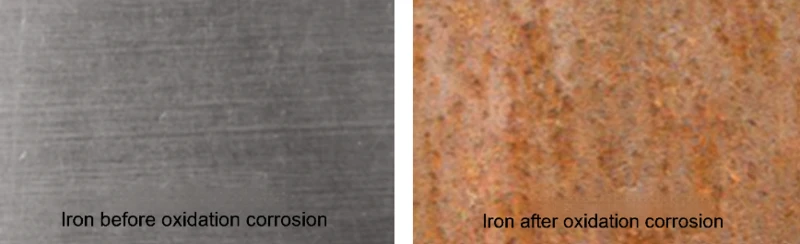
As we all know, metal products with iron as the main component usually rust if not properly protected (except stainless steel). This is because the iron atoms on the metal surface combine with oxygen in the air to produce iron oxide. Iron oxide appears reddish brown, which is the common rust, as shown in the figure below.
The reason why stainless steel does not rust is that its chemical composition contains no less than 10.5% chromium. When stainless steel is exposed to air or water, the chromium element will react with oxygen before iron and form a very dense passivation layer, thereby protecting the stainless steel matrix from further oxidation and corrosion.
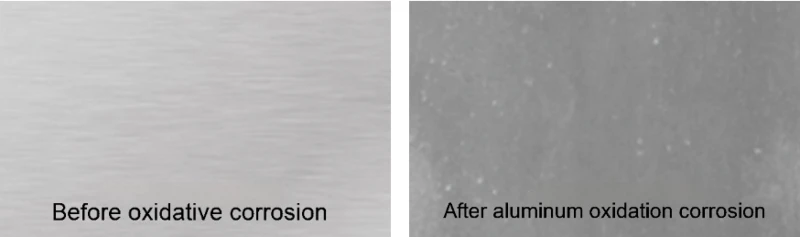
In fact, aluminum is the same as iron. Aluminum and its alloys will also react with aluminum atoms on their surface and oxygen in the air to produce aluminum oxide, but the color is gray or dark gray, not rust. However, this aluminum oxide plays the same function as chromium oxide in stainless steel, forming a protective layer on the metal surface to prevent further oxidation of the internal metal, as shown in the figure below.
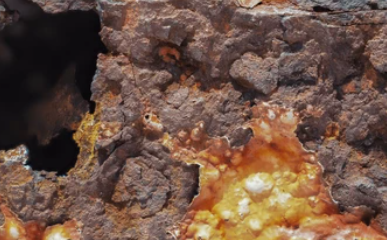
In practice, we have seen some steel parts rusting particularly badly, and some even rusting through, as shown in the figure below, while aluminum is rare. I wonder if you have a question here: Why can aluminum oxide and chromium oxide form a protective layer, but iron oxide can't?
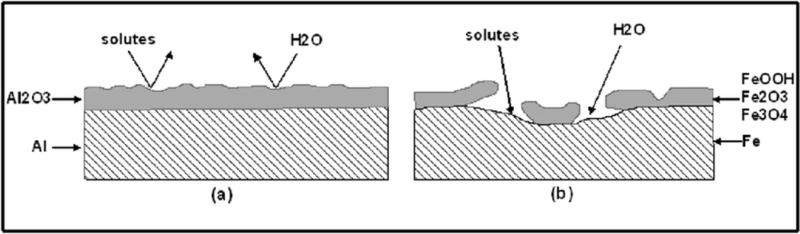
In fact, the key here is whether the formed oxide layer is dense or not. If the oxide layer is very dense, it is difficult for external corrosive compounds (such as chlorides, sulfides, etc.) to enter the interior to corrode new metals, so further corrosion will not occur. The following figure is a comparison of aluminum and iron oxides. Iron oxide is loose and porous, and it is easy to peel off, while aluminum oxide is dense and fits tightly to the substrate.
Then the question arises again, why is iron oxide not dense and not fit? This requires more in-depth knowledge of chemistry and physics to explain. Due to the complexity of the principle of rust, it is not clear in one or two sentences, but we can simply explain it:
In fact, if the air is absolutely dry (without moisture), iron oxide (whether Fe2O3 or Fe3O4) is also a stable compound that will not cause the peeling of the surface and further corrosion of the internal metal. The real reason for the rust to fall off and corrode the inside is the hydrated iron oxide Fe2O3·nH2O and iron hydroxide (FeO(OH) Fe(OH)3), which are the main components of the rust we see in daily life. After the hydrated iron hydroxide combines with iron, it expands in volume and is easy to bulge and crack. On the other hand, it also makes it unable to effectively adhere to the iron matrix and is easy to peel off. Once the glass reveals the new metal underneath, it will oxidize and rust again, and then the cycle will repeat until all the metals are rusted and corroded.
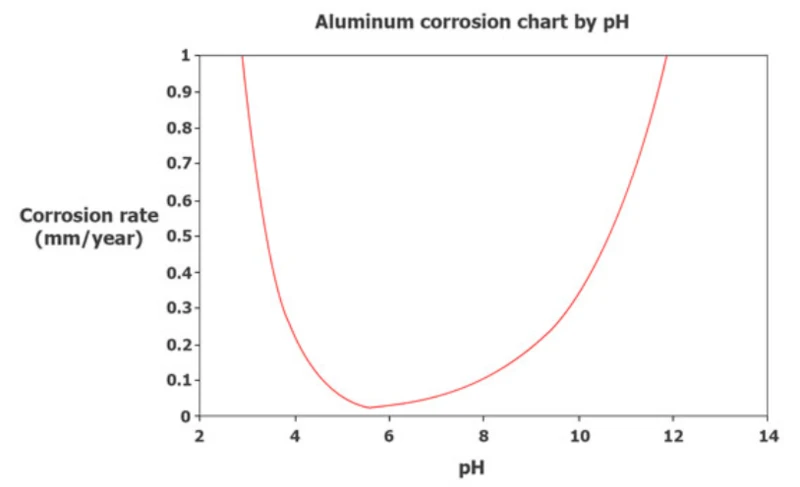
Under normal conditions, aluminum oxide will not react with water and will not "rust" like iron, but it will corrode under some harsh conditions. For example, under strong acid or strong alkali conditions, the decomposition rate of the oxide layer on the surface of aluminum will be higher than its generation rate. In order to avoid this situation, aluminum without any surface treatment should be used in the pH range of 4.5 to 8.5.
Another common cause of aluminum corrosion is electrochemical corrosion. When two different metals are immersed in water, a weak battery or circuit is formed. This causes electrons to flow between the metals, depleting the more electrochemically active of the two metals. Aluminum has a higher electrochemical potential than most other metals, as shown in the figure below. Therefore, if a circuit is formed between aluminum and mild steel or stainless steel, aluminum will quickly corrode.
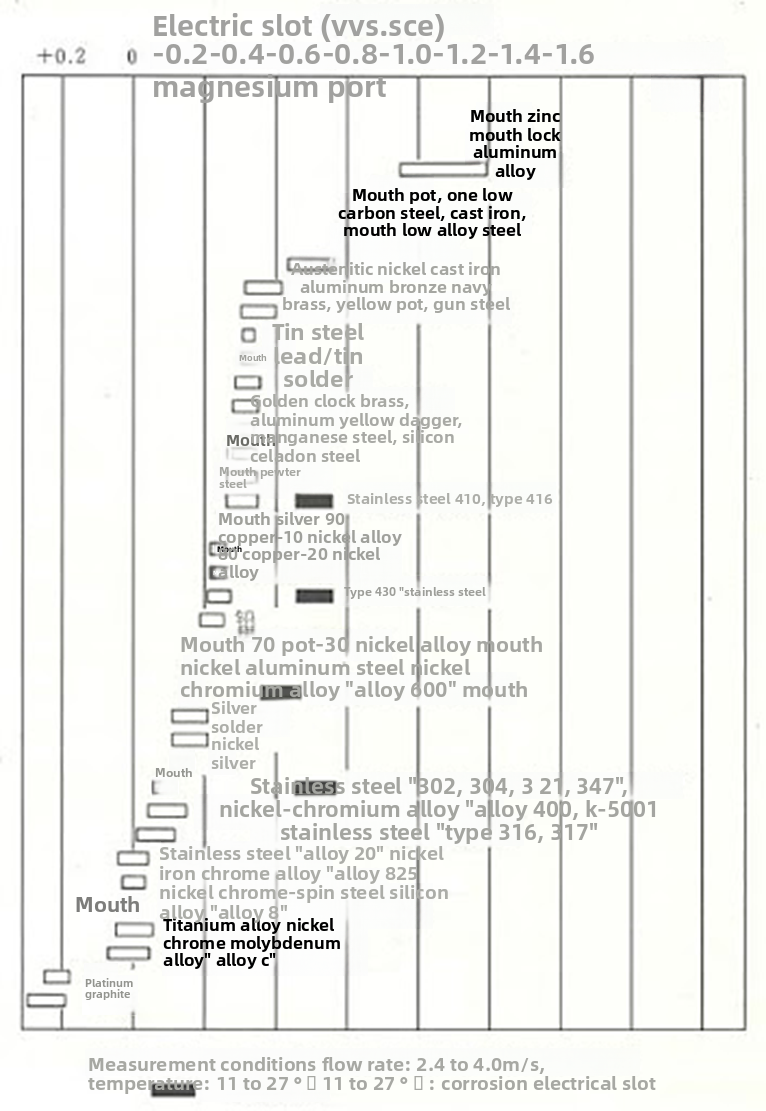
Image from the Corrosion and Corrosion Prevention Handbook
Therefore, it does not mean that aluminum is not prone to rust and corrosion, and no surface anti-corrosion treatment is required. When aluminum is at risk of corrosion, appropriate treatment is still necessary, such as anodizing, powder coating, insulation isolation, etc.(文章来源:iMechanics机械)


