



"Light Transmission Dilemma" in Medical Accessories Processing
In the field of dental restoration, glass ceramics have become the preferred material for implant crowns and veneers due to their high hardness of HV760, strong biocompatibility, and light transmission that mimics natural teeth. However, according to industry statistics, more than 32% of glass ceramic accessories are scrapped due to edge collapse in traditional processing, which has become a pain point restricting the production of high-end dental consumables.
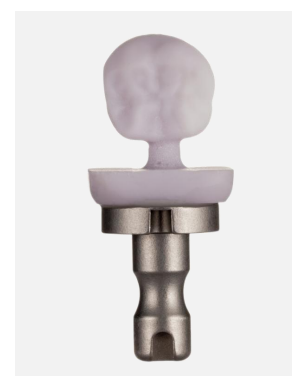
Analysis of typical processing cases
Processing features
• Material: Lithium disilicate reinforced glass ceramics
• Process: Micron-level precision milling
• Hardness: HV760 (equivalent to Mohs 6.5)
• Processing difficulties: Need to achieve personalized crown shape with edge accuracy of <15μm
Pain points of traditional solutions
When a South China foundry uses a three-axis machine tool for processing:
✓ Single-piece processing takes up to 45 minutes
✓ Edge collapse rate reaches 27%
✓ Monthly scrap cost exceeds 120,000 yuan
✓ Secondary manual polishing affects light transmittance
MID solution
In view of the "fragile processing" characteristics of dental glass ceramics, we innovatively adopt:
Five-axis linkage flexible processing system
• 360° continuous positioning technology
• 0.8mm ultra-fine diamond-coated tool
• Intelligent stress monitoring module
• 8-axis synchronous compensation algorithm
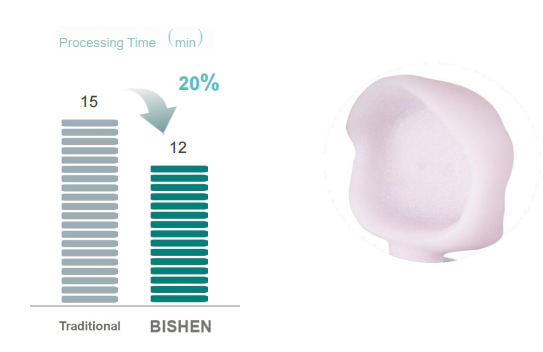
Comparison data after implementation:
1.Edge collapse rate dropped from 27% to 0.3%
2.The working time of a single piece is shortened to 18 minutes
3.Surface roughness Ra0.02μm
4.The edge fit of the restoration is improved to 99.6%


