



In high-end semiconductor manufacturing, precision is not just about dimensions-it's about temperature. As machining tolerances approach the micrometer level, even minor heat-induced distortions can have significant consequences on part functionality, especially in components like optical lens mounts, ultra-precision spindles, or alignment stages.
The Hidden Enemy: Heat-Induced Distortion
During CNC machining, especially at high speeds or when working with hard metals or ceramics, heat is a constant byproduct. This thermal energy, if not managed, can:
Cause localized expansion in the workpiece
Lead to tool deflection or uneven cutting
Induce permanent shape distortion after cooling
Consider a component like an optical lens holder used in photolithography systems. A minor shape deviation of even 2–3 microns can throw off the entire optical alignment, reducing the yield of thousands of chips.
Why Conventional Machining Falls Short
In standard machining environments, coolant flow, machine bed temperature, and ambient air control are rarely optimized for sub-micron accuracy. But in semiconductor components, this matters. For example:
A temperature shift of just 1°C can cause aluminum to expand by over 20 μm per meter
Inconsistent spindle heat may cause cutting path drift
Residual heat buildup in thin-walled parts can lead to warping post-machining
Our Approach: Precision Starts with Thermal Stability
At MID Precision, we approach thermal management as part of our core process control, not just an afterthought:
Use of thermally stable machine tools and temperature-controlled environments
Implementation of low-heat cutting strategies, including adaptive toolpaths
Real-time in-process temperature monitoring for critical jobs
Strategic use of multi-stage machining with intermediate cooling steps
Real Case: Machining Ultra-Precision Spindles for Optical Systems
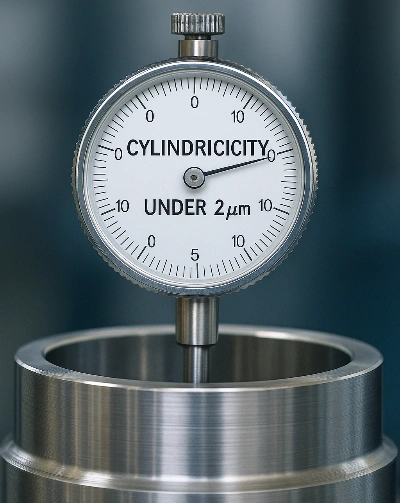
A client required spindle housings with cylindricity under 2 μm for use in a high-speed wafer inspection tool. Initial prototypes failed due to minor ovalization. We revised our approach to include interrupted roughing, extended rest times, and post-machining stabilization. The result? Consistent dimensional performance across production runs.
When Precision Depends on Temperature, We're Ready
If your project demands parts that perform in real-world conditions-not just on the machine, let us help. Our experience in thermal deformation control ensures that your tolerances are maintained not just during machining, but after assembly and during operation.


