



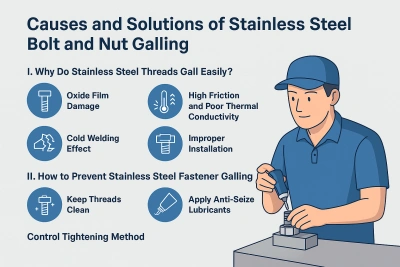
In CNC machining and assembly, the galling (or seizure) of stainless steel bolts and nuts is a frequent problem. Due to the unique properties of stainless steel, fasteners may seize during tightening, making it difficult or even impossible to loosen without damaging the threads or components.
Why Do Stainless Steel Threads Gall Easily?
1.Oxide Film Damage
Stainless steel relies on a chromium oxide layer for corrosion resistance. During thread engagement, friction and pressure can break this protective film, exposing active metal surfaces.
2.High Friction and Poor Thermal Conductivity
Stainless steel has a high friction coefficient and poor thermal conductivity. The heat generated during tightening cannot dissipate quickly, leading to localized high temperatures and increased thread adhesion.
3.Cold Welding Effect
Once the protective layer is damaged, active metal surfaces directly contact and cause "cold welding." As the fastener is tightened, tearing and galling occur, producing metal debris that clogs the threads and further increases friction.
4.Improper Installation
- Misaligned threads
- Rough or damaged surfaces
- Presence of debris or contamination
- Over-tightening or high-speed installation
These factors significantly raise the risk of galling.
How to Prevent Stainless Steel Fastener Galling?
- Keep Threads Clean: Ensure threads are free of metal shavings, dust, and contaminants.
- Apply Anti-Seize Lubricants: Use nickel-based, PTFE-based, or wax-based anti-seize lubricants. Avoid copper- or graphite-based lubricants in environments where they are unsuitable.
- Control Tightening Method: Use a torque wrench, tighten slowly and evenly, and avoid high-speed power tools that accelerate galling.
👉 In summary:
The root cause of stainless steel bolt and nut galling is the breakdown of the oxide film, combined with friction heat and cold welding. Proper cleaning, lubrication, and controlled tightening are effective ways to prevent it.


