



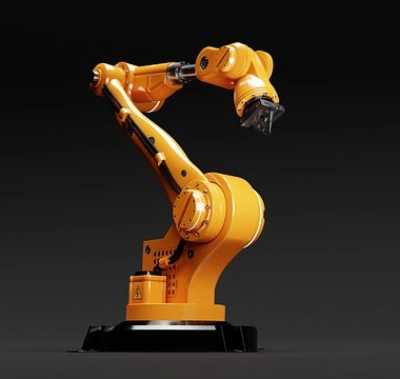
Smooth Movement Starts with the Right Surface
In robotics, motion precision isn't just about motor control-it's about how parts touch and slide. From linear guides to rotary shafts, even subtle imperfections in surface finish can cause unexpected friction, noise, and premature wear.
Why Surface Quality Matters
Key moving components-like guide rails, ball screws, and actuator shafts-require surface roughness levels as low as Ra ≤ 0.4 μm. This level of polish reduces mechanical resistance and ensures smoother motion, which is especially critical in collaborative robots (cobots), where any stick-slip or vibration can impact safety and positional accuracy.
Real Case: Cobot Guide Rail Finish Optimization
One client, a European robotics startup, encountered erratic motion in their cobot's arm. The issue wasn't in the control system-but in the precision guide rails. The surface roughness of Ra 0.8 μm led to inconsistent rolling resistance and increased acoustic noise. We re-machined and finished the rails using precision honing and micro-polishing techniques, bringing the roughness down to Ra 0.3 μm. The result: silent, repeatable movement-and an immediate boost in market confidence.
How We Help You Get There
At MID Precision, we specialize in machining robotic components with stringent surface and wear requirements. We combine controlled-speed CNC finishing, in-process inspection, and optional post-treatments (like hard anodizing or PTFE coating) to deliver not just dimensional accuracy-but long-term performance. We understand the micro-mechanics of wear and the macro-impact of surface friction.
Looking to Improve Motion Quality?
If your robotic system demands smooth, silent motion, the answer may lie in how your surfaces are made-not just what they're made of. Contact us to explore how high-end CNC surface finishing can help your design reach its full potential.


