



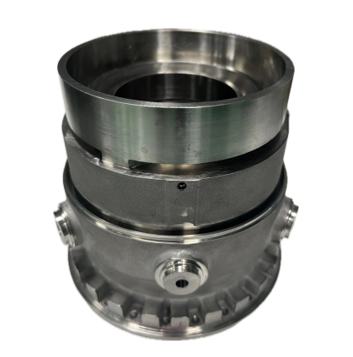
Core processing challenges
Material properties: cast nickel-based high-temperature alloy K4169 (HRC46 hardness)
Process requirements: internal and external turning (aircraft bearing seat assembly surface accuracy ±0.005mm)
Industry standard: surface roughness Ra<0.1μm (meets the 2000-hour endurance test of aircraft engines)
Pain points in the aviation manufacturing industry
A. Material processing characteristics
The low thermal conductivity of K4169 alloy causes the cutting zone temperature to reach 1000°C. Traditional turning easily induces a work hardening layer, which seriously affects the fatigue life of aviation bearings.
B. Three major defects of traditional technology
Efficiency bottleneck: single-piece processing takes 120 minutes (delaying the progress of engine assembly)
Quality risk: surface vibration leads to bearing failure (one of the main causes of aviation safety accidents)
Cost out of control: blades need to be replaced every 3 pieces (tool costs account for 35% of the total cost of parts)
MID Solutions Technology Matrix
Five-axis milling and turning center: realize one-time clamping of bearing seats for full-process processing (eliminating repeated positioning errors of aviation parts)
Ultrasonic assisted turning system: 40kHz high-frequency vibration reduces cutting temperature by 60% (solving the problem of K4169 sticking tool)
Aviation-specific toolholder system: HSK-A63 interface rigidity increased by 50% (ensuring micron-level roundness of aviation parts)
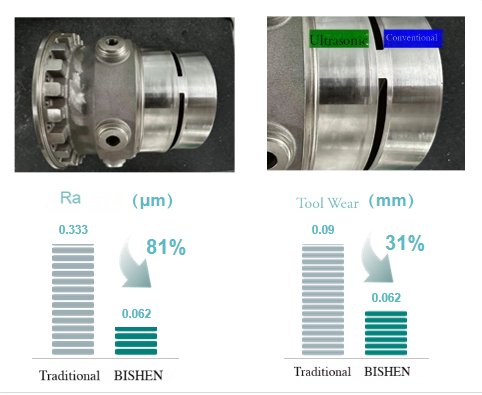
Measured performance comparison
Surface quality: roughness from Ra 0.333μm→0.062μm (5 times better than aviation standards)
Tool economy: Wear reduction by 31% (single blade can complete 8 pieces of continuous processing)
Comprehensive benefits: Single piece processing cost reduced by 42% (key indicator for mass production of aviation parts)


