



With the global approval standards for Class III medical devices being improved and the penetration rate of biomaterials such as PEEK exceeding 42%, medical precision manufacturing is facing the dual technical barriers of micron-level zero defects and carbon emission reduction. Core processes such as complex cavity processing of orthopedic implants and nano-level surface treatment of optical instruments are in urgent need of breaking through the bottlenecks of material thermal damage and burr residue caused by traditional cutting. The iteration cycle of green processing technology in the industry has been shortened to 2.3 years, forcing the industry chain to accelerate the process of technological innovation.
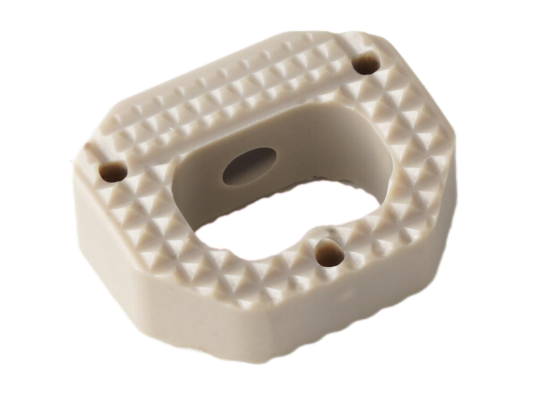
Typical Cases of Medical Precision Machining
A medical device company recently accepted a batch of production orders for cervical fusion devices made of PEEK (polyetheretherketone). The part has a size of 16.0×13.0×6.2mm and needs to be milled and precisely drilled. As a core component of orthopedic implants, the product is required to meet medical-grade standards with zero burrs and no surface residue.
Unlike traditional metal materials, PEEK has unique processing characteristics:
1.Biocompatibility meets the standards of medical device implants
2.Elastic modulus (3.8GPa) is close to human bones
3.High temperature resistance and self-lubricating properties affect the setting of processing parameters
Bottlenecks of traditional processes
In practical applications, traditional CNC processing faces two major problems:
The problem of burr residue is prominent, and an additional manual deburring process is required, which increases the processing time of a single piece by 45 minutes
Cutting fluid must be used to ensure processing quality, resulting in the cost of subsequent cleaning processes accounting for 18% of the total production cost
MID solutions breakthrough innovation
In response to the special needs of medical precision processing, the MID technical team customized and developed an ultrasonic green precision engraving and milling system:
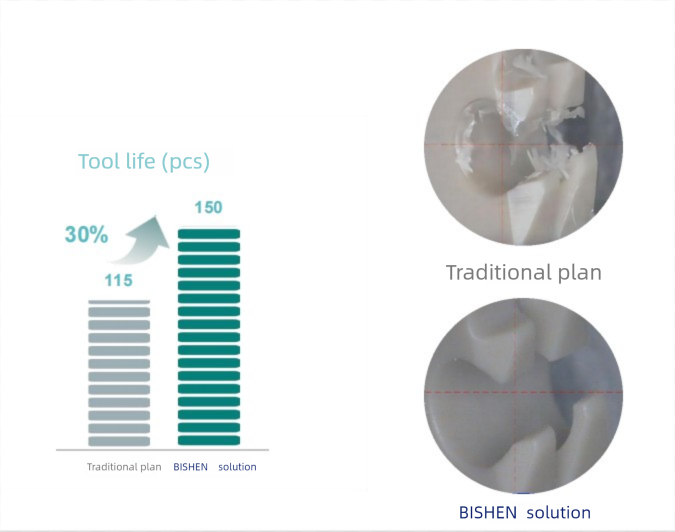
Core technology innovation:
1.Ultrasonic high-frequency vibration processing unit (40kHz)
2. Five-axis linkage rotary table (±0.003° positioning accuracy)
3.Supercritical CO₂ low-temperature cooling system (-56.6℃ working condition)
Production efficiency improvement:
1.The amount of processing burrs was reduced by 98.7%, achieving zero deburring process
2. No cutting fluid was used during the whole process, saving the investment in cleaning equipment and consumables
3.The processing efficiency was increased by 3.2 times, and the comprehensive cost per piece was reduced by 41%
MID Precision Technology (China) Co., Ltd. is a high-tech enterprise integrating metal precision parts manufacturing and ultra-precision processing equipment research and development. The company has a 7,500 square meter modern production base, and its service areas cover high-end industries such as aerospace, medical equipment, robotics and optical precision manufacturing. With its innovative design of complex structural parts and one-stop engineering service capabilities, MID has formed core advantages in ultra-precision processing fields such as medical implants and optical devices. The company holds ISO13485 medical quality management system certification and other industry qualifications, and continues to promote technological innovation and industrial upgrading in medical and industrial precision manufacturing.


