



Introduction: When life science meets manufacturing limits
In orthopedic surgery, a thumb-sized lumbar fusion device carries the patient's hope of standing up again. With the popularization of 3D printing technology, titanium alloy porous structure implants have become the "gold standard" for spinal repair, but the processing requirements of its nano-scale pores and bioactive surfaces have put global manufacturers in a dilemma - they must maintain the integrity of the 80μm-level bone cell channel and achieve mirror accuracy comparable to jewelry. Under traditional processes, problems such as tool chipping, burr residue, and low efficiency directly increase the risk of postoperative complications by 20%. How to break through this fatal bottleneck in the "medical-manufacturing" intersection? MID Solutions gave the answer with a set of disruptive data.
Processing products
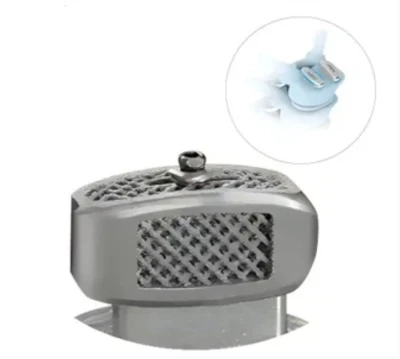
Workpiece material: 3D printed titanium alloy TC4 (ASTM F136 medical grade)
Processing features: Five-axis milling of the outer contour of the lumbar fusion device
Key dimensions: 25×12×10mm (including 0.2-0.5mm microporous structure)
Industry pain points and challenges
Medical implant characteristics requirements
• High strength (≥900MPa) and biocompatibility
• The porous structure needs to maintain an 80μm-level bone cell attachment channel
• The surface corrosion rate of the implant within 12 years after surgery must be ≤0.02mm/year
Traditional processing bottlenecks
Tool chipping: Tool life is sharply reduced by 70% when the titanium alloy cutting temperature reaches 650℃
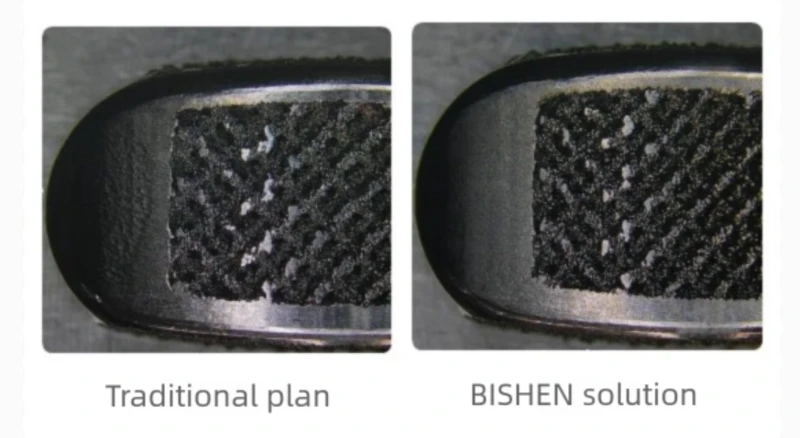
Burr out of control: The residual burrs on the edge of the micropores increase the risk of postoperative inflammation by 40%
Efficiency constraints: Single-piece finishing takes more than 3.5 hours, and the scrap rate is >15%
MID Solutions technological breakthroughs
1. Five-axis linkage intelligent compensation system
• Real-time monitoring of tool deflection, automatic correction of 0.005mm path error
• Optimize feed strategy for 3D printing layer pattern features, reducing empty tool travel by 35%
2. Ultrasonic assisted cutting module
• 40kHz high-frequency vibration crushes titanium alloy chips, reducing cutting resistance by 58%
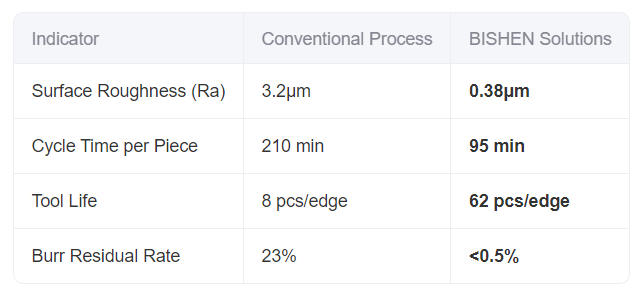
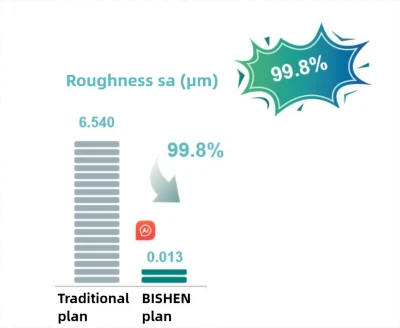
• Achieve Ra 0.4μm mirror effect, meeting ASTM F3306 orthopedic implant standards
3. Supercritical CO₂ cryogenic cooling technology
• Inner cooling channel sprays -196℃ atomized coolant to suppress temperature rise in processing area <80℃
• Synchronously remove residual debris in micropores, eliminating secondary cleaning process
Clinical processing results
Processing comparison
MID corporate mission
As an innovator of precision manufacturing technology, MID focuses on the research and development of special processing solutions in high-end fields such as medical and aerospace. Relying on the intelligent processing platform and ultra-precision cooling technology with independent intellectual property rights, it has participated in the precision parts processing of many projects. From nano-scale coatings to Industry 4.0 intelligent control systems, we continue to push the boundaries of "impossible materials" processing technology.


