



In recent years, five-axis linkage CNC machining centers have been shining, especially in the processing of special-shaped and complex parts, and their high efficiency and high quality have won wide acclaim. Many manufacturers have chosen five-axis equipment in order to improve processing efficiency and quality. So, how deep is your understanding of five-axis machining technology?
Mechanical structure of five-axis machine tools
Five-axis machine tools, namely 5 Axis Machining, are based on the traditional three linear moving axes of X, Y, and Z, and add two rotating axes. These two rotating axes are usually selected from the three axes of A, B, and C, each with a unique motion mode, designed to adapt to and meet the precision machining needs of diversified products.
In the field of mechanical design of 5-axis machining centers, machine tool manufacturers continue to explore and innovate, striving to develop a variety of motion modes to meet various processing needs. Although there are many types of five-axis machine tools on the market, and the mechanical structure forms are different,
But there are mainly the following forms:
Two rotating coordinates directly control the direction of the tool axis (double swing head form).
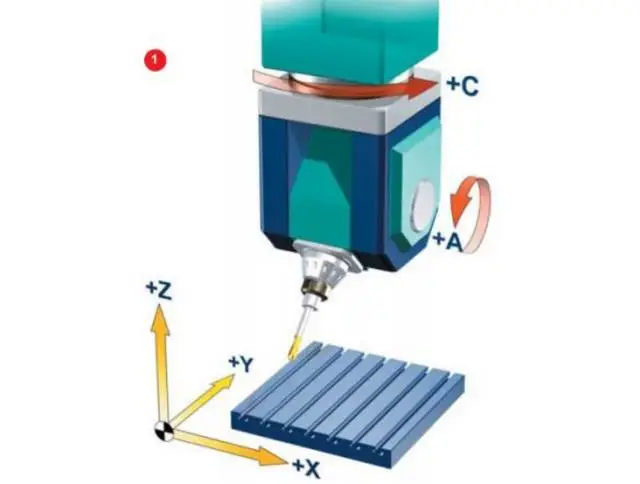
Two coordinate axes are on the top of the tool, but the rotation axis is not perpendicular to the linear axis (pitch-type swing head type).
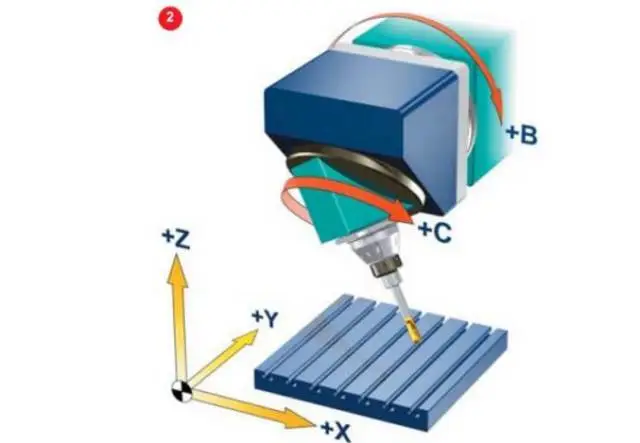
Two rotating coordinates directly control the rotation of space (double turntable form).
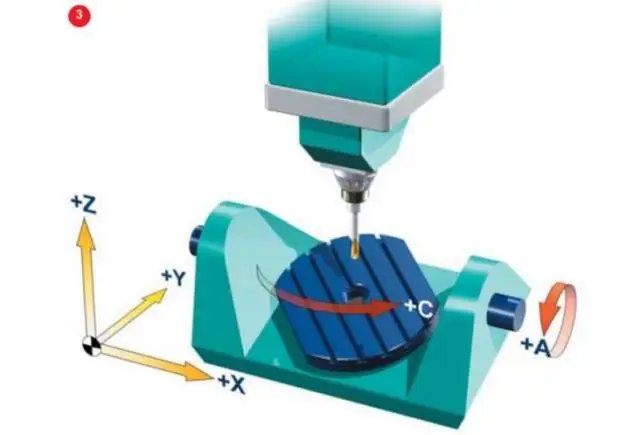
Two coordinate axes are on the workbench, but the rotation axis is not perpendicular to the linear axis (pitch-type workbench type).
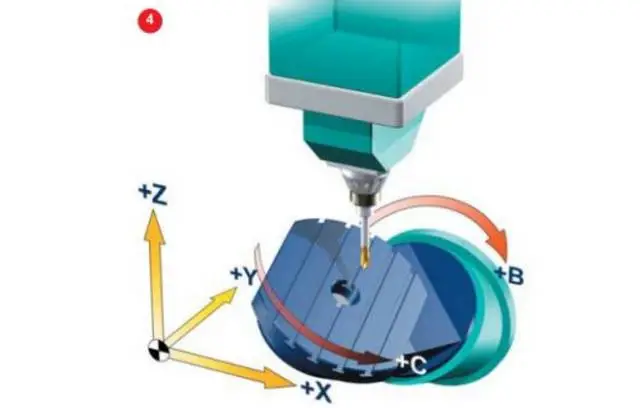
One of the two rotating coordinates acts on the tool and the other on the workpiece (one swing and one rotation form).
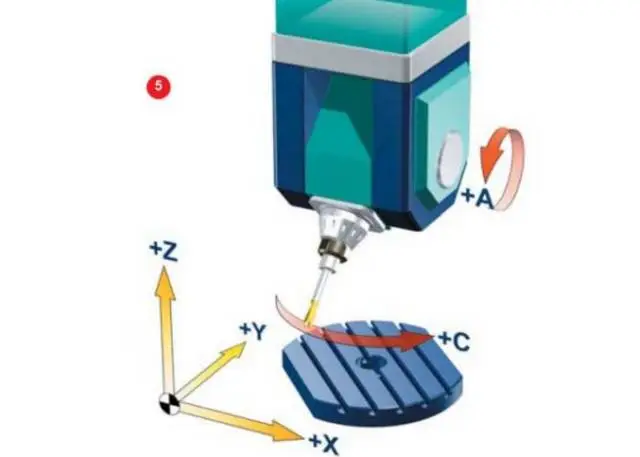
Terminology: If the rotation axis is not perpendicular to the linear axis, it is considered a "pitch-type" axis.
What unique performance can five-axis machine tools of different structures bring during the processing process? Compared with conventional three-axis machine tools, what significant advantages do they have?
The many advantages of five-axis machining
To explore the characteristics of five-axis machine tools, it is inevitable to compare them with traditional three-axis equipment. In production practice, three-axis machining equipment is more popular, and they usually include vertical, horizontal and gantry types.

Common processing methods include using the end and side edges of end mills for processing, and using ball-end cutters for profiling. However, these methods and forms share a feature: during the processing process, the axial direction of the tool remains constant, and the machine tool relies on the coordinated movement of the three linear axes X, Y, and Z to achieve the displacement of the tool in the three-dimensional rectangular coordinate system.
Compared with three-axis CNC processing equipment, five-axis CNC machine tools have the following advantages:
1.Maintain the optimal cutting state of the tool and improve cutting conditions
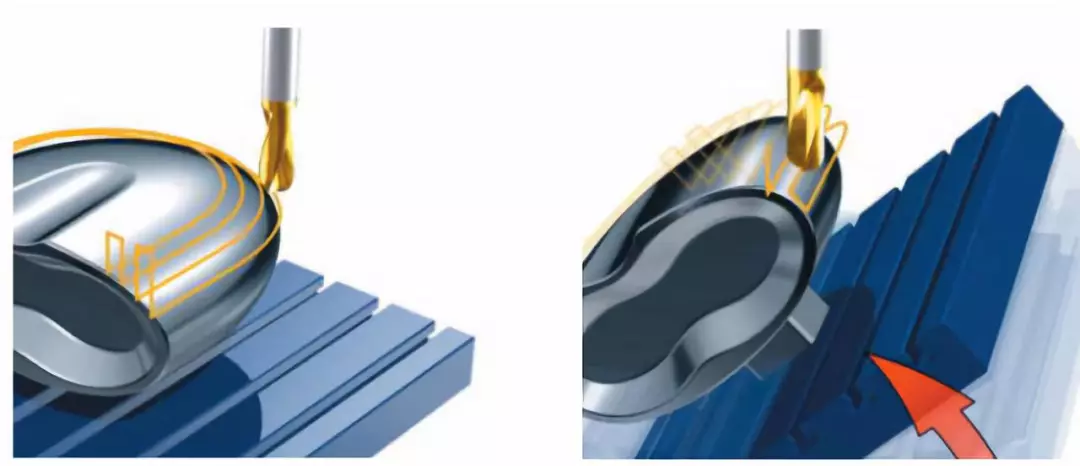
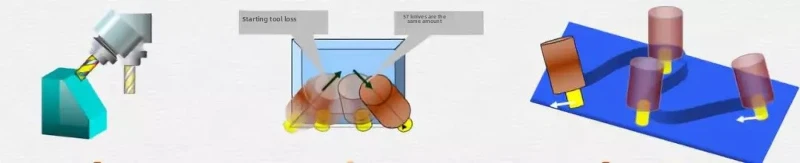
In the three-axis cutting mode shown on the left, when the tool approaches the top or edge of the workpiece, the cutting effect will gradually weaken. In order to maintain the ideal cutting state at these positions, it is necessary to rotate the worktable. However, to fully process an irregular surface, it is necessary to frequently rotate the worktable at different angles. It is worth noting that the five-axis machine tool can effectively avoid the situation where the linear speed of the center point of the ball-end milling cutter drops to 0, thereby ensuring a better surface processing quality.
2.Effectively avoid tool interference
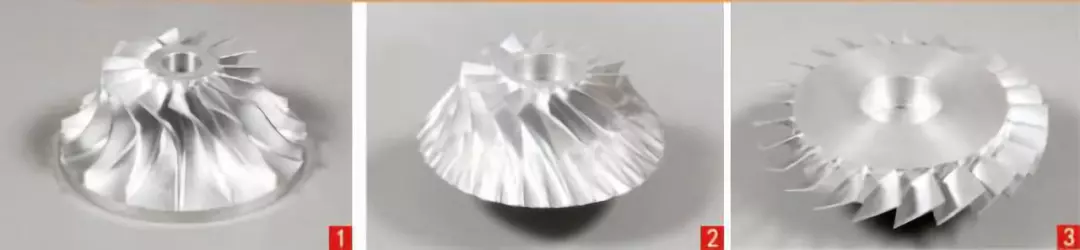
For complex parts such as impellers, blades and integral blades in the aerospace field, three-axis equipment cannot meet the process standards due to interference problems, but five-axis machine tools can do the job. In addition, five-axis machine tools can also use shorter tools for processing, enhance system rigidity, reduce the types and number of tools, and avoid the use of special tools. For business owners, this means that five-axis machine tools can save you considerable expenses in tool costs!
3.Reduce the number of clamping times and complete five-sided processing in one clamping
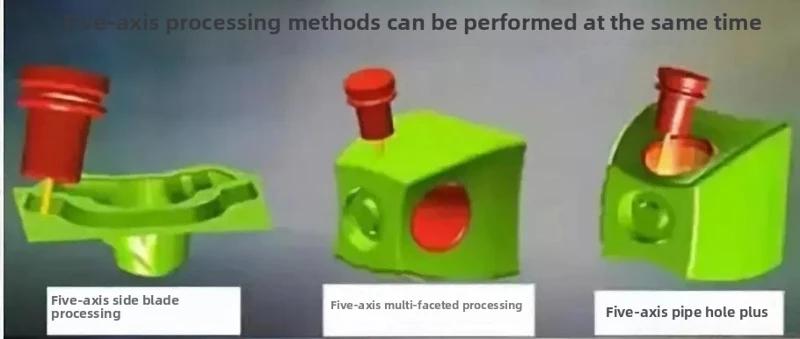
The five-axis machining center significantly improves the accuracy of processing by reducing the steps of benchmark conversion. In actual operations, it is easier to ensure processing accuracy with only one clamping. Moreover, because the five-axis machining center simplifies the processing process and reduces the number of equipment required, the use of tooling fixtures, the required area of the workshop, and the cost of equipment maintenance are also reduced. This means that you can achieve more efficient and higher-quality processing and production with fewer fixtures, a more compact plant layout, and lower maintenance costs!
4.Improve machining quality and efficiency
Five-axis machine tools can use tool side cutting for higher machining efficiency.
5.Shorten the production process chain and simplify production management
The integrated processing of five-axis CNC machine tools greatly shortens the entire production process, making production management and planning and scheduling easier. Especially for complex workpieces, compared with the traditional decentralized multi-process production method, the advantages shown by five-axis CNC machine tools are more significant.
6.Shorten the new product development cycle
In enterprises in the aerospace, automotive and other industries, facing new product parts and molding molds with complex shapes and extremely high precision requirements, the five-axis CNC machining center has become an ideal choice for solving the problems of complex parts processing accuracy and cycle in the process of new product development with its high flexibility, high precision, high integration and comprehensive processing capabilities. It not only significantly shortens the R&D cycle, but also greatly improves the success rate of new products.(文章来源:UG学习堂小胥收徒)


