



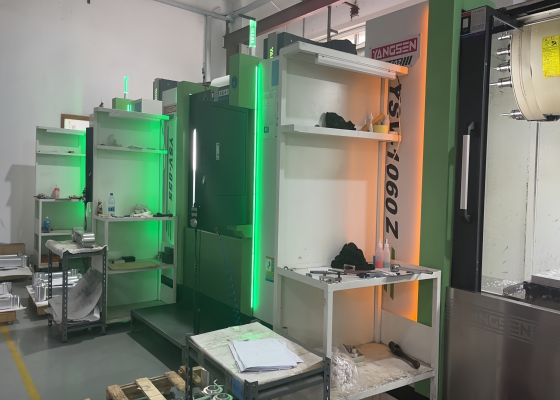
CNC milling is a subtractive manufacturing process that uses rotating cutting tools to remove material from a workpiece, guided by computer-controlled programming. Here's a detailed breakdown of how it works, tailored for professionals:
1. Core Process Overview
Programming: Starts with CAD/CAM software converting 3D models into G-code, dictating toolpaths, speeds, and depths.
Setup: Workpieces (metal, plastic, or sheet metal) are clamped to the machine bed. Toolholders are loaded with end mills, drills, or face mills.
Machining: The spindle rotates tools at 500–30,000 RPM while moving along 3–5 axes to carve geometries.
2. Material-Specific Considerations
Metals like aluminum (6061, 7075) or stainless steel require rigid setups and coolant to manage heat.
High-speed machining (HSM) minimizes tool wear in aerospace aluminum parts.
Delicate plastics (PEEK, nylon) need sharp tools and lower RPMs to avoid melting.
Vacuum clamping prevents deformation in thin-walled medical device housings.
Milling adds precision holes, slots, or threads to laser-cut or bent sheet metal parts (e.g., brackets).
3. Key Technologies in Modern Milling
5-Axis Machines: Enable complex contours in a single setup (e.g., turbine blades).
Live Tooling: Combines milling and turning for hybrid parts (e.g., flanged connectors).
Automation: Robotic part-loading systems in CNC machining service China hubs reduce labor costs for high-volume orders.
4. Advantages of CNC Milling Services in China
Cost Efficiency: Chinese suppliers like MID Precision offer rates 30–50% lower than Western counterparts for aluminum CNC machining or PEEK components.
Scale: Equipped with 100+ CNC mills for bulk sheet metal fabrication or prototypes.
Precision: Advanced machines achieve ±0.001″ tolerances for aerospace or military parts.
5. Critical Best Practices
Use toolpath optimization to reduce cycle times.
For plastics, prioritize sharp carbide tools and air blasts over coolant.
Partner with ISO-certified CNC machining service China providers for strict quality control.
By understanding these principles, professionals can optimize milling workflows for metals, plastics, or sheet metal.


