



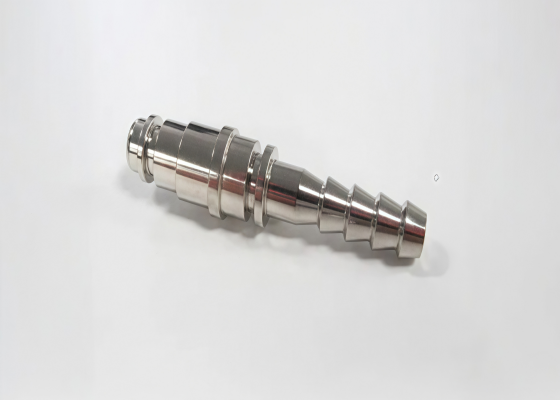
Electroless nickel plating is a process that forms a protective nickel alloy layer on the surface of CNC machined parts to enhance their corrosion resistance.
The process utilizes a nickel bath and a chemical reducing agent such as sodium hypophosphite to deposit a layer of nickel alloy (usually nickel phosphorus) on a metal part. This method is able to evenly coat parts with complex features such as holes and slots with a nickel alloy coating.
Electroless nickel plating is classified into several types, depending on the phosphorus content, including low-phosphorus, medium-phosphorus, and high-phosphorus nickel.
Parts treated with electroless nickel generally have excellent hardness and wear resistance. In addition, hardness can be further improved through heat treatment. The electroless nickel plating process is suitable for a variety of metals, including stainless steel, aluminum, and steel.
Although this method has significant advantages, it also has some limitations, such as reduced subsequent plating rates, increased contaminants in the nickel bath, and increased phosphorus content. In addition, electroless nickel plating is not well suited to treating parts with rough, uneven or poorly machined surfaces.(来源:UG学习堂小胥收徒)
MID focuses on high-precision parts manufacturing and services, providing one-stop solutions covering CNC precision machining, and has rich experience in diversified surface treatment processes. Including anodizing (multiple colors available), nickel/chrome electroplating, sandblasting polishing, passivation treatment and Teflon coating, etc., which can significantly improve the corrosion resistance, wear resistance and appearance texture of parts to meet the stringent requirements of medical, aviation, automotive and other industries. Relying on advanced surface treatment equipment and strict quality control, we ensure the quality delivery of the entire process from micron-level processing to terminal protection.


