



Background requirements:
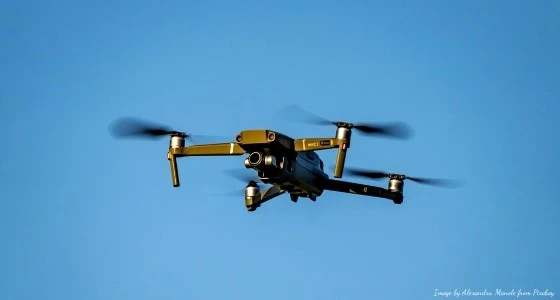
A certain model of drone landing gear aluminum alloy support (material: 7075-T6) needs to meet the precision requirements of verticality 0.005mm, flatness 0.004mm, and parallelism 0.005mm.
Process selection and operation:
1.Deep cryogenic treatment solution:
Pretreatment: After finishing with a five-axis CNC machine tool, the surface roughness Ra≤0.8μm.
Deep cryogenic parameters: -185℃ liquid nitrogen immersion for 24 hours, cooling rate ≤3℃/min, to avoid thermal shock cracking.
Post-processing: 18 passes of precision cold rolling (rolling force ≤50kN), combined with online laser measurement correction.
Results: Flatness 0.003mm, verticality 0.004mm, parallelism 0.004mm, qualified rate 98%.
2.artificial aging solutions:
Process: artificial aging (160℃×8 hours) + three mechanical corrections (hydraulic shaping).
Result: The flatness after the first processing was 0.011mm, and after three corrections it was reduced to 0.007mm, still exceeding the tolerance by 40%, and the final qualified rate was only 62%.
Cost and efficiency analysis:
Deep cryogenic treatment: The cost per piece is about 1,200 yuan (including equipment depreciation and liquid nitrogen consumption), but no rework is required.
Artificial aging: The cost per piece is about 600 yuan, but the rework cost is an additional 800 yuan/piece, and the comprehensive cost exceeds the deep cryogenic process.
Conclusion: The underlying logic of process selection
In the processing of aviation aluminum materials, deep cryogenic treatment can stably achieve 0.005mm-level accuracy through grain reconstruction and deep stress elimination in an ultra-low temperature environment, which is especially suitable for aviation parts with high added value and long life requirements. Although the general aging has a lower cost, it is limited by the incomplete elimination of residual stress and is only suitable for ordinary industrial parts with accuracy requirements of ≤0.01mm. In the future, as the cost of cryogenic equipment decreases and the process becomes standardized, its penetration rate in the field of high-precision aviation manufacturing will continue to increase.


