
Hey there! As a supplier in the CNC metal machining industry, I often get asked about the accuracy level achievable in CNC metal machining. It's a super important topic, especially for those who rely on precise metal parts for their projects. So, let's dive right in and explore this together.
First off, what is CNC metal machining? Well, CNC stands for Computer Numerical Control. It's a process where computers control the movement of machining tools to shape metal into the desired parts. This technology has revolutionized the manufacturing industry, allowing for high - precision and efficient production.
When it comes to the accuracy in CNC metal machining, it can vary based on several factors. One of the key factors is the type of metal being machined. Different metals have different properties, which can affect how accurately they can be machined.
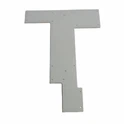
Let's start with titanium alloy. Titanium is known for its high strength - to - weight ratio and excellent corrosion resistance. But it's also a bit tricky to machine. The hardness and heat - resistance of titanium can cause wear on the cutting tools, which might affect the accuracy. However, with the right tools and machining parameters, we can achieve a high level of accuracy in CNC Machining Titanium Alloy. Modern CNC machines are equipped with advanced control systems that can compensate for the tool wear to a certain extent. Generally, for titanium alloy machining, we can achieve an accuracy level of around ±0.01mm to ±0.05mm, depending on the complexity of the part.
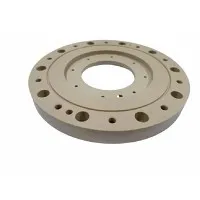
Next up is aluminum alloy. Aluminum is a popular choice in CNC metal machining because it's lightweight, easy to machine, and has good thermal conductivity. Machining aluminum alloy is relatively easier compared to titanium. The cutting tools experience less wear, and we can achieve a higher level of accuracy. In CNC Machining Aluminum Alloy, we can often reach an accuracy of ±0.005mm to ±0.01mm. This makes aluminum alloy a great option for parts that require high precision, such as aerospace components and electronic devices.
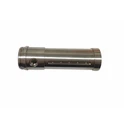
Another important group of metals is nickel - based alloys. These alloys are known for their high temperature resistance and excellent mechanical properties. They are commonly used in the aerospace and power generation industries. However, machining nickel - based alloys is quite challenging. The high strength and toughness of these alloys can cause significant tool wear and generate a lot of heat during machining. But with state - of - the - art CNC machines and specialized cutting tools, we can still achieve a decent level of accuracy in CNC Machining Nickel - based Alloys. Typically, an accuracy of around ±0.02mm to ±0.05mm can be achieved for nickel - based alloy parts.
Apart from the type of metal, the complexity of the part design also plays a huge role in determining the achievable accuracy. Simple parts with basic geometries, like flat plates or cylinders, are easier to machine accurately. We can usually achieve higher precision for these parts compared to complex parts with intricate shapes, thin walls, or small features. For example, if a part has a lot of sharp corners or deep cavities, it can be more difficult to maintain the same level of accuracy throughout the machining process.
The quality of the CNC machine itself is another crucial factor. High - end CNC machines are equipped with advanced sensors, servo systems, and control algorithms. These machines can provide more precise control over the movement of the cutting tools, resulting in higher accuracy. Additionally, regular maintenance of the CNC machines is essential. Worn - out components, such as ball screws or linear guides, can affect the machine's accuracy. So, we make sure to perform routine inspections and maintenance on our machines to keep them in top - notch condition.
The cutting tools we use also have a significant impact on accuracy. High - quality cutting tools made from advanced materials, like carbide or diamond, can provide better cutting performance and longer tool life. These tools can maintain their sharpness for a longer time, which is crucial for achieving consistent accuracy during the machining process. We carefully select the cutting tools based on the type of metal and the machining requirements to ensure the best possible accuracy.
Now, let's talk about the measuring and inspection processes. After the machining is done, we use a variety of measuring tools to check the accuracy of the parts. Tools like coordinate measuring machines (CMMs), calipers, micrometers, and optical measuring systems are commonly used. CMMs are particularly useful for measuring complex parts with high precision. They can measure the dimensions of the part in three - dimensional space and compare them with the design specifications. If any deviations are found, we can make adjustments to the machining process for future parts.
In some cases, we might also use post - machining processes to improve the accuracy. For example, grinding or lapping can be used to achieve an even higher level of surface finish and dimensional accuracy. These processes are often used for parts that require extremely high precision, such as medical devices or precision instruments.
So, to sum it up, the accuracy level achievable in CNC metal machining can range from ±0.005mm to ±0.05mm, depending on various factors like the type of metal, part complexity, machine quality, cutting tools, and inspection processes. At our company, we are committed to providing the highest level of accuracy possible for our customers.


If you're in need of high - precision CNC metal machining services, whether it's for titanium alloy, aluminum alloy, or nickel - based alloys, we'd love to hear from you. We have the expertise, the state - of - the - art equipment, and the commitment to quality to meet your requirements. Just reach out to us, and we can start discussing your project and how we can help you achieve the best results.
References:
- Manufacturing Engineering Handbook
- Precision Machining Technology Journal