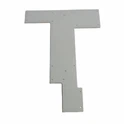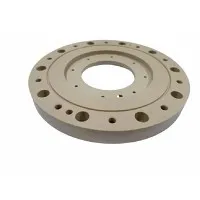

Hey there! As a supplier of CNC machining FR4 G10, I've seen my fair share of challenges in this field. In this blog post, I'll be sharing some of the common hurdles we face when working with FR4 G10 and how we tackle them.
Material Characteristics
First off, let's talk about the material itself. FR4 G10 is a fiberglass-reinforced epoxy laminate. It's known for its excellent electrical insulation properties, high mechanical strength, and good chemical resistance. But these very characteristics that make it so useful also pose some challenges during CNC machining.
One of the main issues is its hardness. FR4 G10 is a relatively hard material, which means it can cause rapid tool wear. When the cutting tools interact with the hard fiberglass fibers, they experience a lot of abrasion. This not only shortens the tool life but also affects the quality of the machined parts. For example, as the tools wear down, the cutting edges become dull, leading to rough surface finishes and less precise dimensions.
Another characteristic is its brittleness. FR4 G10 can crack or delaminate easily, especially when subjected to high cutting forces or vibrations. During operations like drilling or milling, if the cutting parameters are not set correctly, the material may chip or break. This is a major concern as it can result in scrap parts and increased production costs.
Tool Selection and Wear
Selecting the right tools for CNC machining FR4 G10 is crucial. Carbide tools are often the go-to choice because of their hardness and wear resistance. However, even carbide tools need to be carefully selected based on the specific machining operation.
For instance, when drilling holes in FR4 G10, a drill bit with a sharp point and proper flute design is essential. The sharp point helps in initiating the hole accurately, while the flutes are responsible for chip evacuation. If the chips are not removed efficiently, they can clog the drill bit, causing overheating and further tool wear.
As I mentioned earlier, tool wear is a significant challenge. To mitigate this, we need to monitor the tool condition regularly. We use tool wear sensors and inspection techniques to detect when the tools are starting to wear out. Once the wear reaches a certain level, we replace the tools promptly. This ensures that the machining process remains consistent and the quality of the parts is maintained.
Cutting Parameters
Determining the optimal cutting parameters is another tricky aspect of CNC machining FR4 G10. The cutting speed, feed rate, and depth of cut all need to be carefully balanced.
If the cutting speed is too high, it can generate excessive heat, which may cause the material to burn or warp. On the other hand, if the cutting speed is too low, it can lead to poor surface finishes and longer machining times. The feed rate also plays a crucial role. A high feed rate can cause excessive cutting forces, increasing the risk of chipping and delamination. A low feed rate, however, may not be efficient enough.
We usually conduct a series of tests to find the ideal cutting parameters for different applications. These tests involve machining sample parts and evaluating the surface finish, dimensional accuracy, and tool wear. Based on the results, we adjust the parameters accordingly.
Dust and Chip Management
During CNC machining of FR4 G10, a significant amount of dust and chips are generated. This is not only a nuisance but also a potential health hazard. The dust particles can be inhaled, causing respiratory problems for the operators.
To manage the dust and chips, we use effective dust collection systems. These systems are designed to capture the dust at the source, minimizing its spread in the workshop. Additionally, we ensure proper ventilation in the machining area to maintain a safe working environment.
When it comes to chip management, we use chip conveyors to remove the chips from the machining area. This helps in preventing the chips from interfering with the cutting process and damaging the machined parts.
Machining Complex Geometries
FR4 G10 is often used in applications where complex geometries are required. Machining these complex shapes can be extremely challenging.
For example, when machining intricate patterns or thin-walled structures, the material's brittleness becomes even more of an issue. The thin walls are more prone to cracking and delamination, and the intricate patterns require high precision. To overcome these challenges, we use advanced CNC programming techniques. We break down the complex geometries into smaller, more manageable steps and use multi-axis machining to access hard-to-reach areas.
Comparison with Other Materials
It's interesting to compare the challenges of CNC machining FR4 G10 with other materials. For example, CNC Machining POM is a different ballgame. POM is a more ductile material compared to FR4 G10. It's easier to machine in terms of tool wear and chip formation. However, POM has its own set of challenges, such as its tendency to melt at high temperatures during machining.
Similarly, CNC Machining Nylon also has unique characteristics. Nylon is a semi-crystalline material, which means it can have different mechanical properties depending on its processing conditions. Machining nylon requires careful control of the cutting parameters to avoid issues like melting and burring.
And then there's CNC Machining PMI Foams and PVC. These materials are lightweight and have different machining requirements compared to FR4 G10. PMI foams are very soft and can be easily damaged during machining, while PVC can release toxic fumes if not machined properly.
Solutions and Strategies
Despite all these challenges, there are several solutions and strategies that we've developed over the years.
One of the key strategies is continuous training for our operators. We make sure that they are well-versed in the properties of FR4 G10 and the best practices for CNC machining. This includes proper tool handling, setting the right cutting parameters, and troubleshooting common issues.
We also invest in the latest CNC machining technology. Newer machines come with advanced features like real-time monitoring and adaptive control. These features help in optimizing the machining process and reducing the impact of the challenges we face.
In addition, we work closely with our customers to understand their specific requirements. By collaborating early in the design phase, we can make suggestions to simplify the geometries and select the most suitable manufacturing processes. This not only improves the quality of the final products but also reduces the overall production costs.
Conclusion
In conclusion, CNC machining FR4 G10 comes with its fair share of challenges. From the material's hardness and brittleness to tool wear, cutting parameters, and dust management, there are many factors to consider. However, with the right tools, techniques, and strategies, we can overcome these challenges and produce high-quality parts.


If you're in the market for CNC machining services for FR4 G10 or have any questions about the process, don't hesitate to reach out. We're here to help you with your specific needs and ensure that you get the best possible results.
References
- "Handbook of Fiberglass - Reinforced Plastics"
- "CNC Machining Technology: Principles and Applications"
- Industry research reports on FR4 G10 machining