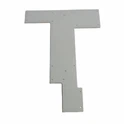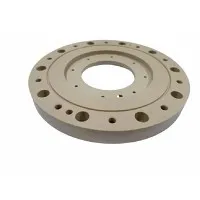

Selecting the right clamping force for ABS (Acrylonitrile Butadiene Styrene) during CNC machining is a critical aspect that directly impacts the quality of the final product. As a supplier specializing in CNC machining of ABS, I've encountered various challenges and learned valuable insights over the years. In this blog, I'll share some key considerations and guidelines to help you determine the appropriate clamping force for ABS in CNC machining.
Understanding ABS Properties
Before delving into clamping force selection, it's essential to understand the properties of ABS. ABS is a popular thermoplastic known for its excellent impact resistance, toughness, and dimensional stability. However, it also has a relatively low melting point compared to some other engineering plastics. During CNC machining, excessive heat generated by high cutting forces or improper clamping can cause the ABS to deform or melt, leading to poor surface finish and dimensional inaccuracies.
Factors Affecting Clamping Force
Several factors influence the selection of the right clamping force for ABS during CNC machining. These include:
1. Part Geometry
The shape and size of the ABS part play a significant role in determining the clamping force. Complex geometries with thin walls or intricate features require more careful clamping to prevent deformation. For example, a thin-walled ABS enclosure may need a lower clamping force to avoid crushing the walls, while a solid, thick ABS block can withstand higher clamping forces.
2. Machining Operations
Different machining operations, such as milling, turning, or drilling, generate varying levels of cutting forces. Milling operations, especially those involving high-speed machining or deep cuts, tend to produce higher cutting forces compared to drilling. Therefore, the clamping force should be adjusted accordingly to ensure the part remains stable during machining.
3. Tooling and Cutting Parameters
The choice of cutting tools and cutting parameters, such as cutting speed, feed rate, and depth of cut, also affects the clamping force. Using sharp cutting tools and optimizing the cutting parameters can reduce the cutting forces, allowing for a lower clamping force. Conversely, dull tools or aggressive cutting parameters may require higher clamping forces to prevent part movement.


4. Fixturing Design
The design of the fixturing system is crucial for achieving the right clamping force. A well-designed fixture should provide uniform support and clamping pressure across the part surface. It should also minimize the contact area between the fixture and the part to reduce the risk of surface damage. For example, using soft jaws or rubber pads on the clamping surfaces can help distribute the clamping force evenly and protect the ABS surface.
Determining the Optimal Clamping Force
To determine the optimal clamping force for ABS during CNC machining, a combination of theoretical calculations and practical testing is often required. Here are some steps to follow:
1. Calculate the Estimated Cutting Forces
Based on the machining operations, tooling, and cutting parameters, calculate the estimated cutting forces using appropriate cutting force models or software. This will give you an idea of the minimum clamping force required to keep the part stable during machining.
2. Consider the Part's Yield Strength
ABS has a specific yield strength, which is the maximum stress it can withstand before permanent deformation occurs. The clamping force should be kept below the yield strength of the ABS to prevent damage to the part. You can find the yield strength of the specific ABS material you're using from the material datasheet.
3. Conduct Trial Runs
Once you have an estimated clamping force, conduct trial runs on a sample part. Start with a relatively low clamping force and gradually increase it until the part remains stable during machining without any signs of deformation or movement. Observe the surface finish, dimensional accuracy, and any other quality indicators during the trial runs.
4. Adjust the Clamping Force
Based on the results of the trial runs, adjust the clamping force as needed. If the part is still moving or deforming, increase the clamping force slightly. If the surface finish is poor or there are signs of damage to the part, reduce the clamping force. Repeat the trial runs until you achieve the optimal clamping force.
Common Mistakes to Avoid
When selecting the clamping force for ABS during CNC machining, there are several common mistakes to avoid:
1. Over-Clamping
Over-clamping the ABS part can lead to deformation, surface damage, and even cracking. It can also increase the risk of tool breakage and reduce the tool life. Always ensure that the clamping force is just sufficient to keep the part stable during machining.
2. Under-Clamping
Under-clamping the part can cause it to move or vibrate during machining, resulting in poor surface finish, dimensional inaccuracies, and even tool breakage. Make sure the clamping force is adequate to prevent any movement of the part.
3. Using Inappropriate Fixturing
Using the wrong type of fixture or clamping method can lead to uneven clamping forces, surface damage, and part deformation. Choose a fixture that is specifically designed for ABS machining and provides uniform support and clamping pressure.
Conclusion
Selecting the right clamping force for ABS during CNC machining is a critical step in ensuring the quality and accuracy of the final product. By understanding the properties of ABS, considering the factors that affect the clamping force, and following the steps outlined above, you can determine the optimal clamping force for your specific application. Remember to avoid common mistakes and conduct thorough testing to achieve the best results.
If you're looking for a reliable CNC machining ABS supplier, we have the expertise and experience to meet your needs. We offer a wide range of CNC machining services, including CNC Machining PMMA, CNC Machining PMI Foams and PVC, and CNC Machining FR4 G10. Contact us today to discuss your project and get a quote.
References
- "Machining of Plastics" by John A. Schey
- "Cutting Tool Engineering" magazine
- Material datasheets of ABS materials