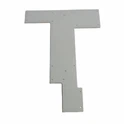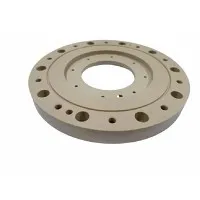

Hey there! As a supplier of CNC plastic machining services, I often get asked if CNC plastic machining can be used for prototyping. And the answer is a resounding yes! In this blog post, I'll break down why CNC plastic machining is a top - notch option for prototyping, the types of plastics commonly used, and how it all works.
Why CNC Plastic Machining for Prototyping?
Precision and Accuracy
When you're making a prototype, you need it to be as close to the final product as possible. CNC plastic machining offers incredible precision. The computer - numerical - control technology allows for extremely accurate cuts and shaping. This means that every prototype we make will match the exact specifications you provide. Whether it's a complex part with intricate details or a simple, straightforward design, CNC machines can handle it with ease.
Quick Turnaround
Time is money, especially when you're in the product development phase. CNC plastic machining can significantly reduce the time it takes to get a prototype. Once the design is programmed into the CNC machine, it can start working right away. There's no need for complex tooling set - ups that can take days or even weeks. We can often have your prototype ready in a matter of days, depending on the complexity of the design.
Cost - Effective
Compared to some other prototyping methods, CNC plastic machining is quite cost - effective. You don't have to invest in expensive molds or dies, which can be a huge upfront cost. Since the process is automated, there's less labor involved, which also helps keep the costs down. This makes it a great option for startups and small businesses that are working on a tight budget.
Material Variety
There are so many different types of plastics that can be used in CNC plastic machining for prototyping. This gives you the flexibility to choose the material that best suits your product's needs. Let's take a look at some of the commonly used plastics:
ABS
CNC Machining ABS is a popular choice for prototyping. It's a tough and impact - resistant plastic. This makes it suitable for products that might be subjected to some rough handling or impacts. ABS also has good dimensional stability, which means the prototype will keep its shape over time. It's easy to machine, and we can achieve a smooth finish on ABS parts.
PMMA
CNC Machining PMMA is another great option. PMMA, also known as acrylic, is transparent and has excellent optical properties. If your product requires a clear, see - through component, PMMA is the way to go. It can be machined to create high - quality prototypes with a polished look. It's also resistant to weathering, so it can be used for outdoor applications as well.
PMI Foams and PVC
CNC Machining PMI Foams and PVC offers unique characteristics. PMI foams are lightweight and have high strength - to - weight ratios. They're often used in aerospace and automotive applications. PVC, on the other hand, is a versatile plastic that can be used for a wide range of products. It's resistant to chemicals and has good electrical insulation properties.
How Does CNC Plastic Machining for Prototyping Work?
Design and Programming
The first step is to have a detailed design of your prototype. This can be in the form of a 3D CAD model. Once we have the design, our team of experts will use specialized software to program the CNC machine. The program will include all the instructions for the machine, such as the cutting paths, speeds, and feeds.
Material Selection
Based on your product's requirements, we'll help you choose the right plastic material. We'll consider factors like strength, durability, appearance, and cost. Once the material is selected, it's loaded into the CNC machine.
Machining Process
The CNC machine will then start the machining process. It uses cutting tools to remove material from the plastic block according to the programmed instructions. The machine can perform a variety of operations, such as milling, drilling, and turning. During the process, we'll monitor the machine to ensure everything is going smoothly.
Finishing
After the machining is complete, the prototype may need some finishing touches. This can include sanding, polishing, or painting. We'll make sure the prototype looks and feels just like the final product.
Quality Inspection
Before we send the prototype to you, we'll conduct a thorough quality inspection. We'll check the dimensions, surface finish, and overall quality of the prototype. If there are any issues, we'll make the necessary adjustments.
Real - World Applications of CNC Plastic Machining Prototypes
Consumer Products
CNC plastic machining is widely used in the prototyping of consumer products. For example, if you're developing a new smartphone case, we can quickly create a prototype using CNC machining. This allows you to test the fit, feel, and appearance of the case before mass - producing it.
Medical Devices
In the medical industry, precision is crucial. CNC plastic machining can be used to create prototypes of medical devices, such as surgical instruments or diagnostic equipment. The high accuracy of the process ensures that the prototypes meet the strict requirements of the medical field.
Automotive Parts
Automotive manufacturers often use CNC plastic machining for prototyping parts. Whether it's an interior component or an under - the - hood part, we can create a high - quality prototype. This helps in testing the functionality and performance of the part before it goes into production.
Let's Work Together!
If you're in the process of developing a new product and need a reliable prototyping solution, CNC plastic machining is the way to go. As a supplier with years of experience in the field, we have the expertise and equipment to handle all your prototyping needs. We're committed to providing high - quality prototypes at a reasonable price and within a short turnaround time.


Don't hesitate to reach out to us for a quote or to discuss your project in more detail. We're here to help you turn your ideas into reality. Whether you're a small startup or a large corporation, we have the capabilities to support your product development journey.
References
- "Manufacturing Engineering Handbook" by Myer Kutz
- "Plastics Engineering Handbook" by Charles A. Harper