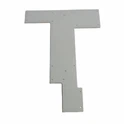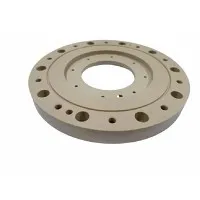

As a leading supplier in the field of milling machining PPSU parts, I've witnessed firsthand the critical role that an optimized milling path plays in achieving high - quality, efficient production. PPSU (Polyphenylsulfone) is a high - performance thermoplastic known for its excellent mechanical properties, chemical resistance, and high - temperature stability. However, machining PPSU presents unique challenges that require a well - thought - out milling strategy. In this blog, I'll share some insights on how to optimize the milling path for PPSU parts.
Understanding the Characteristics of PPSU
Before diving into the optimization of the milling path, it's essential to understand the properties of PPSU. PPSU has a relatively high melting point and good toughness. These properties mean that during milling, it can generate a significant amount of heat, which may lead to thermal deformation if not properly managed. Additionally, its toughness can cause the material to adhere to the cutting tool, resulting in poor surface finish and reduced tool life.
Initial Planning and Design Considerations
The first step in optimizing the milling path is the initial planning and design phase. When designing the part, we need to consider the manufacturability. Complex geometries may require more intricate milling paths, which can increase machining time and the risk of errors. Try to simplify the design as much as possible without sacrificing the functionality of the part.
For example, avoid sharp internal corners as they can be difficult to machine and may cause stress concentrations. Instead, use rounded corners with a reasonable radius. This not only makes the milling process smoother but also improves the mechanical performance of the final part.


Selecting the Right Cutting Tools
The choice of cutting tools is crucial for optimizing the milling path. For PPSU, carbide cutting tools are often a good choice due to their high hardness and wear resistance. The geometry of the cutting tool also matters. Tools with a large rake angle can reduce cutting forces and heat generation, which is beneficial for machining PPSU.
When selecting the cutting tool, consider the type of milling operation. For roughing, choose tools with a large flute count and a high feed rate to remove material quickly. For finishing, use tools with a fine edge and a lower feed rate to achieve a smooth surface finish.
Determining the Optimal Cutting Parameters
Cutting parameters such as cutting speed, feed rate, and depth of cut have a significant impact on the milling path optimization. The cutting speed should be carefully selected based on the material properties of PPSU and the cutting tool. A too - high cutting speed can generate excessive heat, while a too - low speed can lead to poor productivity.
The feed rate is related to the amount of material removed per tooth of the cutting tool. A higher feed rate can increase productivity, but it also needs to be balanced with the cutting force and surface finish requirements. The depth of cut should be chosen according to the strength of the cutting tool and the rigidity of the machining system. A large depth of cut can remove more material in one pass, but it may also cause tool deflection and poor surface quality.
Using Advanced Milling Strategies
There are several advanced milling strategies that can be employed to optimize the milling path for PPSU parts. One such strategy is trochoidal milling. Trochoidal milling involves a circular or spiral motion of the cutting tool, which allows for a more consistent engagement of the tool with the material. This reduces the cutting forces and heat generation, making it ideal for machining PPSU.
Another strategy is climb milling. In climb milling, the cutting tool rotates in the same direction as the feed motion. This results in a cleaner cut and less tool wear compared to conventional milling. However, climb milling requires a more rigid machining system to prevent the tool from pulling the workpiece.
Minimizing Tool Changes
Tool changes can significantly increase the machining time. To optimize the milling path, try to minimize the number of tool changes. Group similar operations together and use tools that can perform multiple functions. For example, a single end mill may be able to perform both roughing and finishing operations on certain features of the part.
Simulation and Verification
Before starting the actual machining process, it's highly recommended to use simulation software to verify the milling path. Simulation allows us to visualize the machining process, detect potential problems such as tool collisions or excessive cutting forces, and make necessary adjustments to the milling path.
There are many commercial simulation software packages available in the market. These software can simulate the cutting process in 3D, providing detailed information about the tool path, cutting forces, and surface finish. By using simulation, we can optimize the milling path offline, reducing the time and cost associated with trial - and - error on the machine.
Quality Control and Monitoring
During the machining process, it's important to implement quality control and monitoring measures. Use in - process inspection techniques such as probing to check the dimensions of the part at regular intervals. This allows us to detect any deviations from the design specifications early and make adjustments to the milling path if necessary.
Monitoring the cutting forces and power consumption can also provide valuable information about the machining process. An increase in cutting forces or power consumption may indicate tool wear or other problems with the milling path. By continuously monitoring these parameters, we can ensure the stability and quality of the machining process.
Conclusion
Optimizing the milling path for PPSU parts is a complex but essential task. By understanding the properties of PPSU, selecting the right cutting tools, determining the optimal cutting parameters, using advanced milling strategies, minimizing tool changes, and implementing simulation and quality control measures, we can achieve high - quality, efficient machining of PPSU parts.
As a trusted supplier of milling machining PPSU parts, we are committed to providing our customers with the best - in - class solutions. Whether you need a single prototype or a large - scale production run, we have the expertise and resources to meet your needs. If you're interested in our PPSU machining services, please feel free to contact us for further discussion and procurement negotiation. We look forward to working with you to bring your projects to life.
References
- Smith, J. (2018). Advanced Machining Techniques for High - Performance Plastics. Machining Technology Press.
- Brown, A. (2020). Cutting Tool Selection and Application. Industrial Cutting Tools Journal.
- Johnson, R. (2019). Simulation and Optimization of Milling Processes. Manufacturing Simulation Review.