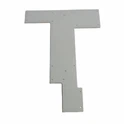
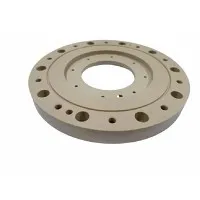
When it comes to milling PPSU parts, reducing the cutting time is crucial for both efficiency and cost - effectiveness. As a supplier of Milling machining PPSU, I've gathered a lot of hands - on experience and insights on how to optimize this process. Let's dive right in and explore some key strategies.
Understanding PPSU
First things first, let's understand a bit about PPSU. PPSU, or Polyphenylsulfone, is a high - performance thermoplastic known for its excellent heat resistance, chemical resistance, and mechanical properties. It's widely used in various industries, like aerospace, medical, and electronics. But working with PPSU can be tricky due to its hardness and toughness. When milling PPSU parts, these properties can lead to increased cutting times and tool wear.
Choosing the Right Tools
One of the most important factors in optimizing cutting time is selecting the proper cutting tools. For PPSU, tools with sharp edges are a must. Carbide end mills are a popular choice as they offer high hardness and good wear resistance. These tools can withstand the tough nature of PPSU and maintain their cutting performance for longer periods.
Also, consider the tool geometry. Tools with a high helix angle can help in better chip evacuation. When milling PPSU, chips can build up quickly, which not only increases the cutting time but can also damage the tool and the part. By choosing a tool with a high helix angle, the chips are effectively removed from the cutting zone, allowing the tool to cut smoothly and continuously.
Moreover, don’t overlook the quality of the coating on the tools. A good coating can significantly reduce friction between the tool and the PPSU material. Titanium nitride (TiN) coating, for example, can improve the tool's ability to cut through PPSU faster by reducing heat build - up and tool wear.
You can also refer to other related plastic machining processes, like CNC Machining PEEK, CNC Machining FR4 G10, and CNC Machining Nylon, to get more insights into tool selection for different plastics.
Optimal Cutting Parameters
Setting the right cutting parameters is essential for minimizing cutting time.
Speed and Feed Rates
The cutting speed and feed rates play a huge role. Higher cutting speeds can reduce the overall cutting time, but you need to be careful not to go too high. If the speed is too high, it can generate excessive heat, which can warp the PPSU part and damage the cutting tool. A good starting point for the cutting speed of PPSU is around 100 - 200 meters per minute, depending on the tool and the specific job requirements.


As for the feed rate, it should be set in a way that the tool can remove material efficiently without putting too much stress on it. A general rule of thumb is to use a feed rate of 0.05 - 0.15 mm per tooth for carbide end mills when milling PPSU.
Depth of Cut
The depth of cut also affects the cutting time. A deeper cut might seem like a good idea to remove more material at once, but it can increase the cutting forces and tool wear. For PPSU, it's often better to make multiple shallow cuts rather than one deep cut. This approach allows the tool to work more effectively and reduces the risk of tool breakage.
Workholding and Fixturing
Proper workholding and fixturing are often overlooked but are vital for optimizing cutting time. A well - designed fixture can hold the PPSU part securely in place, preventing any movement during the milling process. If the part moves, the tool might not cut accurately, leading to rework and increased cutting time.
Using fixtures that allow for quick part loading and unloading can also save a significant amount of time. For example, pneumatic or hydraulic fixtures can be operated quickly, reducing the non - cutting time between parts.
Coolant and Lubrication
Applying the right coolant and lubrication is another key aspect. Coolants help in reducing the heat generated during the cutting process. Since PPSU can be sensitive to heat, using a coolant can prevent thermal damage to the part and the tool.
There are different types of coolants available, such as water - based and oil - based coolants. Water - based coolants are more environmentally friendly and offer good cooling properties. However, they may not provide as much lubrication as oil - based coolants. Oil - based coolants, on the other hand, can reduce friction and wear on the tool, but they need to be handled carefully due to their flammability and environmental impact.
Lubricants can also be used in combination with coolants. They help in reducing the friction between the tool and the PPSU material, allowing the tool to cut more smoothly and quickly.
Toolpath Optimization
The toolpath is the path that the cutting tool follows during the milling process. Optimizing the toolpath can significantly reduce the cutting time.
Using modern CAM (Computer - Aided Manufacturing) software can help in generating efficient toolpaths. These software programs can analyze the part geometry and generate a toolpath that minimizes the distance the tool has to travel and maximizes material removal.
For example, climbing milling is a technique where the cutting tool moves in the same direction as the feed direction of the workpiece. This technique can reduce the cutting forces and improve the surface finish of the PPSU part, while also reducing the cutting time compared to conventional milling.
Operator Training
Last but not least, well - trained operators are essential. An operator who understands the properties of PPSU, the cutting tools, and the milling process can make real - time adjustments to optimize the cutting time.
Training should cover topics such as tool selection, setting cutting parameters, workholding, coolant application, and toolpath optimization. Operators should also be trained to identify and troubleshoot common problems, such as tool wear, chip clogging, and surface finish issues.
Conclusion
Optimizing the cutting time for milling PPSU parts requires a comprehensive approach. From choosing the right tools and setting optimal cutting parameters to using proper workholding, coolant, and toolpath optimization, every step matters. As a supplier of Milling machining PPSU, I'm committed to providing the best solutions to my customers. If you're interested in purchasing high - quality PPSU parts or need more information on optimizing the milling process, feel free to reach out for a procurement discussion.
References
- Modern Plastics Encyclopedia
- Handbook of Machining PPSU Materials
- Journal of High - Performance Plastic Machining