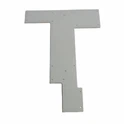
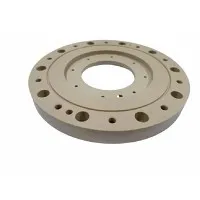
In the realm of precision manufacturing, CNC machining of Polyoxymethylene (POM) has emerged as a crucial process for creating high - quality, complex components. As a dedicated CNC Machining POM supplier, I've witnessed firsthand the challenges and opportunities that come with this field. Improving the productivity of CNC machining POM not only enhances operational efficiency but also boosts competitiveness in the market. In this blog, I'll share some practical strategies that have proven effective in my experience.
Understanding the Properties of POM
Before delving into productivity improvement, it's essential to understand the unique properties of POM. POM, also known as acetal or Delrin, is a high - performance engineering plastic. It has excellent mechanical properties, including high stiffness, low friction, and good dimensional stability. However, it also has a relatively low melting point and is prone to thermal expansion. These characteristics can pose challenges during CNC machining, such as tool wear, surface finish issues, and dimensional inaccuracies.
Tool Selection and Optimization
One of the most critical factors in CNC machining POM is the selection of appropriate cutting tools. High - speed steel (HSS) and carbide tools are commonly used. Carbide tools, in particular, offer several advantages. They have higher hardness and wear resistance, which allows for longer tool life and higher cutting speeds.
When choosing a tool, consider the geometry of the cutting edge. A sharp cutting edge reduces cutting forces and heat generation, minimizing the risk of melting or deforming the POM material. For example, end mills with a high helix angle can provide better chip evacuation, which is crucial for maintaining a clean cutting area and preventing chip re - cutting.
Regular tool maintenance is also essential. Tools should be sharpened or replaced at the appropriate intervals. Dull tools increase cutting forces, generate more heat, and can lead to poor surface finishes and dimensional errors. By monitoring tool wear and replacing tools in a timely manner, you can ensure consistent machining quality and productivity.
Cutting Parameters Optimization
Optimizing cutting parameters is another key aspect of improving productivity. The three main cutting parameters are cutting speed, feed rate, and depth of cut.
- Cutting Speed: The cutting speed is the speed at which the cutting edge of the tool moves relative to the workpiece. For POM, a relatively high cutting speed can be used compared to some other materials. However, it's important not to exceed the recommended speed, as this can cause excessive heat generation and tool wear. A typical cutting speed for carbide tools when machining POM ranges from 80 to 200 m/min, depending on the specific tool and machine setup.
- Feed Rate: The feed rate is the rate at which the tool advances into the workpiece. A higher feed rate can increase productivity, but it also needs to be balanced with the cutting speed and the strength of the tool. If the feed rate is too high, it can cause the tool to break or result in poor surface finishes. A feed rate of 0.1 - 0.3 mm/tooth is often suitable for CNC machining POM.
- Depth of Cut: The depth of cut is the thickness of the material removed in each pass of the tool. A larger depth of cut can reduce the number of passes required, but it also increases cutting forces. For POM, a depth of cut of 0.5 - 3 mm is generally recommended, depending on the tool and the complexity of the part.
By carefully adjusting these cutting parameters based on the specific requirements of the job, you can achieve the optimal balance between productivity and quality.
Workholding and Fixturing
Proper workholding and fixturing are often overlooked but play a significant role in productivity. A secure and stable workholding setup ensures that the workpiece remains in place during machining, reducing the risk of vibration and dimensional errors.
For POM parts, soft jaws or custom - made fixtures can be used. Soft jaws can be machined to match the shape of the workpiece, providing a large contact area and uniform clamping force. This helps to prevent deformation of the POM material, which is particularly important for thin - walled or delicate parts.
In addition, quick - change fixtures can significantly reduce setup time. By using a modular fixture system, you can easily swap out different workpieces without the need for extensive re - alignment and calibration. This allows for faster job changeovers and increased overall productivity.
Cooling and Lubrication
Cooling and lubrication are crucial for CNC machining POM. Since POM has a low melting point, excessive heat can cause the material to melt or deform. Using a suitable coolant or lubricant can help to dissipate heat, reduce friction, and improve surface finishes.
Water - soluble coolants are commonly used for POM machining. They provide good cooling and lubrication properties and are environmentally friendly. However, it's important to ensure that the coolant is compatible with the POM material to avoid any chemical reactions or surface damage.
In some cases, dry machining may also be an option. If dry machining is chosen, proper ventilation should be provided to remove the heat and chips generated during the process.
Automation and Programming
Automation can greatly enhance the productivity of CNC machining POM. CNC machines can be programmed to perform complex machining operations automatically, reducing the need for manual intervention.
Advanced programming techniques, such as high - speed machining (HSM) and adaptive machining, can also improve efficiency. HSM involves using high cutting speeds and feeds to reduce machining time. Adaptive machining, on the other hand, adjusts the cutting parameters in real - time based on the actual cutting conditions, ensuring optimal performance.
In addition, using computer - aided manufacturing (CAM) software can streamline the programming process. CAM software allows for the creation of accurate toolpaths and can simulate the machining process, helping to identify and correct potential issues before actual machining.
Quality Control and Inspection
Implementing a robust quality control system is essential for maintaining productivity. By detecting and correcting errors early in the machining process, you can avoid costly rework and scrap.
Regular inspections should be carried out using precision measuring instruments, such as calipers, micrometers, and coordinate measuring machines (CMMs). These instruments can ensure that the dimensions of the machined parts meet the required specifications.
Statistical process control (SPC) techniques can also be used to monitor the machining process. By collecting and analyzing data on key process parameters, you can identify trends and take proactive measures to prevent quality issues.
Conclusion
Improving the productivity of CNC machining POM requires a comprehensive approach that addresses various aspects, from tool selection and cutting parameters optimization to automation and quality control. As a CNC Machining POM supplier, I understand the importance of continuous improvement in this field.
By implementing the strategies outlined in this blog, you can enhance the efficiency of your CNC machining operations, reduce costs, and deliver high - quality POM parts to your customers. If you're interested in learning more about our CNC Machining POM services or have any specific requirements, feel free to contact us for a detailed discussion. We also offer CNC Machining FR4 G10 and CNC Machining PEEK services, and we're always ready to assist you in finding the best machining solutions for your needs.


References
- Boothroyd, G., Dewhurst, P., & Knight, W. (2011). Product Design for Manufacturing and Assembly. CRC Press.
- Kalpakjian, S., & Schmid, S. R. (2008). Manufacturing Engineering and Technology. Pearson Prentice Hall.
- Dornfeld, D., Min, S., & Takeuchi, Y. (2008). Handbook of Machining with Cutting Tools. CRC Press.