
Surface treatment plays a crucial role in various industries, from aerospace to consumer electronics. One often overlooked aspect of surface treatment is its impact on the sound - absorbing properties of a surface. As a surface treatment vendor, we've witnessed firsthand how different treatment methods can transform a surface's ability to deal with sound waves. In this blog post, I will explore the science behind this relationship and discuss how our surface treatment solutions can optimize sound absorption.
The Basics of Sound Absorption
Before delving into the role of surface treatment, it's essential to understand the fundamentals of sound absorption. Sound is a mechanical wave that travels through a medium, such as air. When sound waves hit a surface, three things can happen: reflection, absorption, and transmission.
Absorption occurs when the energy of the sound wave is converted into other forms of energy, primarily heat, as it interacts with the surface. The sound - absorbing coefficient (α) is a measure of a material's ability to absorb sound, ranging from 0 (total reflection) to 1 (total absorption). Surfaces with high sound - absorbing coefficients are desirable in environments where noise reduction is critical, such as recording studios, auditoriums, and industrial workshops.
How Surface Treatment Affects Sound Absorption
1. Porosity and Microstructure
One of the most significant ways surface treatment can impact sound absorption is by altering the porosity and microstructure of a surface. Many surface treatment techniques, such as electroplating and anodizing, can create a porous layer on the surface of a material. These pores act as tiny chambers where sound waves can enter and get trapped.
As sound waves travel into the pores, they bounce around multiple times, and the friction between the air molecules and the pore walls converts the sound energy into heat. For instance, in the case of Aluminum Alloys Surface Finishing, anodizing can create a highly porous oxide layer on the aluminum surface. This porous layer significantly enhances the sound - absorbing capabilities of the aluminum alloy, making it suitable for applications where both lightweight and sound - absorbing properties are needed, like in aircraft interiors.
2. Material Hardness and Density
Surface treatment can also change the hardness and density of a surface material. Harder and denser surfaces tend to reflect more sound, while softer and less dense materials are better at absorbing sound. For example, by applying a soft polymer coating through a surface treatment process, we can reduce the surface hardness and increase the sound - absorbing capacity.
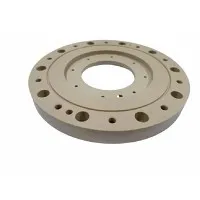
In the context of Engineering Plastic Surface Finishing, a well - applied coating can optimize the plastic's acoustic performance. The coating can act as a buffer, dampening the sound waves that hit the plastic surface and converting their energy into heat more effectively.
3. Surface Roughness
The roughness of a surface plays a vital role in sound absorption. A smooth surface reflects sound waves more efficiently, while a rough surface scatters the sound waves in multiple directions. When sound waves are scattered, a portion of their energy is dissipated, resulting in better sound absorption.
Our surface treatment processes can be adjusted to control the surface roughness precisely. For metal parts, techniques like sandblasting can create a rough texture on the surface. As a result, the Metal Parts Surface Finishing can enhance the sound - absorbing properties of the metal components, making them suitable for use in noisy machinery to reduce overall noise levels.
Real - world Applications
The impact of surface treatment on sound absorption has numerous real - world applications.
In the Automotive Industry
In cars, excessive noise can be a major annoyance to passengers. By applying appropriate surface treatments to the interior panels, engine covers, and other components, automotive manufacturers can significantly reduce the noise level inside the vehicle. For example, a surface - treated engine cover can absorb sound waves generated by the engine, preventing them from entering the passenger compartment.
In Architectural Design
In buildings, sound control is essential for creating comfortable and functional spaces. Surface treatment can be applied to walls, ceilings, and floors to improve their sound - absorbing capabilities. For instance, in a concert hall, treated acoustic panels can be used to enhance the sound quality by minimizing unwanted reflections and ensuring that the sound is well - distributed throughout the space.
In Industrial Settings
Industrial machinery often produces high levels of noise, which can be harmful to workers and cause disturbances in the surrounding environment. By treating the surfaces of machinery components, such as gears, motors, and enclosures, the noise emitted can be reduced. This not only improves the working conditions but also helps industries comply with noise regulations.


Our Surface Treatment Solutions for Sound Absorption
As a surface treatment provider, we offer a range of solutions tailored to enhance the sound - absorbing properties of different materials. Our team of experts can analyze your specific requirements and recommend the most suitable treatment methods.
We use state - of - the - art equipment and high - quality materials to ensure the effectiveness and durability of our surface treatments. Whether you need to treat aluminum alloys, engineering plastics, or metal parts, we have the expertise and technology to deliver exceptional results.
Conclusion
In conclusion, surface treatment has a profound impact on the sound - absorbing properties of a surface. By altering the porosity, hardness, density, and roughness of a surface, we can significantly enhance its ability to absorb sound. This has far - reaching implications in various industries, from automotive to architecture and industrial manufacturing.
If you're interested in exploring how our surface treatment solutions can improve the sound - absorbing capabilities of your products or components, we encourage you to reach out. Our team is ready to discuss your needs and provide you with a customized solution. Contact us today to start the conversation about optimizing your surface's acoustic performance.
References
- Beranek, Leo L. “Acoustics.” American Institute of Physics, 1986.
- Craik, R. J. “Surface Coatings: Science and Technology.” Chapman & Hall, 1994.
- Fahy, Frank J. “Foundations of Engineering Acoustics.” Academic Press, 2001.