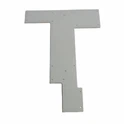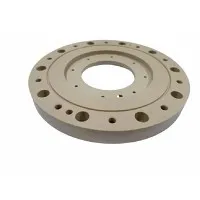

Hey there! I'm a supplier in the field of CNC machining FR4 G10, and I often get asked about the accuracy of CNC machining for FR4 G10. So, I thought I'd share my insights on this topic.
First off, let's talk a bit about FR4 G10. It's a composite material that's widely used in various industries, especially in electronics. It's known for its excellent electrical insulation properties, high mechanical strength, and good chemical resistance. These features make it a top - choice for parts like circuit boards, insulators, and structural components.
When it comes to CNC machining, accuracy is a big deal. It determines whether the final product will fit its intended purpose and meet the required specifications. So, how accurate can we get when machining FR4 G10?
Factors Affecting the Accuracy of CNC Machining FR4 G10
1. Machine Quality
The quality of the CNC machine itself plays a huge role. High - end machines come with better control systems, more precise axes movement, and advanced sensors. These machines can usually achieve a higher level of accuracy. For example, a top - notch CNC milling machine can have a positioning accuracy of ±0.005mm to ±0.01mm. This means that when machining FR4 G10, it can place the cutting tool very precisely, resulting in a more accurate part.
2. Tooling
The cutting tools used in CNC machining are also crucial. For FR4 G10, we need tools that can withstand its hardness and abrasive nature. Carbide tools are often a good choice because they are hard and can maintain their sharpness for longer periods. The geometry of the tool, such as the rake angle and the cutting edge radius, also affects the accuracy. A well - designed tool can reduce the amount of chatter and vibration during machining, which in turn improves the surface finish and dimensional accuracy of the part.
3. Material Properties
FR4 G10 has its own set of material properties that can influence the machining accuracy. It has a certain degree of hardness and brittleness. During machining, if the cutting parameters are not set correctly, it can lead to issues like chipping or cracking on the edges of the part. Also, the internal stress in the material can cause distortion after machining. To minimize these problems, we need to understand the material well and adjust the machining process accordingly.
4. Programming
The CNC program is like the brain of the machining process. A well - written program can optimize the tool path, cutting speed, and feed rate. It can also take into account the specific requirements of the part, such as the tolerance and surface finish. For example, if we need a very tight tolerance on a hole in a FR4 G10 part, the program can be set to use a finishing pass with a slower feed rate and a smaller step - over to achieve the desired accuracy.
Typical Accuracy Levels in CNC Machining FR4 G10
In general, for most CNC machining operations on FR4 G10, we can achieve a dimensional accuracy of around ±0.02mm to ±0.05mm. This level of accuracy is sufficient for many applications, such as making standard circuit boards or simple insulators.
However, if we are dealing with more complex parts or applications that require extremely high precision, we can push the accuracy even further. With the right combination of high - quality machines, proper tooling, and optimized programming, we can achieve an accuracy of up to ±0.005mm. This is often required for parts in high - end electronics or aerospace applications, where even the slightest deviation can cause malfunctions.
Comparison with Other Materials
Let's compare the accuracy of CNC machining FR4 G10 with some other common plastics. Check out these links if you're interested in CNC machining other materials: CNC Machining PPSU, CNC Machining POM, and CNC Machining Nylon.
Materials like PPSU, POM, and Nylon are also popular in CNC machining. PPSU is known for its high - temperature resistance and good mechanical properties. When machining PPSU, we can usually achieve an accuracy similar to FR4 G10, around ±0.02mm to ±0.05mm.
POM, on the other hand, is a very easy - to - machine plastic. It has a lower hardness compared to FR4 G10, and we can often achieve a slightly higher accuracy, sometimes even down to ±0.01mm in some cases.
Nylon is a flexible and tough material. Machining nylon can be a bit more challenging in terms of achieving high accuracy because it has a tendency to absorb moisture, which can cause dimensional changes. But with proper drying and machining techniques, we can still achieve an accuracy of around ±0.02mm to ±0.03mm.
Ensuring High Accuracy in CNC Machining FR4 G10
To ensure the highest possible accuracy when machining FR4 G10, we follow a strict set of procedures.
First, we conduct a thorough inspection of the raw material. We check for any visible defects, such as cracks or inclusions, and measure its dimensions to make sure it meets the specifications.
Next, we select the appropriate cutting tools and set the cutting parameters based on the material properties and the requirements of the part. We often perform test cuts on a sample piece to fine - tune the parameters and ensure that the desired accuracy can be achieved.


During the machining process, we use in - process inspection techniques. This can include using coordinate measuring machines (CMMs) or optical measurement systems to check the dimensions of the part at various stages of machining. If any deviations are detected, we can make adjustments to the program or the cutting parameters immediately.
Finally, after the machining is completed, we perform a final inspection. We measure all the critical dimensions of the part using high - precision measuring instruments to ensure that it meets the required tolerance.
Conclusion
So, in conclusion, the accuracy of CNC machining for FR4 G10 can vary depending on several factors. But with the right equipment, tooling, programming, and quality control measures, we can achieve a high level of accuracy, ranging from ±0.02mm to ±0.005mm.
If you're in the market for high - precision FR4 G10 parts, I'd love to have a chat with you. Whether you need a small batch for prototyping or a large - scale production run, I can provide you with top - quality CNC machining services. Just reach out, and we can start discussing your project requirements.
References
- "Handbook of Plastic Machining"
- "CNC Machining Technology for Composite Materials"