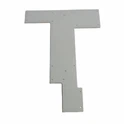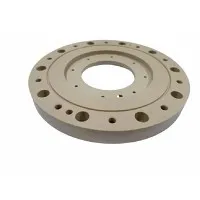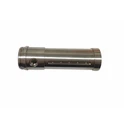

PEEK, or polyether ether ketone, is a high-performance engineering plastic known for its excellent mechanical properties, chemical resistance, and thermal stability. As a supplier of CNC Machining PEEK services, I often get asked about the recommended spindle speed for CNC machining this material. In this blog post, I'll share some insights based on my experience and industry knowledge.
Understanding PEEK's Characteristics
Before diving into the spindle speed, it's crucial to understand what makes PEEK unique. PEEK has a high melting point, around 343°C (649°F), which means it can withstand high temperatures without deforming. It also has good wear resistance and low friction coefficients, making it suitable for applications in harsh environments. However, these same properties can pose challenges during CNC machining.
PEEK is a semi - crystalline polymer, and its structure can cause it to be more prone to stress cracking and chipping if machined incorrectly. The heat generated during machining can also lead to thermal degradation if not managed properly. This is where the spindle speed plays a vital role.
The Role of Spindle Speed in CNC Machining
The spindle speed in CNC machining refers to the rotational speed of the cutting tool, usually measured in revolutions per minute (RPM). It affects several aspects of the machining process, including the cutting force, surface finish, and tool life.
A higher spindle speed generally results in a faster cutting rate, which can reduce the machining time. However, it also generates more heat, which can be a problem for PEEK. On the other hand, a lower spindle speed may produce a better surface finish but can increase the machining time and may cause more tool wear due to the higher cutting forces.


Recommended Spindle Speeds for CNC Machining PEEK
The recommended spindle speed for CNC machining PEEK can vary depending on several factors, such as the type of cutting tool, the diameter of the tool, the depth of cut, and the specific grade of PEEK.
- For Small - Diameter Tools (Less than 6mm)
- When using small - diameter end mills or drills, a relatively high spindle speed can be used. A good starting point is around 10,000 - 15,000 RPM. This higher speed helps to keep the cutting edge sharp and reduces the chances of the tool getting clogged with chips. For example, if you're using a 3mm end mill to machine a thin - walled PEEK part, a speed of 12,000 RPM can provide a good balance between cutting efficiency and surface quality.
- For Medium - Diameter Tools (6mm - 12mm)
- For medium - sized tools, the spindle speed can be adjusted to around 6,000 - 10,000 RPM. At this range, the cutting forces are more manageable, and the heat generation is also kept in check. Suppose you're using an 8mm end mill to machine a PEEK block. A speed of 8,000 RPM would be a reasonable choice to ensure smooth cutting and good surface finish.
- For Large - Diameter Tools (Greater than 12mm)
- When dealing with large - diameter tools, a lower spindle speed is recommended, typically in the range of 3,000 - 6,000 RPM. This is because larger tools generate more heat and cutting forces at higher speeds. For instance, if you're using a 16mm face mill to machine a large PEEK plate, a speed of 4,000 RPM can prevent overheating and excessive tool wear.
Other Factors to Consider
- Cutting Tool Material
- The material of the cutting tool also affects the recommended spindle speed. Carbide tools are generally more suitable for machining PEEK compared to high - speed steel (HSS) tools. Carbide tools can withstand higher temperatures and cutting forces, allowing for higher spindle speeds. For example, a carbide end mill can be run at a slightly higher RPM than an HSS end mill when machining PEEK.
- Coolant and Lubrication
- Using a coolant or lubricant during machining can significantly improve the process. Coolants help to dissipate heat, reduce friction, and flush away chips. For PEEK, a water - soluble coolant is often a good choice. When using coolant, you may be able to increase the spindle speed slightly as the heat is being removed more effectively.
- Feed Rate
- The feed rate, which is the speed at which the workpiece moves relative to the cutting tool, is closely related to the spindle speed. A proper combination of spindle speed and feed rate is essential for achieving good results. Generally, a higher feed rate can be used with a higher spindle speed, but it needs to be adjusted carefully to avoid excessive cutting forces and poor surface finish.
Comparing with Other Plastics
It's interesting to compare the recommended spindle speeds for CNC machining PEEK with other common plastics. For example, CNC Machining Polycarbonate typically allows for higher spindle speeds because polycarbonate has a lower melting point and is less prone to thermal degradation. Polycarbonate can often be machined at spindle speeds of 15,000 - 20,000 RPM for small - diameter tools.
CNC Machining Nylon also has different requirements. Nylon is more flexible and has a lower hardness compared to PEEK. It can be machined at a wide range of spindle speeds, but generally, it can tolerate higher speeds similar to polycarbonate in some cases, especially when using sharp cutting tools.
Conclusion
Determining the recommended spindle speed for CNC machining PEEK is not a one - size - fits - all situation. It requires a careful consideration of various factors, including the tool diameter, cutting tool material, coolant usage, and feed rate. By following the general guidelines mentioned above and making some adjustments based on your specific machining setup, you can achieve optimal results in terms of surface finish, tool life, and machining efficiency.
As a CNC Machining PEEK supplier, I have extensive experience in handling different PEEK machining projects. If you're looking for high - quality CNC machined PEEK parts or have any questions about the machining process, feel free to reach out to me for a consultation and to discuss your procurement needs.
References
- "Machining of Engineering Plastics" - A technical guide on machining various plastics.
- Industry reports on high - performance plastics machining.