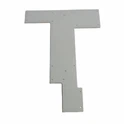
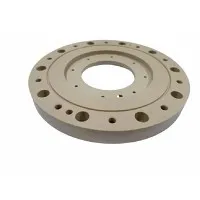
Hey there! As a supplier of machined POM parts, I often get questions about the moisture absorption rate of these parts. It's a crucial factor that can significantly impact the performance and durability of POM components in various applications. So, let's dive right in and explore what the moisture absorption rate of machined POM parts is all about.
First off, let's talk a bit about POM. POM, or polyoxymethylene, is a high - performance engineering plastic known for its excellent mechanical properties, such as high stiffness, low friction, and good dimensional stability. It's widely used in industries like automotive, electronics, and consumer goods. But when it comes to moisture, POM has its own characteristics.
The moisture absorption rate of POM is relatively low compared to some other plastics. Under normal conditions, POM has a moisture absorption rate of around 0.2% - 0.3% when fully saturated. This is quite different from materials like nylon, which can have a much higher moisture absorption rate. For example, if you're interested in CNC Machining Nylon, nylon can absorb anywhere from 1% to 3% of moisture, depending on the type and environmental conditions.
Why does the moisture absorption rate matter? Well, when a material absorbs moisture, it can lead to dimensional changes. In the case of POM, even a small amount of moisture can cause some expansion. This might not seem like a big deal, but in precision applications where tight tolerances are required, these dimensional changes can be a real problem. For instance, in automotive engine components or electronic connectors, a slight change in size due to moisture absorption can lead to misfits, reduced performance, or even complete failure of the part.


Another aspect affected by moisture absorption is the mechanical properties of POM. As POM absorbs moisture, its stiffness and strength can decrease. This means that parts made from POM might not be able to withstand the same level of stress and load as they would in a dry environment. However, the good news is that because the moisture absorption rate of POM is relatively low, these changes are also relatively minor compared to materials with higher absorption rates.
Now, let's talk about how the machining process can influence the moisture absorption rate of POM parts. During machining, the surface finish of the part can play a role. A rough surface finish can provide more areas for moisture to penetrate, potentially increasing the moisture absorption rate. On the other hand, a smooth surface finish can act as a bit of a barrier, reducing the amount of moisture that can be absorbed. That's why at our company, we pay close attention to the machining process to ensure that the surface finish of our POM parts is as smooth as possible.
The environmental conditions also have a huge impact on the moisture absorption rate of machined POM parts. In a high - humidity environment, POM parts will absorb more moisture compared to a dry environment. For example, if you're using POM parts in a tropical climate or near a body of water, the moisture in the air can cause the parts to absorb more water over time. Similarly, if the parts are exposed to water directly, such as in a water - based manufacturing process or a marine application, the moisture absorption will be much higher.
To mitigate the effects of moisture absorption, there are a few things you can do. One option is to use a coating on the POM parts. A suitable coating can act as a barrier, preventing moisture from reaching the surface of the POM. Another approach is to control the storage and operating environment. Keeping the parts in a dry place and using dehumidifiers in the working area can help reduce the amount of moisture in the air and, in turn, the moisture absorption of the POM parts.
When it comes to CNC Machining POM, we have a lot of experience. Our machining processes are optimized to produce high - quality POM parts with the best possible surface finish and dimensional accuracy. We understand the importance of the moisture absorption rate and take steps to minimize its impact on our parts.
In comparison to other plastics, like polycarbonate, POM has a different moisture absorption profile. CNC Machining Polycarbonate results in parts with a moisture absorption rate that is generally higher than POM but lower than nylon in many cases. Polycarbonate can absorb around 0.15% - 0.35% of moisture when fully saturated. Each plastic has its own unique set of properties, and the moisture absorption rate is just one of the factors that need to be considered when choosing the right material for a specific application.
If you're in the market for machined POM parts, it's essential to understand the moisture absorption rate and how it can affect your project. Whether you're designing a new product or looking to replace existing parts, our team of experts can help you make the right decisions. We can provide detailed information about the moisture absorption characteristics of our POM parts and offer solutions to minimize any potential issues.
So, if you're interested in learning more about our machined POM parts or have any questions regarding moisture absorption or other aspects of POM, don't hesitate to reach out. We're here to help you find the best solutions for your needs and ensure that your projects are a success.
References:
- Engineering Plastics Handbook, various editions
- Research papers on the properties of POM and its moisture absorption characteristics
- Industry reports on the use of POM in different applications