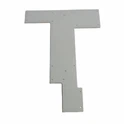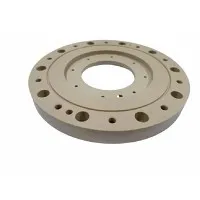

Hey there! I'm a supplier in the business of milling machining Peek. You might be wondering, "What is the maximum milling depth for Peek?" Well, let's dive right into it.
PEEK, or Polyether Ether Ketone, is a high - performance thermoplastic known for its excellent mechanical properties, chemical resistance, and high - temperature stability. These features make it a top choice in various industries, such as aerospace, medical, and automotive. But when it comes to milling this material, determining the maximum milling depth is crucial for a successful machining process.
Factors Affecting the Maximum Milling Depth of Peek
Material Properties
PEEK has a relatively high melting point and good mechanical strength. However, it also has a certain degree of brittleness. When the milling depth is too large, the cutting force will increase significantly. This can lead to excessive stress on the PEEK material, causing it to crack or break. Also, the heat generated during the milling process can affect the material. PEEK's thermal conductivity is not very high, so if the milling depth is too deep, the heat generated by cutting can't be dissipated quickly. This can result in thermal deformation of the material, affecting the dimensional accuracy of the final product.
Tool Geometry
The design of the milling tool plays a vital role in determining the maximum milling depth. Tools with sharp cutting edges can reduce the cutting force, allowing for a relatively deeper milling depth. For example, end mills with a high helix angle can improve chip evacuation. When chips are removed smoothly, it reduces the chance of chip re - cutting and the associated heat generation. This, in turn, enables a greater milling depth. On the other hand, dull tools will increase the cutting force and heat, limiting the maximum milling depth.


Machine Rigidity
The rigidity of the milling machine is another key factor. A more rigid machine can better withstand the cutting forces generated during the milling process. If the machine is not rigid enough, excessive vibrations will occur when the milling depth is increased. These vibrations can cause poor surface finish, inaccurate dimensions, and even damage to the tool and the workpiece. So, a high - quality, rigid milling machine is essential for achieving a greater maximum milling depth for Peek.
Typical Maximum Milling Depths for Peek
In general, for most standard milling operations on Peek, the maximum milling depth can range from 0.5 mm to 3 mm. However, this is a very rough estimate and can vary widely depending on the factors mentioned above.
If you're using a high - quality end mill with a sharp cutting edge on a rigid milling machine, and the PEEK material has good quality, you might be able to achieve a maximum milling depth closer to 3 mm. But in some cases, especially when dealing with more complex geometries or when high precision is required, a shallower milling depth of around 0.5 mm to 1 mm might be more appropriate.
For example, in the aerospace industry, where parts need to meet extremely strict quality and precision requirements, the milling depth of PEEK components is often kept relatively shallow. This ensures that the material doesn't experience excessive stress or thermal deformation, maintaining the integrity of the part.
Comparison with Other Plastics
It's interesting to compare the maximum milling depth of Peek with other commonly machined plastics.
Let's take a look at CNC Machining Polycarbonate. Polycarbonate is a more ductile plastic compared to Peek. It can generally tolerate a relatively larger milling depth. Due to its good impact resistance and lower melting point, in some cases, the maximum milling depth for polycarbonate can reach up to 5 mm or even more, depending on the machining conditions.
CNC Machining Nylon is another popular plastic. Nylon has a lower hardness and better self - lubricating properties. This allows for relatively deep milling, often up to 4 mm. But it also has a higher water absorption rate, which can affect its dimensional stability during machining.
CNC Machining PMMA, or acrylic, is a brittle plastic. Similar to Peek, it requires careful control of the milling depth. Usually, the maximum milling depth for PMMA is around 2 - 3 mm to avoid cracking and ensure a good surface finish.
Tips for Achieving the Maximum Milling Depth
If you want to achieve the maximum possible milling depth for Peek while maintaining good quality, here are some tips:
Tool Selection
Choose high - quality tools specifically designed for machining plastics. Carbide end mills are a popular choice for milling Peek. They have sharp cutting edges and good wear resistance. Make sure to keep the tools sharp by regularly inspecting and replacing them when they become dull.
Cutting Parameters
Optimize the cutting parameters, such as cutting speed, feed rate, and spindle speed. A higher cutting speed can reduce the cutting force, but it also generates more heat. So, you need to find the right balance. A lower feed rate can improve the surface finish and reduce the stress on the material, allowing for a deeper milling depth.
Cooling and Lubrication
Use appropriate cooling and lubrication methods. Coolants can help dissipate the heat generated during cutting, reducing the chance of thermal deformation. Some water - based coolants are suitable for milling Peek. They can also improve chip evacuation, enabling a greater milling depth.
Conclusion
In conclusion, the maximum milling depth for Peek is influenced by multiple factors, including material properties, tool geometry, and machine rigidity. While the typical range is from 0.5 mm to 3 mm, with the right tools, cutting parameters, and machining conditions, you might be able to push the limit closer to the upper end of this range.
If you're in the market for high - quality milling machining of Peek, I'm here to help. Whether you have a small - scale project or a large - scale production run, I can provide the expertise and services you need. Don't hesitate to reach out for a quote or to discuss your specific requirements. Let's work together to achieve the best results for your Peek machining needs.
References
- "Plastic Machining Handbook"
- Industry research reports on high - performance thermoplastics machining