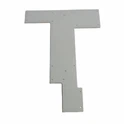
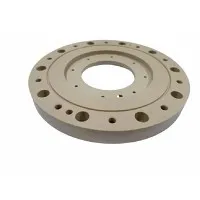
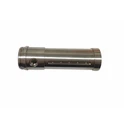
As a supplier of machined POM (Polyoxymethylene) parts, I often get asked about the maximum machining speed for these components. POM, known for its high stiffness, low friction, and excellent dimensional stability, is a popular choice in various industries, including automotive, electronics, and consumer goods. Understanding the maximum machining speed is crucial for optimizing production efficiency and ensuring the quality of the final product.
Factors Affecting the Maximum Machining Speed of POM Parts
The maximum machining speed for POM parts is not a fixed value but is influenced by several factors. These factors interact with each other, and a comprehensive understanding of them is necessary to determine the optimal machining speed.
Material Properties of POM
POM has unique material properties that affect its machinability. Its high crystallinity gives it good mechanical strength but also makes it prone to heat generation during machining. Excessive heat can lead to melting, deformation, and poor surface finish of the parts. Therefore, the machining speed needs to be carefully controlled to avoid overheating.
Tool Geometry and Material
The geometry and material of the cutting tool play a significant role in determining the maximum machining speed. A sharp tool with the appropriate rake angle and clearance angle can reduce cutting forces and heat generation, allowing for higher machining speeds. Carbide tools are commonly used for machining POM due to their high hardness and wear resistance. However, the tool's coating can also affect its performance. For example, a TiN (Titanium Nitride) coated tool can reduce friction and improve chip evacuation, enabling faster machining.
Machining Operation
Different machining operations, such as turning, milling, drilling, and tapping, have different requirements for machining speed. For instance, turning operations generally allow for higher speeds compared to drilling operations. This is because turning involves continuous cutting, while drilling requires the tool to penetrate the material, which generates more heat and requires more power.
Machine Tool Capabilities
The capabilities of the machine tool, including its spindle speed, power, and rigidity, also limit the maximum machining speed. A high - performance machine tool with a powerful spindle and good rigidity can handle higher cutting speeds. However, it is essential to ensure that the machine tool is properly maintained and calibrated to achieve optimal performance.
Determining the Maximum Machining Speed
To determine the maximum machining speed for POM parts, a combination of theoretical calculations and practical testing is often required.
Theoretical Calculations
Theoretical calculations can provide a starting point for determining the machining speed. The cutting speed (Vc) can be calculated using the formula:
Vc = π * D * n / 1000


where Vc is the cutting speed in m/min, D is the diameter of the cutting tool in mm, and n is the spindle speed in rpm.
However, this formula only provides a basic estimate, and other factors such as the material properties and machining operation need to be considered.
Practical Testing
Practical testing is the most reliable way to determine the maximum machining speed. Start with a conservative speed and gradually increase it while monitoring the cutting forces, surface finish, and tool wear. The maximum machining speed is reached when any of the following occurs:
- Excessive tool wear: If the tool wears out too quickly, it indicates that the machining speed is too high.
- Poor surface finish: A rough or uneven surface finish may be a sign of overheating or excessive cutting forces, which means the speed needs to be reduced.
- Excessive heat generation: If the workpiece becomes too hot to touch, it is a clear indication that the machining speed is too high.
Recommended Machining Speeds for POM Parts
Based on industry experience and practical testing, here are some general recommendations for machining speeds for POM parts:
Turning
For turning operations, the cutting speed can range from 80 - 200 m/min, depending on the tool material and the diameter of the workpiece. A carbide tool can generally achieve higher speeds compared to a high - speed steel tool. The feed rate can be between 0.1 - 0.3 mm/rev, and the depth of cut can be 0.5 - 2 mm.
Milling
In milling operations, the cutting speed is typically in the range of 60 - 150 m/min. The feed per tooth can be 0.05 - 0.2 mm/tooth, and the axial depth of cut can be 1 - 5 mm, while the radial depth of cut can be 0.5 - 2 mm.
Drilling
Drilling POM requires lower speeds compared to turning and milling. The cutting speed for drilling is usually between 20 - 60 m/min. The feed rate can be 0.05 - 0.2 mm/rev, depending on the drill diameter.
It is important to note that these are just general guidelines, and the actual machining speed may need to be adjusted based on the specific requirements of the part and the machining conditions.
Importance of Optimal Machining Speed
Maintaining an optimal machining speed is crucial for several reasons:
Quality of the Parts
An optimal machining speed ensures a good surface finish and dimensional accuracy of the parts. Excessive machining speed can lead to poor surface finish, burrs, and dimensional errors, which can affect the part's functionality and performance.
Tool Life
Using the appropriate machining speed can significantly extend the tool's life. High - speed machining can cause rapid tool wear, leading to frequent tool changes and increased production costs. By operating at the optimal speed, the tool can maintain its sharpness for a longer time, reducing tooling costs.
Production Efficiency
An optimal machining speed can improve production efficiency by reducing cycle times. However, it is a balance between speed and quality. If the speed is too high, it may result in rework or scrap, which can actually increase the overall production time.
Other Machining Considerations for POM Parts
In addition to the machining speed, there are other important considerations when machining POM parts:
Chip Evacuation
Proper chip evacuation is essential for maintaining a high - quality surface finish and preventing tool damage. POM chips can be stringy, which can cause them to wrap around the tool and interfere with the cutting process. Using a coolant or lubricant can help break up the chips and improve chip evacuation.
Clamping and Fixturing
POM parts are relatively soft and can be easily deformed during clamping. Therefore, it is important to use appropriate clamping and fixturing methods to ensure the part's stability without causing excessive deformation.
Related Machining Processes
If you are interested in other plastic machining processes, we also offer CNC Machining Nylon, CNC Machining PEEK, and CNC Machining PPSU. Each of these materials has its own unique properties and machining requirements.
Conclusion
Determining the maximum machining speed for POM parts is a complex process that involves considering multiple factors such as material properties, tool geometry, machining operation, and machine tool capabilities. By understanding these factors and using a combination of theoretical calculations and practical testing, it is possible to achieve an optimal machining speed that ensures high - quality parts, long tool life, and efficient production.
If you are in need of high - quality machined POM parts or have any questions about the machining process, please feel free to contact us for procurement and further discussion. We are committed to providing the best solutions for your specific needs.
References
- Kalpakjian, S., & Schmid, S. R. (2010). Manufacturing Engineering and Technology. Pearson Prentice Hall.
- ASM Handbook, Volume 16: Machining. ASM International.
- Tooling manufacturers' catalogs and technical guides.