


Hey there! As a supplier in the precision parts processing industry, I've been keeping a close eye on the future development trends. It's a super exciting time, and I'm stoked to share my thoughts with you.
First off, let's talk about automation. In the coming years, automation is going to play an even bigger role in precision parts processing. With the advancement of technology, more and more processes will be automated. This means faster production times, higher accuracy, and reduced human error. For example, robots can be programmed to perform repetitive tasks with extreme precision. They don't get tired or make mistakes due to fatigue, which is a huge advantage in this industry. Automated systems can also monitor the production process in real - time, adjusting parameters as needed to ensure the quality of the parts. This level of automation will not only increase efficiency but also lower costs in the long run.
Another trend that's really taking off is the use of advanced materials. We're no longer just working with traditional metals like steel and aluminum. Now, we're seeing a rise in the use of composite materials, ceramics, and even some high - performance plastics. These materials offer unique properties such as high strength - to - weight ratios, excellent heat resistance, and corrosion resistance. For instance, in the aerospace industry, composite materials are being used more frequently to reduce the weight of aircraft parts without sacrificing strength. As a precision parts processing supplier, we need to be able to work with these new materials. That means investing in the right tools and equipment, as well as training our staff to handle them properly.
Precision Prototyping Production is also becoming more important. With the increasing demand for customized parts, prototyping allows us to quickly test and validate designs before mass production. It helps our customers save time and money by identifying potential issues early on. By using advanced prototyping techniques, we can create highly accurate models of the parts, which can be used for functional testing and design verification. You can learn more about Precision Prototyping Production.
CNC Turning and Milling Compound Machining is another area that's evolving rapidly. This technology combines the capabilities of turning and milling in a single machine, allowing for more complex and precise parts to be manufactured. It reduces the need for multiple setups and transfers between different machines, which in turn improves the accuracy and efficiency of the production process. With CNC turning and milling compound machining, we can create parts with intricate geometries and tight tolerances. Check out CNC Turning and Milling Compound Machining for more details.
The trend towards 5 Axis High Complex Machining is also very significant. This technology enables us to machine parts from multiple angles in a single setup, which is ideal for creating highly complex and precise components. In industries like medical device manufacturing and automotive, 5 axis machining is becoming essential for producing parts with complex shapes and features. It offers greater flexibility and precision compared to traditional machining methods. If you're interested in learning more about the capabilities of 5 Axis High Complex Machining, click the link.

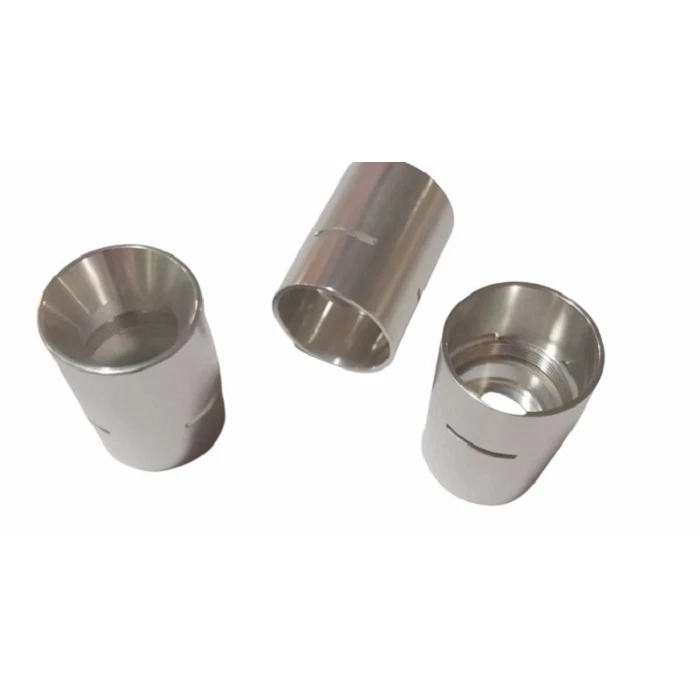
In addition to these technological trends, there's also a growing focus on sustainability in the precision parts processing industry. Customers are becoming more environmentally conscious, and they expect us to do our part. This means reducing waste, using energy - efficient equipment, and implementing recycling programs. We're looking into ways to optimize our production processes to minimize the environmental impact. For example, we can use coolant recycling systems to reduce the amount of coolant waste, and we can invest in energy - saving machinery.
Quality control is always going to be a top priority. In the future, we'll see even more advanced quality control methods. Non - destructive testing techniques such as X - ray inspection and ultrasonic testing will become more common. These methods allow us to detect internal defects in parts without damaging them. We'll also be using more sophisticated metrology equipment to measure the dimensions and surface finish of parts with extreme accuracy. This ensures that every part we produce meets the highest quality standards.
The demand for smaller and more precise parts is also on the rise. In industries like electronics and micro - mechanics, there's a need for parts with incredibly small dimensions and tight tolerances. As a precision parts processing supplier, we need to be able to meet these requirements. This might involve using micro - machining techniques and specialized equipment.
So, what does all this mean for you as a potential customer? Well, it means that we're constantly evolving to meet your needs. Whether you need a prototype for a new product or a large - scale production run of precision parts, we have the technology and expertise to get the job done. We're committed to providing high - quality parts at competitive prices, with fast turnaround times.
If you're in the market for precision parts processing services, I encourage you to get in touch with us. We'd love to have a chat about your project, understand your requirements, and see how we can help. Whether it's a simple part or a highly complex component, we're here to support you every step of the way.
In conclusion, the future of precision parts processing is full of exciting possibilities. With the rapid advancement of technology, we're able to offer more precise, efficient, and sustainable solutions. We're ready to embrace these trends and continue to provide the best service to our customers. So, don't hesitate to reach out and start a conversation about your precision parts needs.
References
- Industry reports on precision parts processing
- Technical papers on advanced manufacturing technologies
- Interviews with experts in the precision parts processing field





