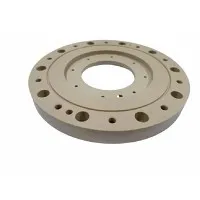
As a supplier of Milling machining Peek parts, I understand the importance of maintaining the quality and cleanliness of these precision components. PEEK (Polyetheretherketone) is a high-performance thermoplastic known for its excellent mechanical properties, chemical resistance, and biocompatibility. Milled PEEK parts are widely used in various industries, including aerospace, medical, automotive, and electronics. However, after the machining process, these parts often require thorough cleaning to remove contaminants such as chips, coolant residues, and lubricants. In this blog post, I will discuss the best ways to clean milled PEEK parts to ensure their optimal performance and longevity.
Understanding the Contaminants
Before diving into the cleaning methods, it's essential to understand the types of contaminants that can adhere to milled PEEK parts. During the milling process, small chips of PEEK and other materials used in the machining operation can accumulate on the surface of the parts. Coolants and lubricants are also commonly used to reduce friction and heat during machining, but they can leave behind residues that may affect the part's performance. Additionally, dust and other environmental particles can settle on the parts during handling and storage.
Cleaning Methods
1. Ultrasonic Cleaning
Ultrasonic cleaning is one of the most effective methods for cleaning milled PEEK parts. This process uses high-frequency sound waves to create microscopic bubbles in a cleaning solution. As these bubbles collapse, they generate a powerful scrubbing action that can remove even the most stubborn contaminants from the surface of the parts.
To perform ultrasonic cleaning, follow these steps:
- Select the appropriate cleaning solution: Choose a cleaning solution that is compatible with PEEK and can effectively dissolve the contaminants. Mild detergents or specialized plastic cleaners are often recommended.
- Prepare the ultrasonic cleaner: Fill the ultrasonic cleaner tank with the cleaning solution and set the appropriate temperature and cleaning time according to the manufacturer's instructions.
- Load the parts: Place the milled PEEK parts in a suitable basket or holder and immerse them in the cleaning solution. Make sure the parts are not overcrowded to ensure proper cleaning.
- Start the cleaning process: Turn on the ultrasonic cleaner and let it run for the specified time. The high-frequency sound waves will agitate the cleaning solution and remove the contaminants from the parts.
- Rinse the parts: After the cleaning cycle is complete, remove the parts from the ultrasonic cleaner and rinse them thoroughly with clean water to remove any remaining cleaning solution.
- Dry the parts: Use a clean, lint-free cloth or compressed air to dry the parts completely before further processing or assembly.
Ultrasonic cleaning is a highly efficient and thorough method that can clean complex shapes and hard-to-reach areas of milled PEEK parts. However, it's important to note that excessive ultrasonic cleaning or using the wrong cleaning solution can damage the PEEK material. Therefore, it's crucial to follow the manufacturer's guidelines and perform a test cleaning on a small sample before cleaning a large batch of parts.
2. Manual Cleaning
Manual cleaning can be used as a supplementary method or for parts that are not suitable for ultrasonic cleaning. This method involves using a soft brush, cloth, or sponge to gently scrub the surface of the parts with a cleaning solution.
Here are the steps for manual cleaning:
- Select the appropriate cleaning solution: Similar to ultrasonic cleaning, choose a cleaning solution that is compatible with PEEK and can effectively remove the contaminants.
- Prepare the cleaning area: Place the parts on a clean, flat surface and cover the area with a protective cloth or paper to prevent damage to the parts or the work surface.
- Apply the cleaning solution: Dip the soft brush, cloth, or sponge into the cleaning solution and gently scrub the surface of the parts. Pay special attention to areas with heavy contamination or hard-to-reach areas.
- Rinse the parts: After scrubbing, rinse the parts thoroughly with clean water to remove any remaining cleaning solution.
- Dry the parts: Use a clean, lint-free cloth or compressed air to dry the parts completely.
Manual cleaning is a more labor-intensive method compared to ultrasonic cleaning, but it can be effective for removing light contaminants or for parts with delicate features that may be damaged by ultrasonic cleaning.
3. Solvent Cleaning
Solvent cleaning can be used to remove specific types of contaminants, such as grease or oil, from milled PEEK parts. However, it's important to choose a solvent that is compatible with PEEK and does not cause any damage to the material.
To perform solvent cleaning, follow these steps:
- Select the appropriate solvent: Choose a solvent that is specifically designed for cleaning plastics and is compatible with PEEK. Common solvents used for cleaning PEEK include isopropyl alcohol, acetone (in limited applications), and specialized plastic solvents.
- Prepare the cleaning area: Place the parts in a well-ventilated area and cover the area with a protective cloth or paper to prevent damage to the parts or the work surface.
- Apply the solvent: Dip a clean, lint-free cloth or sponge into the solvent and gently wipe the surface of the parts. Make sure to use the solvent sparingly and avoid excessive soaking or prolonged exposure to the solvent.
- Rinse the parts: After wiping, rinse the parts thoroughly with clean water to remove any remaining solvent.
- Dry the parts: Use a clean, lint-free cloth or compressed air to dry the parts completely.
Solvent cleaning should be used with caution, as some solvents can cause swelling, cracking, or other damage to PEEK. It's recommended to test the solvent on a small, inconspicuous area of the part before performing a full cleaning.
Best Practices for Cleaning Milled PEEK Parts
- Use clean tools and equipment: Make sure all tools and equipment used in the cleaning process are clean and free of contaminants to prevent cross-contamination.
- Handle the parts carefully: PEEK parts are often delicate and can be easily damaged. Handle the parts with clean gloves or tweezers to avoid leaving fingerprints or other marks on the surface.
- Inspect the parts after cleaning: After cleaning, inspect the parts carefully to ensure that all contaminants have been removed. If necessary, repeat the cleaning process or use a different cleaning method.
- Store the parts properly: After cleaning and drying, store the parts in a clean, dry environment to prevent recontamination. Use protective packaging materials, such as plastic bags or boxes, to protect the parts during storage and transportation.
Conclusion
Cleaning milled PEEK parts is an essential step in the manufacturing process to ensure their optimal performance and longevity. Ultrasonic cleaning is the most effective method for removing stubborn contaminants, while manual cleaning and solvent cleaning can be used as supplementary methods or for specific types of contaminants. By following the best practices outlined in this blog post, you can ensure that your milled PEEK parts are clean, free of contaminants, and ready for use in your applications.
If you are interested in purchasing high-quality milled PEEK parts or need more information about our CNC machining services, including CNC Machining FR4 G10, CNC Machining PPSU, and CNC Machining Nylon, please feel free to contact us for a quote or to discuss your specific requirements. We are committed to providing our customers with the best products and services at competitive prices.


References
- "PEEK - Polyetheretherketone: Properties, Processing, and Applications" by K. Friedrich and R. J. Young
- "Ultrasonic Cleaning Handbook" by P. A. Kunkel
- "Plastic Materials and Their Properties" by B. D. Cullity and S. R. Stock