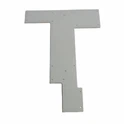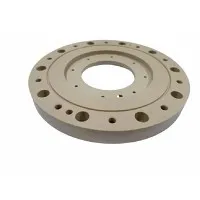

Hey there! As a supplier of CNC machining polycarbonate parts, I've had my fair share of experiences working with thin - walled polycarbonate components. Polycarbonate is a super - versatile plastic known for its high impact resistance, transparency, and heat resistance. But when it comes to machining those thin - walled parts, things can get a bit tricky. So, let's dive into what I think is the best strategy for machining thin - walled polycarbonate parts using CNC.
Understanding the Challenges of Machining Thin - Walled Polycarbonate
First off, it's important to know why thin - walled polycarbonate parts are so tough to machine. Polycarbonate has a relatively low melting point compared to metals. When you're using a CNC machine to cut through it, the heat generated during the machining process can cause the material to deform, melt, or even crack. And thin - walled parts are even more susceptible to these issues because they have less material to dissipate the heat.
Another challenge is the flexibility of thin - walled polycarbonate. The cutting forces applied by the CNC tool can cause the part to deflect, leading to inaccurate dimensions and a poor surface finish. This is especially true when you're dealing with parts that have complex geometries.
Choosing the Right CNC Machine
The first step in the strategy is to pick the right CNC machine for the job. You need a machine that can provide precise control over the cutting parameters. A high - precision CNC milling machine or a CNC turning center can work well, depending on the shape of the part you're making.
For thin - walled polycarbonate parts, a machine with a high spindle speed is often beneficial. This allows you to use smaller cutting tools and reduce the cutting forces. Look for a machine that has good vibration dampening capabilities too. Vibration can cause chattering, which will damage the surface of the polycarbonate and make it harder to achieve the desired dimensions.
Selecting the Appropriate Cutting Tools
The cutting tools you use are crucial. For polycarbonate, carbide cutting tools are a great choice. They are hard, wear - resistant, and can withstand the heat generated during machining. End mills with a sharp cutting edge and a high helix angle are often used for milling thin - walled polycarbonate parts. The high helix angle helps to evacuate the chips quickly, reducing the chances of chip recutting and heat buildup.
When it comes to drills, use ones with a split point. This type of drill bit can penetrate the polycarbonate more easily and reduce the chances of the material cracking. Also, make sure the cutting tools are sharp. Dull tools will generate more heat and require higher cutting forces, which can lead to part deformation.
Optimizing Cutting Parameters
Now, let's talk about the cutting parameters. The three main parameters you need to consider are cutting speed, feed rate, and depth of cut.
The cutting speed should be high enough to keep the machining process efficient but not so high that it causes excessive heat. A good starting point for polycarbonate is around 1000 - 2000 surface feet per minute (SFM). However, you may need to adjust this based on the specific grade of polycarbonate and the cutting tool you're using.
The feed rate is how fast the cutting tool moves through the material. For thin - walled polycarbonate, a relatively low feed rate is recommended. This helps to reduce the cutting forces and prevent the part from deflecting. A feed rate of 0.001 - 0.005 inches per tooth is a good range to start with.
The depth of cut should be shallow. For thin - walled parts, you don't want to take off too much material at once. A depth of cut of 0.01 - 0.03 inches is usually sufficient. By taking multiple shallow passes, you can control the heat generation and minimize the risk of part deformation.
Cooling and Lubrication
Cooling and lubrication are essential for machining polycarbonate. Since polycarbonate has a low melting point, it's important to keep the cutting area cool. You can use a coolant to dissipate the heat and reduce friction. A water - based coolant is a popular choice as it's effective and environmentally friendly.
Lubrication also helps to improve the surface finish of the part. It reduces the adhesion between the cutting tool and the polycarbonate, preventing the material from sticking to the tool. You can use a cutting fluid that is specifically designed for plastics.
Fixturing and Workholding
Proper fixturing and workholding are key to machining thin - walled polycarbonate parts accurately. You need to hold the part securely without causing too much deformation. Vacuum chucks are a great option for thin - walled parts. They can hold the part evenly across the surface, reducing the chances of deflection.
If you're using clamps, make sure they are placed in areas where the part is less likely to deform. Use soft jaws or pads to protect the surface of the polycarbonate from damage. Also, consider using support structures or backing plates to provide additional rigidity to the part during machining.
Post - Machining Processes
After machining, there are a few post - machining processes you can do to improve the quality of the thin - walled polycarbonate parts. Deburring is important to remove any sharp edges or burrs left behind by the cutting process. You can use a deburring tool or sandpaper to do this.
If the part requires a smooth surface finish, you can polish it. Polishing can be done using a series of abrasive pads with decreasing grit sizes. This will give the part a clear, shiny appearance.
Related CNC Machining Services
We also offer other related CNC machining services, such as CNC Machining PMI Foams and PVC, CNC Machining ABS, and CNC Machining FR4 G10. These materials have their own unique properties and machining requirements, but many of the strategies we've discussed here can be adapted to them as well.
Contact Us for Your Machining Needs
If you're in the market for high - quality CNC machined polycarbonate parts, especially thin - walled components, we'd love to hear from you. Our team of experts has years of experience in machining polycarbonate and can help you get the best results. Whether you have a small prototype order or a large - scale production run, we're equipped to handle it. So, don't hesitate to reach out and start a conversation about your project.


References
- "Plastic Machining Handbook" by Don L. Smith
- "CNC Machining Technology" by Stephen A. Morse
- Industry research papers on polycarbonate machining