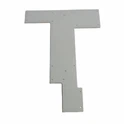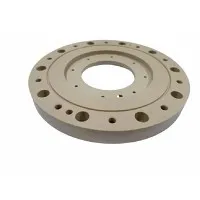

As a supplier of machined POM parts, I've witnessed firsthand the dynamic nature of pricing in this industry. The price of machined POM parts is influenced by a multitude of factors, each playing a crucial role in determining the final cost. In this blog, I'll delve into these factors to provide a comprehensive understanding for potential customers and industry enthusiasts alike.
1. Raw Material Costs
- POM Resin Quality: The quality of the polyoxymethylene (POM) resin used is a primary determinant of cost. High - quality POM resins are engineered to have better mechanical properties such as high stiffness, low friction, and excellent dimensional stability. These resins are often produced using advanced manufacturing processes and may contain additives to enhance specific performance characteristics. For example, POM resins with improved chemical resistance or UV stability will be more expensive compared to standard grades. As a supplier, we source POM resins from reputable manufacturers, and the price we pay for these raw materials directly impacts the cost of the machined parts.
- Market Fluctuations: The price of POM resin is subject to market fluctuations. Factors such as supply and demand, crude oil prices (since POM is a petroleum - based product), and geopolitical events can cause significant price variations. For instance, if there is a disruption in the supply of raw materials due to a natural disaster or political unrest in a major producing region, the price of POM resin is likely to increase. As a result, we may need to adjust the prices of our machined POM parts to maintain profitability.
2. Machining Complexity
- Part Geometry: The complexity of the part's geometry has a direct impact on the machining cost. Parts with intricate shapes, deep cavities, thin walls, or complex curves require more advanced machining techniques and longer machining times. For example, a POM part with a complex 3D contour may need multi - axis CNC machining, which is more time - consuming and requires highly skilled operators. In contrast, simple, rectangular - shaped parts can be machined more quickly and efficiently, resulting in lower costs.
- Tolerances: Tighter tolerances demand higher precision in the machining process, which in turn increases the cost. Maintaining a tolerance of ±0.01 mm is much more challenging than ±0.1 mm. It requires more precise machining equipment, frequent quality checks, and a higher level of operator skill. For applications where high accuracy is critical, such as in medical devices or aerospace components, the cost of achieving these tight tolerances will be reflected in the price of the machined POM parts.
- Surface Finish Requirements: Different applications may require specific surface finishes. Smooth finishes, such as mirror - like surfaces or fine - grained textures, often require additional machining operations such as polishing or grinding. These finishing processes add to the overall machining time and labor cost, thereby increasing the price of the parts. On the other hand, parts that do not require a high - quality surface finish can be machined more economically.
3. Quantity of Production
- Economies of Scale: In general, the larger the quantity of parts produced, the lower the unit cost. When we produce parts in large volumes, we can optimize our production processes, reduce setup times, and take advantage of bulk purchasing of raw materials. For example, if we are producing 1000 pieces of a particular POM part, we can set up the CNC machines once and run the production operation continuously, which is more efficient than setting up the machines for a small batch of 100 pieces. Additionally, we can negotiate better prices with our raw material suppliers for larger orders.
- Small - Batch Production Costs: Small - batch production, on the other hand, is often more expensive per unit. The setup time for each production run is a significant factor. Setting up the CNC machines, programming the machining operations, and performing quality checks take time and resources, regardless of the batch size. For small - batch orders, these setup costs are spread over a smaller number of parts, resulting in a higher unit cost.
4. Labor Costs
- Skilled Operator Requirements: Machining POM parts requires skilled operators who are proficient in using CNC machines and other machining equipment. These operators need to have a deep understanding of the machining processes, programming languages, and quality control measures. Skilled labor is often in high demand, and their wages are a significant component of the overall production cost. In regions with a higher cost of living, labor costs tend to be higher, which will be reflected in the price of the machined POM parts.
- Labor - Intensive Operations: Some machining operations may be more labor - intensive. For example, manual deburring or assembly operations require a significant amount of labor time. These operations, while sometimes necessary for achieving the desired part quality, increase the overall labor cost and, consequently, the price of the parts.
5. Post - Machining Processes
- Heat Treatment and Annealing: Heat treatment and annealing processes are sometimes used to improve the mechanical properties of POM parts, such as increasing their strength or reducing internal stresses. These post - machining processes add to the production time and cost. They require specialized equipment and careful control of temperature and time parameters to ensure the desired results.
- Coating and Plating: Applying coatings or platings to POM parts can enhance their surface properties, such as improving wear resistance or providing corrosion protection. However, these processes involve additional materials and processing steps, which increase the cost of the parts. For example, a nickel - plating process on POM parts requires the use of plating chemicals, specialized equipment, and a controlled environment.
6. Quality Control and Certification
- Quality Assurance Measures: Ensuring the quality of machined POM parts is essential, especially for applications where reliability is critical. We implement a comprehensive quality control system that includes in - process inspections, final inspections, and testing. These quality control measures require time, resources, and specialized equipment. For example, using coordinate measuring machines (CMM) to verify the dimensional accuracy of parts adds to the production cost.
- Certifications: Some industries, such as automotive, medical, and aerospace, require parts to meet specific certifications. Obtaining and maintaining these certifications, such as ISO 9001 or FDA approval, involves additional costs for auditing, documentation, and compliance activities. These costs are ultimately factored into the price of the machined POM parts.
Related CNC Machining Services
If you are interested in other plastic machining services, you might also want to check out our CNC Machining ABS, CNC Machining Polycarbonate, and CNC Machining FR4 G10 services. These materials have their own unique properties and applications, and our machining expertise can ensure high - quality results for your projects.


Contact for Purchase and Negotiation
If you have any requirements for machined POM parts or want to discuss the pricing further, we invite you to reach out for a detailed consultation. Our team of experts is dedicated to providing you with the best solutions and competitive pricing based on your specific needs.
References
- "Plastics Engineering Handbook", edited by Myer Kutz.
- "CNC Machining Technology", various industry textbooks on CNC machining processes and materials.
- Industry reports on POM resin market trends.