Hey there! As a supplier of milled PEEK, I've gotten a ton of questions about its radiation - resistance properties. So, I thought I'd dive deep into this topic and share what I know.
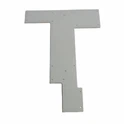
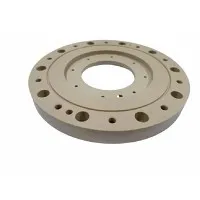
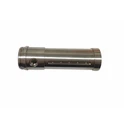
First off, let's talk a bit about PEEK. PEEK, or polyether ether ketone, is a high - performance thermoplastic. It's known for its excellent mechanical properties, chemical resistance, and high - temperature stability. When we mill PEEK, we're shaping it into the specific parts and components that various industries need.
Now, onto the radiation - resistance part. Radiation can come in different forms, like gamma rays, X - rays, and electron beams. These types of radiation can cause damage to many materials over time. They can break chemical bonds, change the material's structure, and lead to a loss of mechanical properties. But PEEK is different.
PEEK has some pretty impressive radiation - resistance characteristics. Studies have shown that it can withstand relatively high doses of radiation without significant degradation. For example, in gamma - ray environments, PEEK can maintain its mechanical strength and dimensional stability up to a certain dose level. This is because of its highly aromatic molecular structure. The benzene rings in the PEEK polymer chain are quite stable and can resist the effects of radiation to a large extent.
When exposed to radiation, some materials might become brittle, crack, or lose their flexibility. But PEEK holds up well. It retains its toughness, which is crucial in applications where the material needs to endure mechanical stress even after radiation exposure.
In the medical field, this radiation - resistance property of milled PEEK is a game - changer. Medical devices often need to be sterilized using radiation methods. Since PEEK can handle radiation without degrading, it's an ideal material for manufacturing parts like surgical instruments, implants, and diagnostic equipment components. For instance, in X - ray machines, PEEK parts can be used without worrying about radiation - induced damage over time.
The aerospace industry also benefits from the radiation - resistance of milled PEEK. In space, there's a lot of cosmic radiation. Components made from milled PEEK can be used in satellites and spacecraft because they can withstand the harsh radiation environment. This helps to ensure the long - term reliability of these aerospace systems.
Now, let's compare PEEK with some other plastics in terms of radiation resistance. If you're familiar with CNC machining, you might know about materials like nylon and polycarbonate. CNC Machining Nylon and CNC Machining Polycarbonate are popular, but they don't have the same level of radiation resistance as PEEK.


Nylon is a great material with good mechanical properties, but it's more susceptible to radiation damage. When exposed to radiation, nylon can experience a decrease in its molecular weight, which leads to a loss of strength and flexibility. Polycarbonate, on the other hand, can also be affected by radiation. It might turn yellow and become more brittle over time when exposed to high - energy radiation.
In contrast, CNC Machining PEEK offers a much more reliable option for applications where radiation is a concern. We, as a milled PEEK supplier, have seen firsthand how our customers in different industries are choosing PEEK over other materials because of its radiation - resistance.
When we mill PEEK, we use advanced CNC machining techniques to ensure the highest quality parts. CNC machining allows us to create precise and complex shapes from PEEK. We can control the machining parameters to optimize the surface finish and dimensional accuracy of the milled PEEK parts. This is important because in applications where radiation resistance is crucial, the quality of the part also matters. A well - machined PEEK part will perform better under radiation exposure compared to a poorly machined one.
We also pay close attention to the post - machining processes. After milling, we might perform heat treatments on the PEEK parts. Heat treatment can further enhance the radiation - resistance properties of PEEK by improving its internal structure. It helps to relieve any residual stresses in the material and can make the PEEK even more stable in radiation environments.
Another aspect to consider is the long - term performance of milled PEEK under radiation. We've conducted some in - house tests to monitor how our milled PEEK parts perform over time when exposed to radiation. The results have been very encouraging. Even after extended periods of radiation exposure, the milled PEEK parts still maintain a significant portion of their original mechanical properties.
If you're in an industry that requires radiation - resistant materials and you're considering using milled PEEK, we're here to help. We can provide you with high - quality milled PEEK parts that meet your specific requirements. Whether you need a small batch for prototyping or a large - scale production run, we have the capabilities to handle it.
We understand that every application is unique, and we're willing to work closely with you to develop the best solutions. You can reach out to us to discuss your project, and we'll be happy to provide you with samples and technical support.
In conclusion, the radiation - resistance properties of milled PEEK make it a top choice for many industries. Its ability to withstand radiation without significant degradation, combined with its excellent mechanical properties, makes it a versatile and reliable material. If you're looking for a material that can perform well in radiation - prone environments, milled PEEK is definitely worth considering. So, don't hesitate to contact us if you're interested in purchasing milled PEEK for your projects.
References:
- "High - Performance Polymers: Their Origins, Developments, and Applications" by W. F. Harris
- "Radiation Effects on Polymers" by A. Charlesby
- Industry research reports on PEEK applications in medical and aerospace fields