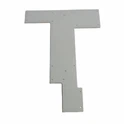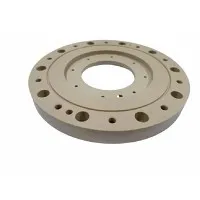

Milled PMMA (Polymethyl Methacrylate) parts have gained significant popularity in various industries due to their unique combination of optical clarity, aesthetic appeal, and mechanical properties. As a supplier specializing in milling machining of PMMA, understanding these mechanical properties is crucial for providing high - quality products and meeting the diverse needs of our customers.
Tensile Strength
Tensile strength is a fundamental mechanical property that measures the maximum stress a material can withstand while being pulled or stretched before breaking. For milled PMMA parts, the tensile strength typically ranges from 50 - 75 MPa. This relatively high tensile strength allows PMMA parts to be used in applications where they may experience moderate pulling forces.
In comparison to other common plastics, PMMA offers a good balance between strength and transparency. For example, CNC Machining ABS has a different tensile strength profile. ABS usually has a tensile strength in the range of 35 - 55 MPa. This means that in applications where higher tensile strength and transparency are required simultaneously, PMMA can be a more suitable choice.
The manufacturing process of milling can have an impact on the tensile strength of PMMA parts. During milling, the cutting forces and heat generated can introduce internal stresses in the material. If not properly managed, these internal stresses can reduce the overall tensile strength of the part. As a supplier, we use advanced milling techniques and appropriate cutting parameters to minimize these negative effects and ensure that the PMMA parts maintain their designed tensile strength.
Flexural Strength
Flexural strength, also known as bending strength, is the ability of a material to resist deformation under a bending load. Milled PMMA parts typically have a flexural strength in the range of 90 - 120 MPa. This high flexural strength makes PMMA suitable for applications where the parts may be subjected to bending forces, such as in displays or light fixtures.


When compared to CNC Machining PMI Foams and PVC, PMMA shows distinct advantages in terms of flexural strength. PMI foams generally have lower flexural strength due to their porous structure, while PVC has a flexural strength that can vary widely depending on its formulation but is often lower than that of PMMA in many standard applications.
In the milling process, the surface finish of the PMMA part can affect its flexural strength. A smooth surface finish reduces the stress concentration points, which in turn enhances the flexural strength. Our milling operations are optimized to achieve a high - quality surface finish, ensuring that the PMMA parts have excellent flexural performance.
Impact Resistance
Impact resistance is an important property, especially in applications where the parts may be exposed to sudden impacts or shocks. PMMA has a relatively low impact resistance compared to some engineering plastics. However, through proper milling and post - processing, the impact resistance of milled PMMA parts can be improved.
There are various methods to enhance the impact resistance of PMMA. One approach is to use additives during the PMMA manufacturing process. Another method is to apply a surface treatment to the milled parts. As a supplier, we offer options for customers who require improved impact resistance in their PMMA parts.
In contrast to CNC Machining Nylon, nylon generally has better impact resistance than PMMA. Nylon is known for its toughness and ability to absorb energy under impact. However, PMMA offers other advantages such as superior optical clarity, which makes it a preferred choice in applications where transparency is crucial.
Hardness
The hardness of PMMA is an important property that affects its wear resistance and scratch resistance. PMMA has a hardness that is typically measured on the Rockwell R scale, with values ranging from 85 - 105. This hardness allows PMMA parts to maintain their surface integrity in many applications, even when they are in contact with other objects.
During the milling process, the choice of cutting tools and cutting parameters can influence the surface hardness of the PMMA part. Using sharp cutting tools and appropriate feed rates can help to achieve a consistent surface hardness. Our experience in milling PMMA enables us to control these factors effectively, ensuring that the parts have the desired hardness characteristics.
Fatigue Resistance
Fatigue resistance is the ability of a material to withstand repeated loading and unloading cycles without failure. For milled PMMA parts, the fatigue resistance is a property that needs to be carefully considered, especially in applications where the parts are subjected to cyclic loading.
The fatigue life of PMMA can be affected by factors such as the magnitude of the cyclic load, the frequency of the loading, and the presence of any internal defects in the material. Milling can introduce small surface cracks or internal stresses that may reduce the fatigue resistance of the part. To address this, we use non - destructive testing methods to detect any potential defects in the milled PMMA parts and take appropriate measures to improve their fatigue performance.
Dimensional Stability
Dimensional stability is crucial for milled PMMA parts, especially in applications where precise dimensions are required. PMMA has relatively good dimensional stability, but it can be affected by factors such as temperature and humidity.
During the milling process, the heat generated can cause thermal expansion of the PMMA material, which may lead to dimensional changes. To ensure dimensional stability, we use cooling systems during milling to control the temperature of the material. Additionally, we perform post - processing operations such as annealing to relieve any internal stresses and further improve the dimensional stability of the parts.
Applications Based on Mechanical Properties
The unique combination of mechanical properties of milled PMMA parts makes them suitable for a wide range of applications. In the automotive industry, PMMA is used for headlight lenses due to its high optical clarity, good tensile and flexural strength, and acceptable impact resistance. In the consumer electronics industry, PMMA is used for display screens and touch panels because of its transparency and hardness.
In the architecture and interior design fields, PMMA is used for decorative elements such as partitions and signage. The high flexural strength and aesthetic appeal of PMMA make it an ideal material for these applications.
Conclusion
As a supplier of milling machining PMMA parts, we understand the importance of the mechanical properties of PMMA. Our expertise in milling allows us to produce parts that meet the specific mechanical requirements of our customers. Whether it is high tensile strength, excellent flexural performance, or good impact resistance, we can tailor the manufacturing process to achieve the desired properties.
If you are in need of high - quality milled PMMA parts, we invite you to contact us for procurement and further discussions. Our team of experts is ready to provide you with detailed information and solutions based on your specific needs.
References
- ASTM International. "Standard Test Methods for Tensile Properties of Plastics." ASTM D638 - 14.
- ISO Standards. "Plastics - Determination of Flexural Properties." ISO 178:2019.
- ASM Handbook Volume 21: Composites. ASM International.