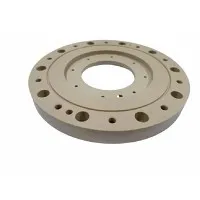
Yo, what's up everyone! I'm a supplier of lathe - machined Nylon parts. Today, I wanna chat about the international trade situations for these parts.
First off, let's talk about the demand. The demand for lathe - machined Nylon parts in international trade is pretty significant. Nylon is known for its high strength, good abrasion resistance, and self - lubricating properties. These features make lathe - machined Nylon parts incredibly useful in a wide range of industries.
In the automotive industry, Nylon parts are used in various components like bearings, bushings, and gears. As the global automotive market keeps growing, especially in emerging economies, the need for reliable and high - quality Nylon parts rises. For example, countries in Asia, such as China and India, have large automotive manufacturing bases. With the continuous expansion of these industries, they are constantly on the lookout for good - quality lathe - machined Nylon parts.
The aerospace industry is another major player. Nylon's lightweight yet strong nature makes it a preferred material for certain aerospace applications. Components like clips and fasteners often utilize lathe - machined Nylon parts. The aerospace sector is highly regulated, so suppliers need to meet strict quality and safety standards. But the high - end nature of the aerospace industry also means that there's a relatively high profit margin for the suppliers who can meet these requirements.
Now, let's move on to the supplier side. There are quite a few countries that are major suppliers of lathe - machined Nylon parts. Germany, for example, is well - known for its precision engineering. German suppliers are often associated with high - quality, accurate, and reliable parts. Their advanced manufacturing techniques and strict quality control systems enable them to produce top - notch lathe - machined Nylon parts, which are exported all over the world.
Japan is also a key player. Japanese suppliers have a reputation for innovation and efficiency. They are constantly coming up with new ways to improve the machining process and enhance the properties of Nylon parts. Their products are widely used in electronics and other high - tech industries globally.
In my case, as a supplier, I face both opportunities and challenges. The opportunity lies in the growing demand. There are always new industries and applications emerging that can use lathe - machined Nylon parts. For instance, the renewable energy sector, such as wind turbines, might need Nylon parts for some components. This is a new and growing market segment that I can explore.
However, the challenges are real too. Competition is fierce. There are so many suppliers out there, both big and small, all vying for the same customers. Pricing is a major factor. Customers are always looking for the best deal, so I need to balance between offering a competitive price and maintaining a reasonable profit margin.
Another challenge is meeting the different regulatory requirements in each country. Some countries have strict environmental regulations regarding the use and disposal of Nylon parts. Others have specific quality and safety standards. It can be a hassle to keep up with all these different rules, but it's essential if I want to do business in those markets.


When it comes to the trade barriers, tariffs can be a real pain. Some countries impose high tariffs on imported lathe - machined Nylon parts to protect their domestic industries. This can significantly increase the cost for my customers in those countries and make my products less competitive.
Non - tariff barriers are also an issue. For example, some countries have complex certification processes that I need to go through before I can sell my products there. These processes can be time - consuming and expensive.
Now, let's touch on some related machining processes. If you're interested in other plastic machining options, you might want to check out CNC Machining ABS, CNC Machining PMMA, and CNC Machining Polycarbonate. These are also popular plastic machining methods with their own unique applications and advantages.
In conclusion, the international trade situation for lathe - machined Nylon parts is a mixed bag. There's a lot of potential due to the wide - spread demand in various industries. But there are also challenges like competition, trade barriers, and meeting different regulatory requirements.
If you're in the market for lathe - machined Nylon parts, don't hesitate to reach out for a discussion. We can talk about your specific needs, the quality you're looking for, and the pricing that works for both of us. Let's see if we can make a great deal together!
References:
- General knowledge about the automotive industry and its supply chain.
- Aerospace manufacturing industry reports.
- Trade statistics on plastic parts and related trade regulations.