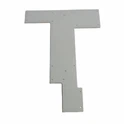
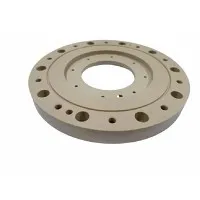
As a supplier specializing in CNC Machining Polycarbonate, I've had the privilege of witnessing the remarkable versatility and performance of this material firsthand. In this blog, I'll delve into the fatigue properties of CNC machined polycarbonate, shedding light on its behavior under cyclic loading and why it's a top choice for various applications.
Understanding Polycarbonate and CNC Machining
Polycarbonate is a high-performance thermoplastic known for its exceptional transparency, impact resistance, and dimensional stability. It has a wide range of applications, from automotive components and electronic devices to medical equipment and safety eyewear. CNC (Computer Numerical Control) machining is a precise manufacturing process that uses computerized controls to operate machine tools, allowing for the creation of complex and accurate parts from polycarbonate and other materials.
Fatigue Properties of Polycarbonate
Fatigue is the progressive and localized structural damage that occurs when a material is subjected to cyclic loading. The fatigue properties of a material are crucial in applications where it will experience repeated stress or strain over time. Here are some key aspects of the fatigue properties of CNC machined polycarbonate:
1. High Fatigue Resistance
Polycarbonate exhibits relatively high fatigue resistance compared to many other plastics. Its molecular structure, which consists of long, chain-like molecules, allows it to withstand cyclic loading without significant degradation. This makes it suitable for applications such as gears, hinges, and other components that are subjected to repeated motion.
2. Influence of Processing Conditions
The fatigue properties of CNC machined polycarbonate can be influenced by the processing conditions during machining. Factors such as cutting speed, feed rate, and tool geometry can affect the surface finish and internal stress of the machined part. A smooth surface finish and minimal internal stress can improve the fatigue resistance of the polycarbonate. For example, using sharp cutting tools and appropriate machining parameters can reduce the formation of microcracks on the surface, which can act as initiation sites for fatigue failure.
3. Environmental Factors
Environmental factors can also have an impact on the fatigue properties of polycarbonate. Exposure to high temperatures, humidity, and certain chemicals can degrade the material over time, reducing its fatigue resistance. However, polycarbonate has good resistance to a wide range of chemicals and can maintain its properties in moderate environmental conditions. In applications where the part will be exposed to harsh environments, appropriate coatings or surface treatments can be applied to enhance its durability.


4. Stress Concentration
Stress concentration is a critical factor in fatigue failure. Sharp corners, notches, and holes in a polycarbonate part can create areas of high stress concentration, which can significantly reduce the fatigue life of the component. During CNC machining, it's important to design parts with rounded corners and smooth transitions to minimize stress concentration. Additionally, proper filleting and chamfering can help distribute the stress more evenly across the part.
Comparing with Other Plastics
To better understand the fatigue properties of CNC machined polycarbonate, it's useful to compare it with other commonly used plastics in CNC machining.
1. CNC Machining POM
POM (Polyoxymethylene), also known as acetal, is another popular engineering plastic. While POM has excellent wear resistance and low friction properties, its fatigue resistance is generally lower than that of polycarbonate. POM is more prone to fatigue failure under cyclic loading, especially in applications where high impact or shock is involved.
2. CNC Machining Nylon
Nylon is a strong and durable plastic with good fatigue resistance. However, it is more hygroscopic than polycarbonate, which means it can absorb moisture from the environment. This can lead to dimensional changes and a reduction in its mechanical properties, including fatigue resistance. Polycarbonate, on the other hand, has better dimensional stability and is less affected by moisture.
Applications of CNC Machined Polycarbonate Based on Fatigue Properties
The high fatigue resistance of CNC machined polycarbonate makes it suitable for a variety of applications, including:
1. Automotive Industry
In the automotive industry, polycarbonate is used for components such as headlamp lenses, interior trim, and engine covers. These parts are often subjected to vibrations and cyclic loading during vehicle operation, and the high fatigue resistance of polycarbonate ensures their long-term performance.
2. Electronics Industry
Polycarbonate is widely used in the electronics industry for housing components, connectors, and switches. These parts may experience repeated use and mechanical stress, and the fatigue properties of polycarbonate help prevent premature failure.
3. Medical Industry
In the medical industry, polycarbonate is used for applications such as surgical instruments, medical device housings, and diagnostic equipment. The fatigue resistance of polycarbonate is important in ensuring the reliability and safety of these critical components.
Importance of Quality Control in CNC Machining Polycarbonate
To ensure the optimal fatigue properties of CNC machined polycarbonate parts, quality control is essential throughout the manufacturing process. This includes:
1. Material Selection
Using high-quality polycarbonate raw materials is the first step in producing parts with good fatigue properties. The material should meet the required specifications and standards for the intended application.
2. Machining Process Control
Controlling the machining process parameters is crucial to achieving a high-quality machined part. Regular monitoring and adjustment of cutting speed, feed rate, and other parameters can help ensure consistent quality and improve the fatigue resistance of the polycarbonate.
3. Inspection and Testing
Inspection and testing of the machined parts are necessary to detect any defects or inconsistencies that could affect the fatigue properties. Non-destructive testing methods such as ultrasonic testing and X-ray inspection can be used to detect internal flaws, while surface finish measurement and hardness testing can provide information about the surface quality and mechanical properties of the part.
Conclusion
In conclusion, CNC machined polycarbonate offers excellent fatigue resistance, making it a valuable material for a wide range of applications. Its high fatigue resistance, combined with its other desirable properties such as transparency, impact resistance, and dimensional stability, makes it a top choice for many industries. However, to fully realize the potential of polycarbonate in fatigue-critical applications, it's important to consider the processing conditions, environmental factors, and design aspects.
If you're looking for high-quality CNC Machining Polycarbonate parts with excellent fatigue properties, we're here to help. Our team of experienced engineers and technicians uses state-of-the-art CNC machining equipment and strict quality control measures to produce precision parts that meet your exact specifications. Contact us today to discuss your project requirements and explore how our CNC machining services can benefit your business.
References
- "Engineering Plastics Handbook" by Charles A. Harper
- "Plastics Engineering" magazine articles on polycarbonate and CNC machining
- Research papers on the fatigue properties of polycarbonate published in materials science journals