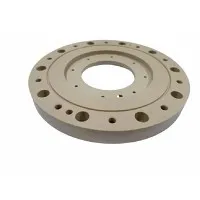

As a supplier specializing in Milling machining PPSU, I've been in the trenches, dealing with all the ins and outs of this process. PPSU, or polyphenylsulfone, is a high-performance thermoplastic known for its excellent heat resistance, chemical resistance, and mechanical properties. However, achieving top-notch cutting performance in milling PPSU isn't a walk in the park. There are several factors that can significantly impact how well the machining goes. So, let's dive into what these factors are.
1. Tool Material and Geometry
First off, the tool we use for milling PPSU matters big time. The material of the cutting tool has to be up to the task. High - speed steel (HSS) tools were once the go - to, but they can wear out pretty quickly when it comes to milling PPSU. That's why carbide tools are more popular these days. Carbide is extremely hard and has good heat resistance, which is crucial since milling generates a lot of heat.
The geometry of the cutting tool also plays a vital role. The rake angle, for example, affects how the tool cuts into the PPSU. A positive rake angle can make the cutting process smoother as it reduces the cutting force. But if it's too large, the cutting edge might become weak and prone to chipping. On the other hand, a negative rake angle increases the strength of the cutting edge but also requires more cutting force.
And then there's the helix angle. A higher helix angle can improve chip evacuation, which is really important. When milling PPSU, if the chips aren't removed properly, they can cause all sorts of problems like clogging the tool and ruining the surface finish. So, finding the right helix angle for your specific milling operation is key. If you're interested in learning more about machining different plastics, check out CNC Machining PMI Foams and PVC.
2. Cutting Parameters
Cutting parameters are like the recipe for a successful milling process. The cutting speed, feed rate, and depth of cut all interact with each other to determine the cutting performance.
The cutting speed is how fast the cutting tool rotates. If the cutting speed is too low, the efficiency of the milling process will be poor, and the tool might rub against the PPSU instead of cutting it cleanly. This can lead to a rough surface finish and increased tool wear. But if the cutting speed is too high, excessive heat will be generated, which can cause the PPSU to melt or degrade.
The feed rate is how fast the workpiece moves relative to the cutting tool. A higher feed rate can increase the material removal rate, but it also puts more stress on the cutting tool. If the feed rate is set too high, the tool might break, or the surface finish will be compromised.
The depth of cut is the thickness of the layer of material removed in each pass. A larger depth of cut can reduce the number of passes required, but it also increases the cutting force and generates more heat. You've got to balance these three parameters based on the specific PPSU grade and the cutting tool you're using. If you're curious about CNC machining of other plastics, CNC Machining Nylon might be worth a look.
3. PPSU Material Properties
The properties of the PPSU itself can have a huge impact on the cutting performance. The viscosity of PPSU at the cutting temperature is an important factor. PPSU has a relatively high viscosity compared to some other plastics, which means it doesn't flow as easily during the cutting process. This can lead to higher cutting forces and more tool wear.
The level of crystallinity in PPSU also matters. Crystalline polymers tend to be harder and more abrasive than amorphous ones. If the PPSU has a high degree of crystallinity, it will be more difficult to machine, and the cutting tool will wear out faster.
Moreover, the presence of any additives or fillers in the PPSU can change its machining characteristics. For example, if the PPSU is filled with glass fibers, it becomes more abrasive and can cause rapid tool wear. So, understanding the specific properties of the PPSU you're working with is crucial for optimizing the cutting process.
4. Cooling and Lubrication
Cooling and lubrication are often overlooked but are essential for good cutting performance. During milling, a lot of heat is generated at the cutting interface. If this heat isn't removed, it can cause the PPSU to melt, warp the workpiece, and increase tool wear.
Using a coolant can help in two ways. First, it cools down the cutting zone, reducing the temperature and preventing the PPSU from overheating. Second, it acts as a lubricant, reducing the friction between the cutting tool and the workpiece. This not only makes the cutting process smoother but also helps in chip evacuation.


There are different types of coolants available, such as water - based coolants and oil - based coolants. Water - based coolants are more environmentally friendly and have good cooling properties, but they might not be as effective as oil - based coolants in reducing friction. Oil - based coolants, on the other hand, provide better lubrication but can be more difficult to clean up.
5. Machine Rigidity
The rigidity of the milling machine is another factor that affects the cutting performance. A rigid machine can better withstand the cutting forces without vibrating. Vibration during the milling process can lead to a poor surface finish, inaccurate dimensions, and premature tool wear.
If the machine isn't rigid enough, the cutting tool might chatter, causing the surface of the PPSU workpiece to have a wavy appearance. To ensure good cutting performance, the machine should be properly maintained, and the axes should be precisely aligned.
6. Workpiece Fixturing
Proper workpiece fixturing is crucial. The PPSU workpiece needs to be securely held in place during the milling process. If the workpiece moves or vibrates, it can lead to inaccurate cuts and a poor surface finish.
The type of fixture used depends on the shape and size of the workpiece. Clamps, vises, or custom - made fixtures can be used. The fixture should be designed in such a way that it doesn't deform the PPSU workpiece, especially since PPSU can be sensitive to pressure.
7. Programming and Control
The programming of the CNC milling machine also affects the cutting performance. The program should be written to optimize the cutting parameters based on the factors we've discussed above. It should also account for the shape and complexity of the PPSU part.
Advanced control systems can adjust the cutting parameters in real - time based on the feedback from sensors. For example, if the cutting force or temperature exceeds a certain limit, the system can automatically reduce the cutting speed or feed rate.
In conclusion, achieving optimal cutting performance in milling PPSU is a multi - faceted process. It requires careful consideration of the tool material and geometry, cutting parameters, PPSU material properties, cooling and lubrication, machine rigidity, workpiece fixturing, and programming and control. As a supplier of Milling machining PPSU, we've got the know - how and experience to handle all these factors to ensure top - quality products. If you're in the market for high - precision PPSU milling services, don't hesitate to reach out and start a procurement discussion. We're here to help you get the best results for your projects. CNC Machining PPSU shows more about our capabilities in this area.
References
- Kalpakjian, S., & Schmid, S. R. (2009). Manufacturing Engineering and Technology. Pearson Prentice Hall.
- Stephenson, D. A., & Agapiou, J. S. (2006). Metal Cutting Theory and Practice. Marcel Dekker.