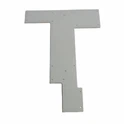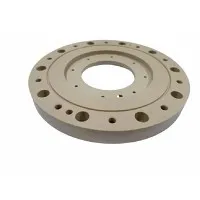

Hey there! As a supplier of CNC Machining FR4 G10, I'm super excited to dig into the electromagnetic shielding properties of this awesome material. Let's get right into it!
First off, what's FR4 G10? Well, it's a composite material made up of fiberglass cloth and epoxy resin. It's widely used in the electronics industry because it's strong, has good electrical insulation, and can be precisely machined using CNC (Computer Numerical Control) technology. That's where we come in, offering top - notch [CNC Machining FR4 G10](/cnc - plastic - machining/cnc - machining - fr4 - g10.html) services.
Now, let's talk about electromagnetic shielding. In today's high - tech world, electronic devices are everywhere, and they generate electromagnetic fields. These fields can interfere with other devices, causing malfunctions or reducing performance. That's why electromagnetic shielding is so important. It helps to block or reduce the amount of electromagnetic radiation that can pass through a material.

So, how does FR4 G10 fare in terms of electromagnetic shielding?
1. Dielectric Properties
FR4 G10 has excellent dielectric properties. The dielectric constant of FR4 G10 is relatively stable over a wide range of frequencies. This stability is crucial for electromagnetic shielding because it allows the material to interact consistently with electromagnetic waves. When an electromagnetic wave hits the FR4 G10 material, the dielectric properties cause the wave to slow down and change direction. Some of the energy of the wave is absorbed by the material, while the rest is reflected. This absorption and reflection process helps to reduce the amount of electromagnetic radiation that passes through the material.
2. Conductivity
Although FR4 G10 is generally considered an insulator, it does have some level of conductivity due to the presence of impurities and the structure of the epoxy resin and fiberglass. This slight conductivity can contribute to its electromagnetic shielding ability. When an electromagnetic wave encounters a conductive material, it induces an electric current on the surface of the material. This current then generates its own electromagnetic field, which opposes the original field. This opposition helps to cancel out some of the electromagnetic radiation, providing shielding.
3. Machinability and Design Flexibility
One of the great things about using [CNC Machining FR4 G10](/cnc - plastic - machining/cnc - machining - fr4 - g10.html) for electromagnetic shielding is the high level of precision and design flexibility that CNC machining offers. We can create complex shapes and structures with tight tolerances. For example, we can machine enclosures with specific thicknesses and geometries to optimize the shielding performance. By controlling the shape and size of the machined parts, we can direct and manipulate the electromagnetic waves, enhancing the overall shielding effectiveness.
4. Comparison with Other Materials
Let's compare FR4 G10 with some other materials commonly used in CNC machining for electromagnetic shielding.
PMMA
[CNC Machining PMMA](/cnc - plastic - machining/cnc - machining - pmma.html) is a popular choice for many applications because of its transparency and good optical properties. However, in terms of electromagnetic shielding, PMMA is not as effective as FR4 G10. PMMA is a non - conductive polymer, and it has a lower ability to absorb and reflect electromagnetic waves. So, if electromagnetic shielding is a primary concern, FR4 G10 is a better option.
Polycarbonate
[CNC Machining Polycarbonate](/cnc - plastic - machining/cnc - machining - polycarbonate.html) is known for its high impact resistance and clarity. While it has some level of electromagnetic shielding ability, it is still not as good as FR4 G10. Polycarbonate has a different dielectric constant and conductivity profile compared to FR4 G10, which means it may not interact with electromagnetic waves as effectively.
5. Applications
The electromagnetic shielding properties of CNC machined FR4 G10 make it suitable for a wide range of applications.
- Electronics Enclosures: Many electronic devices, such as computers, smartphones, and medical equipment, require enclosures that can shield against electromagnetic interference. FR4 G10 enclosures can protect the internal components from external electromagnetic fields and prevent the device's own electromagnetic emissions from interfering with other devices.
- Printed Circuit Boards (PCBs): FR4 G10 is commonly used as a substrate for PCBs. The electromagnetic shielding properties of FR4 G10 can help to reduce crosstalk between different circuit traces on the PCB, improving the overall performance and reliability of the electronic circuit.
- Aerospace and Defense: In the aerospace and defense industries, where electromagnetic interference can have serious consequences, FR4 G10 is used in various components and systems to ensure reliable operation in high - electromagnetic - environment conditions.
6. Factors Affecting Shielding Performance
There are several factors that can affect the electromagnetic shielding performance of CNC machined FR4 G10.

- Thickness: Generally, the thicker the FR4 G10 material, the better the shielding performance. A thicker material can absorb and reflect more electromagnetic waves. However, increasing the thickness also adds weight and cost, so a balance needs to be struck.
- Surface Finish: The surface finish of the machined FR4 G10 part can also impact the shielding performance. A smooth surface can provide better reflection of electromagnetic waves, while a rough surface may scatter the waves and reduce the shielding effectiveness.
- Frequency of the Electromagnetic Waves: The shielding performance of FR4 G10 can vary depending on the frequency of the electromagnetic waves. It may be more effective at certain frequencies than others. So, it's important to consider the frequency range of the electromagnetic interference when designing a shielding solution.
If you're in the market for high - quality CNC machined FR4 G10 parts with excellent electromagnetic shielding properties, we're here to help. Our team of experts has the knowledge and experience to provide you with the best solutions for your specific needs. Whether you need a small batch of custom - designed enclosures or a large - scale production of PCBs, we've got you covered. Don't hesitate to reach out for a quote and start the procurement process. Let's work together to create top - notch products!
References
- "Handbook of Electronic Materials", John Wiley & Sons
- "Electromagnetic Compatibility Engineering", Henry W. Ott