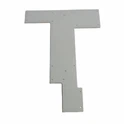
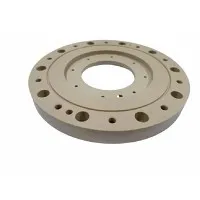
Hey there! As a supplier of Milling machining PPSU, I've had my fair share of experience with different plastics in the milling process. In this blog, I'm gonna break down the differences in milling PPSU compared to other plastics.
Let's start by getting to know PPSU a bit better. PPSU, or Polyphenylsulfone, is a high - performance thermoplastic. It's got some really cool properties like excellent chemical resistance, high heat resistance, and good mechanical strength. These properties make it a top choice in industries such as aerospace, medical, and food processing.


1. Material Hardness and Tool Wear
When it comes to milling, one of the first things we notice is the material's hardness. PPSU is a relatively hard plastic. Compared to softer plastics like polyethylene or polypropylene, it requires more robust cutting tools. With softer plastics, you can often get away with using standard high - speed steel (HSS) tools. But when milling PPSU, carbide tools are usually the way to go.
Carbide tools are more expensive than HSS tools, but they can withstand the high forces and temperatures generated when cutting through the hard PPSU material. They also have a longer tool life, which is important in large - scale milling operations. For example, if you're milling a batch of PPSU parts, using carbide tools can save you a lot of time and money in the long run because you won't have to change tools as frequently.
On the other hand, when milling softer plastics, HSS tools can cut through the material easily, and the tool wear is much less of a concern. You might be able to use the same HSS tool for a long time without significant degradation in the cutting quality.
2. Heat Generation
Heat is a big deal in the milling process. Different plastics generate and handle heat differently. PPSU has a high heat resistance, but during milling, it still generates a fair amount of heat. The high hardness of PPSU means that more energy is required to cut through it, and this energy is often converted into heat.
Excessive heat can cause problems like material deformation, melting, and even chemical changes in the plastic. To deal with the heat when milling PPSU, we often use coolant. Coolant helps to dissipate the heat, keep the cutting tool sharp, and improve the surface finish of the milled part.
In contrast, some other plastics, like polycarbonate, have a lower heat resistance. When milling polycarbonate, we have to be even more careful about heat generation. If the heat gets too high, polycarbonate can start to melt and stick to the cutting tool, ruining the surface finish of the part. You can learn more about CNC Machining Polycarbonate to understand how to manage heat and other issues specific to this plastic.
3. Chip Formation
Chip formation is another area where PPSU differs from other plastics. When milling PPSU, the chips are usually short and curly. This is because of the material's high strength and hardness. The short chips are easier to handle and remove from the cutting area, which is a plus.
Some plastics, like FR4 G10, form long, stringy chips during milling. These long chips can get tangled around the cutting tool, causing problems with the cutting process and potentially damaging the part. To deal with long chips when milling FR4 G10, special chip - breaking techniques or tool geometries might be required. You can find more information about CNC Machining FR4 G10 to understand how to manage chip formation for this material.
4. Surface Finish
The surface finish of the milled part is crucial, especially in applications where the part needs to have a smooth and precise surface. PPSU can achieve a very good surface finish when milled correctly. However, because of its hardness, it might require more precise machining parameters and higher - quality cutting tools to get that perfect finish.
Softer plastics can sometimes achieve a good surface finish more easily. For example, some grades of polypropylene can have a naturally smooth surface after milling. But in applications where high - precision and a very smooth finish are required, PPSU's properties can still make it a better choice despite the extra effort needed to achieve the desired finish.
5. Machining Speed and Feed Rates
Machining speed and feed rates are important parameters in the milling process. When milling PPSU, we usually have to use lower machining speeds and feed rates compared to some other plastics. The high hardness of PPSU means that if we try to mill it too fast, we can put too much stress on the cutting tool, leading to premature tool wear and poor surface finish.
For softer plastics, we can often increase the machining speed and feed rates without causing too many problems. This can result in faster production times and lower costs. But again, it's all about finding the right balance for each material to get the best results.
6. Chemical Resistance and Post - Machining Treatment
PPSU is known for its excellent chemical resistance. This means that after milling, PPSU parts can be used in environments where they will come into contact with various chemicals without significant degradation. In contrast, some other plastics might require special coatings or treatments to improve their chemical resistance.
For example, if a part made from a less chemically - resistant plastic is going to be used in a chemical - rich environment, it might need to be coated with a protective layer. But with PPSU, this extra step might not be necessary, which can save time and money in the production process.
Why Choose Our Milling Machining PPSU Services?
As a supplier of Milling machining PPSU, we've got the expertise and experience to handle all the unique challenges that come with milling this high - performance plastic. We understand the differences between PPSU and other plastics, and we know how to optimize the milling process to get the best results.
We use the latest technology and high - quality cutting tools to ensure that your PPSU parts are milled with precision and a great surface finish. Whether you need a small batch of prototype parts or a large - scale production run, we've got you covered.
If you're in the market for milled PPSU parts or want to learn more about how we can help with your specific project, don't hesitate to reach out. We're here to answer all your questions and work with you to find the best solutions for your needs. You can find more details about our CNC Machining PPSU services on our website.
In conclusion, milling PPSU has its own set of challenges and advantages compared to other plastics. Understanding these differences is key to getting the best results in the milling process. Whether you're a manufacturer looking for high - quality milled parts or just curious about the world of plastic machining, I hope this blog has given you some valuable insights.
References
- Plastics Engineering Handbook, 5th Edition
- Machining of Engineering Materials, 3rd Edition