The firearms industry is a highly specialized and precision - driven sector where the quality and accuracy of components can mean the difference between success and failure, and even between life and death. Swiss lathe machining has emerged as a crucial manufacturing process in this industry, offering unparalleled precision and efficiency. As a Swiss Lathe Machining supplier, I have witnessed firsthand the diverse applications and benefits that this technology brings to the firearms manufacturing world.
1. Precision Barrel Components
One of the most critical components of any firearm is the barrel. The accuracy of a firearm largely depends on the quality of its barrel. Swiss lathe machining is used to produce various barrel - related parts with extreme precision. For instance, the bore of the barrel, which guides the bullet as it is fired, needs to be perfectly cylindrical and have a smooth surface finish. Swiss lathes can achieve tight tolerances, often within a few microns, ensuring that the bore diameter is consistent along its entire length. This consistency is vital for accurate bullet trajectory.
Moreover, components such as the chamber, where the cartridge is loaded, are also machined using Swiss lathes. The chamber must be precisely sized to fit the specific cartridge type, and any deviation can lead to misfires or even dangerous malfunctions. Swiss lathe machining can create chambers with high precision, taking into account factors like the taper, shoulder dimensions, and overall shape. The ability to work with a variety of materials, including high - strength steels and alloys commonly used in barrel manufacturing, makes Swiss lathes an ideal choice for this application.
2. Trigger Mechanisms
Trigger mechanisms are another area where Swiss lathe machining plays a significant role. A well - designed trigger mechanism is essential for a firearm's safety and functionality. The trigger itself, along with other components like the sear, hammer, and disconnector, require precise machining to ensure smooth operation.
Swiss lathes can produce these small but critical parts with complex geometries. For example, the sear, which holds the hammer in place until the trigger is pulled, needs to have a very specific shape and surface finish. The machining process can create a sear with a smooth contact surface, reducing friction and ensuring reliable engagement and disengagement. Additionally, Swiss lathe machining allows for the production of parts with consistent dimensions, which is crucial for the repeatability of the trigger pull weight and feel. This consistency is important for both military and civilian shooters who rely on the predictable performance of their firearms.
3. Magazine Components
Magazines are an integral part of many firearms, and Swiss lathe machining is used to manufacture several key magazine components. The magazine body, follower, and feed lips all need to be precisely machined to ensure proper ammunition feeding.
The magazine body, which holds the ammunition, must have accurate dimensions to accommodate the specific cartridge type and ensure reliable stacking. Swiss lathes can machine the body with tight tolerances, ensuring that the cartridges are held securely and can be fed smoothly into the chamber. The follower, which pushes the cartridges up towards the feed lips, also requires precise machining. A well - machined follower will move smoothly within the magazine body, preventing jams and ensuring consistent ammunition feeding. The feed lips, which guide the cartridges into the chamber, need to be accurately shaped and positioned. Swiss lathe machining can create feed lips with the right curvature and alignment, improving the overall reliability of the magazine.

4. Scope Mounts and Bases
In modern firearms, scopes are widely used for improved accuracy, especially in long - range shooting. Scope mounts and bases are the components that attach the scope to the firearm, and their precision is crucial for maintaining zero and ensuring proper alignment.
Swiss lathe machining can produce scope mounts and bases with high precision. These parts need to be machined to fit the specific scope and firearm models, and any misalignment can lead to inaccurate shooting. The ability to machine parts with tight tolerances and smooth surfaces ensures a secure and stable connection between the scope and the firearm. Additionally, Swiss lathes can work with different materials, such as aluminum alloys for lightweight applications or steel for heavy - duty use, providing options for different types of firearms and shooting requirements.
5. Sights and Sight Adjustment Components
Sights are essential for aiming a firearm, and Swiss lathe machining is used in the production of various sight components. Both iron sights and optical sights have parts that require precise machining.
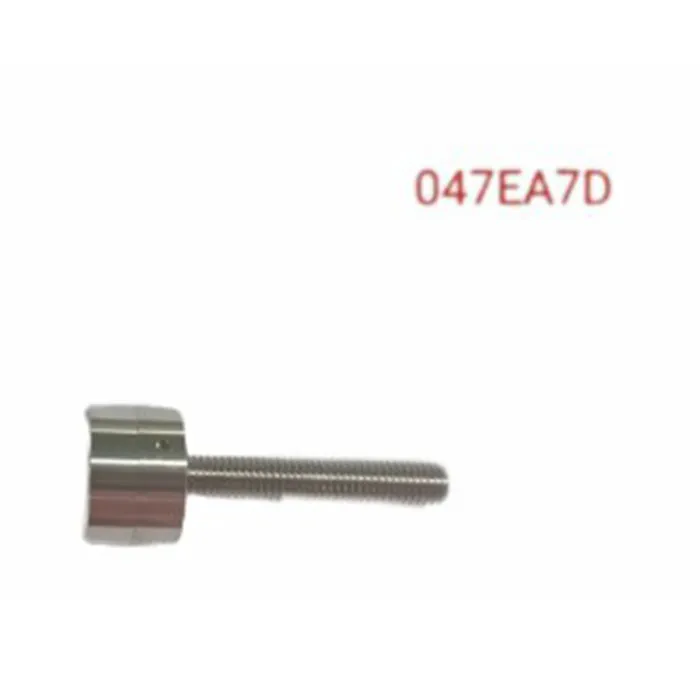
For iron sights, components like the front and rear sight blades need to be accurately machined to ensure proper alignment. The height, width, and shape of the sight blades can affect the accuracy of the shot. Swiss lathe machining can create these parts with consistent dimensions, allowing for accurate sighting. In the case of optical sights, components such as the elevation and windage adjustment knobs and screws are machined using Swiss lathes. These adjustment components need to have precise threads and smooth operation to allow for fine - tuning of the sight. The ability to produce parts with high precision ensures that shooters can make accurate adjustments to their sights, improving their shooting performance.
The Advantages of Swiss Lathe Machining in the Firearms Industry
The applications of Swiss lathe machining in the firearms industry are numerous, and they are driven by several key advantages.
- High Precision: As mentioned earlier, Swiss lathes can achieve extremely tight tolerances, often within a few microns. This level of precision is crucial in the firearms industry, where even small deviations can affect the performance and safety of the firearm.
- Efficiency: Swiss lathe machining is a highly efficient process. It can produce complex parts in a single setup, reducing the need for multiple machining operations and minimizing production time. This efficiency is important for meeting the high - volume demands of the firearms industry.
- Versatility: Swiss lathes can work with a wide range of materials, including steels, alloys, plastics, and composites. This versatility allows firearm manufacturers to choose the most suitable material for each component, depending on factors such as strength, weight, and corrosion resistance.
- Complex Geometry Machining: Many firearm components have complex geometries that are difficult to produce using traditional machining methods. Swiss lathes are capable of machining these complex shapes with ease, enabling the design and production of innovative firearm components.
Connecting with Us for Your Firearms Machining Needs
If you are in the firearms industry and are looking for a reliable Swiss Lathe Machining supplier, we are here to assist you. Our expertise in Swiss lathe machining, combined with our commitment to quality and precision, makes us an ideal partner for your manufacturing needs. Whether you need components for barrels, trigger mechanisms, magazines, scope mounts, or sights, we have the capabilities to produce high - quality parts that meet your specifications.
We offer a range of services, including Precision Prototyping Production, which allows you to test and refine your designs before full - scale production. Our CNC Turning and Milling Compound Machining services further enhance our capabilities, enabling us to produce even more complex components. And of course, our core service of Swiss Lathe Machining is designed to meet the strict requirements of the firearms industry.
Contact us today to discuss your project and find out how our Swiss lathe machining services can benefit your firearms manufacturing operations. We look forward to working with you to produce the highest - quality firearm components.
References
- Smith, J. (2020). Precision Manufacturing in the Firearms Industry. Journal of Firearm Technology, 15(2), 45 - 60.
- Johnson, R. (2019). The Role of Swiss Lathe Machining in Modern Manufacturing. Manufacturing Review, 22(3), 78 - 89.
- Brown, A. (2018). Advances in Firearm Component Machining. International Journal of Precision Engineering, 10(4), 112 - 125.