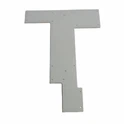
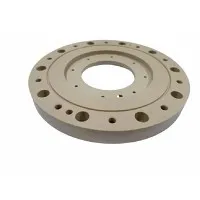
PPSU, or polyphenylsulfone, is a high-performance thermoplastic known for its exceptional mechanical, thermal, and chemical properties. In recent years, it has gained significant attention in the field of precision CNC machining. As a supplier of CNC Machining PPSU, I've witnessed firsthand the growing interest in this material and its potential in various industries. In this blog post, I'll explore whether PPSU is a good material for precision CNC machining, discussing its advantages, challenges, and applications.
Advantages of PPSU for Precision CNC Machining
Excellent Mechanical Properties
PPSU offers outstanding mechanical strength and stiffness, making it suitable for applications that require high structural integrity. It has a high tensile strength, which means it can withstand significant forces without deforming. This property is crucial in precision CNC machining, where parts need to maintain their shape and dimensions under various operating conditions. For example, in the aerospace industry, PPSU components can be used in aircraft interiors and engine components, where they need to endure high stress and vibration.
High Thermal Resistance
One of the most remarkable features of PPSU is its high thermal resistance. It can withstand continuous use at temperatures up to 180°C (356°F) without significant loss of mechanical properties. This makes it ideal for applications in high-temperature environments, such as automotive engine compartments, electrical enclosures, and industrial machinery. During CNC machining, the ability to handle heat generated during the cutting process is essential. PPSU's thermal stability ensures that the material doesn't warp or deform, resulting in precise and accurate machined parts.
Chemical Resistance
PPSU is highly resistant to a wide range of chemicals, including acids, bases, and solvents. This chemical resistance makes it suitable for applications in harsh chemical environments, such as chemical processing plants, laboratories, and medical devices. In precision CNC machining, the material's resistance to chemicals ensures that the machined parts maintain their integrity and performance over time, even when exposed to corrosive substances.
Biocompatibility
PPSU is biocompatible, which means it is safe for use in contact with living tissues. This property makes it a popular choice for medical and food industry applications. In the medical field, PPSU can be used to manufacture surgical instruments, dental devices, and medical equipment components. In the food industry, it can be used for food processing equipment and packaging. During CNC machining, the biocompatibility of PPSU ensures that the machined parts meet the strict safety and hygiene standards required in these industries.
Dimensional Stability
PPSU has excellent dimensional stability, which means it maintains its shape and size over time and under different environmental conditions. This property is crucial in precision CNC machining, where tight tolerances are required. Machined parts made from PPSU can achieve high levels of accuracy and repeatability, ensuring that they fit perfectly into the intended assemblies.
Challenges of PPSU for Precision CNC Machining
High Cost
One of the main challenges of using PPSU in precision CNC machining is its relatively high cost compared to other plastics. PPSU is a high-performance material, and its production process is more complex, which contributes to its higher price. However, the benefits of using PPSU, such as its excellent mechanical, thermal, and chemical properties, often outweigh the cost in applications where performance is critical.
Difficulty in Machining
PPSU is a tough and abrasive material, which can make it challenging to machine. It requires sharp cutting tools and appropriate machining parameters to achieve good surface finishes and dimensional accuracy. During the machining process, the high heat generated can cause the material to soften and stick to the cutting tools, leading to poor surface quality and tool wear. To overcome these challenges, it is essential to use high-quality cutting tools and optimize the machining parameters, such as cutting speed, feed rate, and depth of cut.
Limited Availability
Compared to more common plastics like CNC Machining Nylon and CNC Machining ABS, PPSU may have limited availability in some regions. This can lead to longer lead times and potential supply chain issues. As a supplier of CNC Machining PPSU, we work closely with our customers to ensure a reliable supply of PPSU materials and timely delivery of machined parts.
Applications of PPSU in Precision CNC Machining
Aerospace Industry
In the aerospace industry, PPSU is used to manufacture a variety of components, including aircraft interiors, engine components, and structural parts. Its high strength, thermal resistance, and chemical resistance make it suitable for use in harsh aerospace environments. For example, PPSU can be used to make seat components, ducting, and electrical connectors, where it needs to withstand high temperatures, pressure, and vibration.
Medical Industry
The medical industry requires materials that are biocompatible, sterilizable, and have high mechanical strength. PPSU meets these requirements and is widely used in the manufacture of medical devices and equipment. It can be used to make surgical instruments, dental devices, and medical equipment components, such as syringe barrels, connectors, and valves.
Automotive Industry
In the automotive industry, PPSU is used in applications where high temperature and chemical resistance are required. It can be used to make engine components, electrical enclosures, and interior parts. For example, PPSU can be used to make radiator end tanks, intake manifolds, and sensor housings, where it needs to withstand high temperatures and exposure to automotive fluids.
Electronics Industry
The electronics industry requires materials that have good electrical insulation properties, thermal resistance, and dimensional stability. PPSU meets these requirements and is used in the manufacture of electrical enclosures, connectors, and printed circuit board (PCB) components. Its high thermal resistance allows it to dissipate heat effectively, which is important for electronic devices.
Conclusion
In conclusion, PPSU is a good material for precision CNC machining, especially in applications where high performance is required. Its excellent mechanical, thermal, and chemical properties, along with its biocompatibility and dimensional stability, make it suitable for a wide range of industries, including aerospace, medical, automotive, and electronics. However, it also has some challenges, such as high cost, difficulty in machining, and limited availability. As a supplier of CNC Machining PPSU, we have the expertise and experience to overcome these challenges and provide high-quality machined parts to our customers.
If you are interested in using PPSU for your precision CNC machining needs, I encourage you to contact us for more information. We can provide you with detailed technical specifications, samples, and pricing. Our team of experts is ready to work with you to develop the best solutions for your specific applications.


References
- "Engineering Plastics Handbook: Properties, Processing, Applications" by Michael Biron
- "Plastic Materials: An Introduction" by John A. Brydson
- Technical datasheets provided by PPSU manufacturers