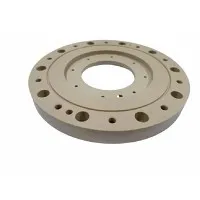

Peek (Polyether Ether Ketone) is a high-performance thermoplastic known for its excellent mechanical properties, chemical resistance, and high-temperature stability. These characteristics make it a popular choice in various industries, including aerospace, automotive, medical, and electronics. As a leading supplier of milling machining Peek services, we understand the importance of selecting the right milling cutter geometry for achieving optimal results. In this blog post, we will explore the key factors to consider when choosing a milling cutter for Peek and provide some practical tips to help you make an informed decision.


Understanding Peek's Machining Characteristics
Before delving into the selection of milling cutter geometry, it is essential to understand the unique machining characteristics of Peek. Peek is a relatively hard and tough material, which can pose challenges during the milling process. It has a high melting point, which means that excessive heat generated during machining can cause the material to soften or melt, leading to poor surface finish and dimensional accuracy. Additionally, Peek has a tendency to produce long, stringy chips, which can clog the cutting edges of the milling cutter and reduce its cutting efficiency.
Key Factors in Selecting Milling Cutter Geometry
1. Number of Flutes
The number of flutes on a milling cutter plays a crucial role in determining its cutting performance. For Peek machining, a cutter with fewer flutes is generally preferred. Fewer flutes provide more space for chip evacuation, which helps to prevent chip clogging and reduce the risk of heat buildup. A two-flute or three-flute end mill is often a good choice for roughing operations on Peek, as it allows for efficient chip removal and high material removal rates. For finishing operations, a four-flute or more cutter can be used to achieve a smoother surface finish.
2. Helix Angle
The helix angle of a milling cutter affects the cutting forces and chip evacuation. A high helix angle (typically 40° - 50°) is recommended for Peek machining. A high helix angle helps to reduce the cutting forces and improves chip evacuation by guiding the chips out of the cutting zone more effectively. This reduces the risk of chip recutting and heat generation, resulting in better surface finish and tool life.
3. Cutting Edge Geometry
The cutting edge geometry of a milling cutter is critical for achieving good cutting performance on Peek. A sharp cutting edge with a positive rake angle is preferred to reduce the cutting forces and prevent the material from tearing or delaminating. However, the rake angle should not be too large, as this can weaken the cutting edge and lead to premature tool wear. A rake angle of 5° - 10° is generally suitable for Peek machining.
4. Coating
Coating the milling cutter can significantly improve its performance and tool life when machining Peek. A TiAlN (Titanium Aluminum Nitride) or TiCN (Titanium Carbonitride) coating is commonly used for Peek machining. These coatings provide high hardness, wear resistance, and thermal stability, which helps to reduce friction and heat generation during the cutting process. The coating also protects the cutting edge from wear and corrosion, extending the tool's lifespan.
5. Tool Diameter
The tool diameter should be selected based on the specific machining requirements. A larger tool diameter can provide higher material removal rates, but it may also require more power and increase the risk of vibration. For roughing operations, a larger diameter tool can be used to remove a significant amount of material quickly. For finishing operations, a smaller diameter tool may be necessary to achieve the desired surface finish and dimensional accuracy.
Practical Tips for Milling Peek
1. Use Appropriate Cutting Parameters
In addition to selecting the right milling cutter geometry, using appropriate cutting parameters is also crucial for successful Peek machining. The cutting speed, feed rate, and depth of cut should be carefully adjusted based on the material properties, tool geometry, and machining conditions. Generally, a lower cutting speed and feed rate are recommended for Peek machining to prevent excessive heat generation and tool wear.
2. Coolant and Lubrication
Using coolant or lubrication during the milling process can help to reduce heat generation, improve chip evacuation, and extend tool life. A water-soluble coolant is often used for Peek machining, as it provides good cooling and lubrication properties. However, it is important to ensure that the coolant is compatible with Peek and does not cause any chemical reactions or damage to the material.
3. Tool Inspection and Maintenance
Regularly inspecting and maintaining the milling cutter is essential for ensuring its optimal performance. Check the cutting edges for wear, chipping, or damage after each use, and replace the tool if necessary. Proper storage of the tools is also important to prevent corrosion and damage.
Related CNC Machining Services
If you are interested in other plastic machining services, we also offer CNC Machining PMI Foams and PVC, CNC Machining Polycarbonate, and CNC Machining Nylon. These materials have different machining characteristics, and our experienced team can help you select the right tools and parameters for each application.
Conclusion
Selecting the right milling cutter geometry is essential for achieving optimal results when machining Peek. By considering factors such as the number of flutes, helix angle, cutting edge geometry, coating, and tool diameter, you can choose a cutter that is best suited for your specific machining requirements. Additionally, using appropriate cutting parameters, coolant, and lubrication, and maintaining the tools properly will help to ensure efficient and high-quality Peek machining.
If you have any questions about Peek milling or would like to discuss your specific machining needs, please feel free to contact us. Our team of experts is ready to assist you in selecting the right tools and providing the best milling machining Peek services.
References
- "Machining of Engineering Plastics" by K. Venkateswara Rao
- "Handbook of Plastic Materials and Technology" by Irvin I. Rubin