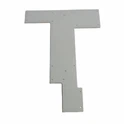
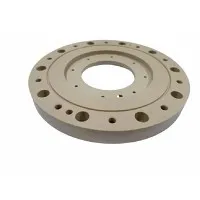
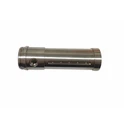
Hey there! As a supplier specializing in CNC machining PPSU, I often get asked about how to pick the right CNC machine for this task. PPSU, or polyphenylsulfone, is a high-performance thermoplastic known for its excellent mechanical properties, chemical resistance, and heat stability. Machining it requires a machine that can handle its unique characteristics. In this blog, I'll share some tips on selecting the appropriate CNC machine for machining PPSU.
Understanding the Basics of PPSU Machining
Before we dive into machine selection, it's crucial to understand the challenges and requirements of machining PPSU. PPSU is a tough material that can cause significant tool wear if not machined properly. It also has a relatively high melting point, so heat management during machining is essential to prevent melting or deformation of the material.
Another factor to consider is the precision required for your PPSU parts. PPSU is often used in applications where tight tolerances are critical, such as in the medical and aerospace industries. Therefore, the CNC machine you choose should be capable of achieving the required precision and surface finish.
Factors to Consider When Selecting a CNC Machine
1. Machine Type
There are several types of CNC machines available, including milling machines, lathes, and routers. The type of machine you choose will depend on the specific requirements of your PPSU parts.
- Milling Machines: Milling machines are versatile and can be used for a wide range of machining operations, such as face milling, end milling, and drilling. They are suitable for machining complex shapes and contours in PPSU parts.
- Lathes: Lathes are ideal for machining cylindrical parts, such as shafts and bushings. They can perform operations like turning, facing, and threading. If your PPSU parts have a cylindrical shape, a lathe may be the best choice.
- Routers: Routers are commonly used for cutting and shaping flat materials, such as sheets and panels. They can be used for machining PPSU parts with simple geometries, such as brackets and covers.
2. Spindle Speed and Power
The spindle speed and power of the CNC machine are important factors to consider when machining PPSU. PPSU is a hard material, so a machine with a high spindle speed and sufficient power is required to cut through it effectively.
- Spindle Speed: A spindle speed of at least 10,000 RPM is recommended for machining PPSU. Higher spindle speeds can help reduce tool wear and improve the surface finish of the machined parts.
- Spindle Power: The spindle power of the machine should be sufficient to handle the cutting forces generated during machining. A machine with a spindle power of at least 5 HP is recommended for machining PPSU.
3. Axis Configuration
The axis configuration of the CNC machine determines the range of motion and the complexity of the parts that can be machined. Most CNC machines have three axes (X, Y, and Z), but some machines also have additional axes, such as the A, B, and C axes.
- Three-Axis Machines: Three-axis machines are suitable for machining simple parts with flat surfaces and straight edges. They are commonly used for basic milling and drilling operations.
- Four-Axis and Five-Axis Machines: Four-axis and five-axis machines offer greater flexibility and can be used for machining complex parts with curved surfaces and irregular shapes. They are ideal for applications where high precision and accuracy are required.
4. Tooling and Tool Changers
The type of tooling and tool changers available on the CNC machine can also affect the machining process. PPSU requires sharp and durable cutting tools to achieve a good surface finish and minimize tool wear.
- Tooling: Carbide tools are commonly used for machining PPSU due to their high hardness and wear resistance. Other types of tools, such as diamond-coated tools, may also be suitable for certain applications.
- Tool Changers: A tool changer allows the machine to automatically change tools during the machining process, reducing setup time and increasing productivity. A machine with a tool changer is recommended for high-volume production.
5. Control System
The control system of the CNC machine is responsible for controlling the movement of the axes and the operation of the spindle. A user-friendly and reliable control system is essential for efficient and accurate machining.


- Ease of Use: The control system should be easy to operate and program, even for users with limited experience. It should have a graphical user interface (GUI) that allows users to input machining parameters and generate tool paths quickly and easily.
- Reliability: The control system should be reliable and stable, with minimal downtime. It should be able to handle complex machining operations without crashing or malfunctioning.
Additional Considerations
1. Coolant System
A coolant system is essential for machining PPSU to prevent overheating and reduce tool wear. The coolant helps to dissipate heat generated during the cutting process and flush away chips and debris.
- Type of Coolant: Water-soluble coolants are commonly used for machining PPSU. They are effective in reducing heat and friction and can also help to prevent corrosion of the cutting tools.
- Coolant Delivery System: The coolant delivery system should be capable of delivering the coolant directly to the cutting area. A high-pressure coolant system is recommended for machining PPSU to ensure effective cooling and chip removal.
2. Machine Size and Capacity
The size and capacity of the CNC machine should be appropriate for the size and quantity of the PPSU parts you need to machine. A machine that is too small may not be able to handle large parts, while a machine that is too large may be inefficient for small-scale production.
- Work Envelope: The work envelope of the machine refers to the maximum size of the part that can be machined. Make sure the work envelope of the machine is large enough to accommodate your PPSU parts.
- Table Size and Load Capacity: The table size and load capacity of the machine should also be considered. The table should be large enough to support the weight of the part and the fixture, and the load capacity should be sufficient to handle the cutting forces generated during machining.
3. Maintenance and Support
Regular maintenance is essential for keeping the CNC machine in good working condition and ensuring its longevity. Make sure the machine comes with a comprehensive maintenance manual and that the manufacturer offers reliable technical support.
- Maintenance Requirements: The maintenance requirements of the machine should be clearly stated in the manual. This may include tasks such as lubrication, cleaning, and inspection of the machine components.
- Technical Support: The manufacturer should offer reliable technical support, including phone and email support, as well as on-site service if necessary. Make sure the manufacturer has a good reputation for providing prompt and effective support.
Conclusion
Selecting the appropriate CNC machine for machining PPSU requires careful consideration of several factors, including machine type, spindle speed and power, axis configuration, tooling and tool changers, control system, coolant system, machine size and capacity, and maintenance and support. By taking these factors into account, you can choose a machine that is capable of meeting the specific requirements of your PPSU parts and ensuring efficient and accurate machining.
If you're in the market for a CNC machine for machining PPSU, I'd be happy to help. As a CNC Machining PPSU supplier, I have extensive experience in working with PPSU and can provide you with expert advice and guidance. Feel free to contact me to discuss your requirements and learn more about our services.
References
- "CNC Machining Handbook" by John A. Reinthaler
- "Plastic Materials and Processing" by Donald R. Paul and Christopher L. Macosko
- "Manufacturing Engineering and Technology" by S. Kalpakjian and S. R. Schmid