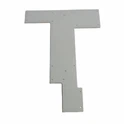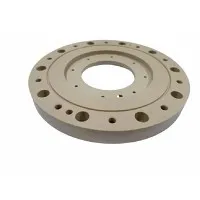

Hey there! I'm a supplier in the business of CNC machining PMMA. PMMA, also known as acrylic, is a popular plastic material due to its high optical clarity, excellent weather resistance, and good mechanical properties. One of the key aspects to ensure efficient and high - quality CNC machining of PMMA is optimizing the tool path. In this blog, I'll share some tips on how to do just that.
Understanding the Basics of Tool Path in CNC Machining PMMA
First off, let's quickly understand what a tool path is. A tool path is the route that the cutting tool follows during the CNC machining process. It's like a roadmap for the machine, telling it where to go and what to do. When it comes to machining PMMA, an optimized tool path can significantly reduce machining time, improve surface finish, and extend tool life.
One of the main challenges in CNC machining PMMA is its tendency to melt and stick to the cutting tool. This can lead to poor surface quality and even damage the tool. So, the tool path needs to be designed in a way that minimizes heat generation and chip accumulation.
Factors Affecting Tool Path Optimization
Material Properties
PMMA has unique material properties. It's relatively soft compared to metals, but it's also brittle. This means that the cutting forces need to be carefully controlled to avoid cracking or chipping. The tool path should be planned to take advantage of the material's strength and avoid applying excessive force in areas where it's likely to break.
Tool Selection
The type of cutting tool used has a big impact on the tool path. For PMMA, end mills with sharp cutting edges and appropriate flute geometries are commonly used. High - speed steel (HSS) or carbide tools can work well, but carbide tools generally offer better performance and longer tool life. The tool path should be adjusted based on the tool's diameter, number of flutes, and cutting edge geometry.
Machining Operations
Different machining operations, such as roughing and finishing, require different tool paths. During roughing, the goal is to remove as much material as possible in a short time. A zig - zag or raster tool path is often used for roughing, as it allows for fast material removal. On the other hand, finishing operations focus on achieving a smooth surface finish. A contour or spiral tool path is more suitable for finishing, as it can provide a consistent cutting action and reduce the chances of leaving tool marks.


Strategies for Tool Path Optimization
Reducing Cutting Forces
To reduce cutting forces, the tool path can be designed to use smaller step - overs and depths of cut. This means that the tool removes less material with each pass, but it also reduces the stress on the tool and the material. For example, instead of taking a large cut in one pass, multiple smaller passes can be made. This not only reduces the risk of cracking but also helps to keep the cutting temperature down.
Avoiding Tool Retractions
Tool retractions, where the tool is lifted out of the material and then re - inserted, can waste time and cause uneven surface finishes. By optimizing the tool path, we can minimize the number of tool retractions. For instance, using a continuous tool path that moves smoothly from one area to another without unnecessary lifting can improve efficiency.
Chip Management
Proper chip management is crucial when machining PMMA. The tool path should be designed to ensure that chips are efficiently removed from the cutting area. One way to do this is by using a tool path that allows the chips to flow freely out of the cutting zone. For example, a helical tool path can help to evacuate chips more effectively compared to a linear tool path.
Advanced Techniques for Tool Path Optimization
Adaptive Machining
Adaptive machining is a technique that adjusts the tool path in real - time based on the actual cutting conditions. This can be particularly useful when machining PMMA, as the material properties can vary slightly from one batch to another. Adaptive machining systems use sensors to monitor the cutting forces, temperature, and other parameters, and then modify the tool path accordingly. This ensures that the machining process remains efficient and produces high - quality parts.
Simulation Software
Simulation software is a great tool for optimizing the tool path before starting the actual machining process. These software programs can create a virtual model of the machining operation, allowing us to visualize the tool path and identify any potential issues. We can simulate different tool paths, cutting parameters, and material properties to find the optimal combination. For example, we can see how the tool path affects the surface finish, machining time, and tool wear.
Real - World Examples of Tool Path Optimization
Let's say we're machining a PMMA display panel. The initial tool path was a simple zig - zag pattern for roughing and a contour path for finishing. However, we noticed that there were some chipping issues around the edges during finishing. After analyzing the problem, we decided to modify the tool path.
We reduced the step - over during finishing to minimize the cutting forces. We also added a small chamfering operation at the edges using a special tool path. This not only improved the edge quality but also made the panel look more professional. By using simulation software, we were able to test different tool paths and cutting parameters before making any changes to the actual machining process. This saved us a lot of time and material.
Related CNC Machining Services
If you're interested in other plastic machining services, we also offer CNC Machining PMI Foams and PVC, CNC Machining FR4 G10, and CNC Machining PEEK. These materials have their own unique properties and require specialized tool path optimization techniques.
Conclusion
Optimizing the tool path for CNC machining PMMA is a complex but rewarding process. By considering factors such as material properties, tool selection, and machining operations, and using strategies like reducing cutting forces, avoiding tool retractions, and proper chip management, we can achieve efficient and high - quality machining. Advanced techniques like adaptive machining and simulation software can further enhance the optimization process.
If you're in the market for CNC machining PMMA or any of our other plastic machining services, I'd love to talk to you. Whether you have a small - scale project or a large - volume order, we're here to help. Contact us to discuss your requirements and let's work together to create the perfect parts for your needs.
References
- Groover, M. P. (2010). Fundamentals of Modern Manufacturing: Materials, Processes, and Systems. Wiley.
- Dornfeld, D. A., Minis, I., & Takeuchi, Y. (2006). Handbook of Machining with Grinding Applications. CRC Press.